Where did the water first appear?
- Water at the door points first to the seal, suds, loading or a machine that isn't level.
- Stop the cycle, close the dishwasher's water valve under the sink and dry the floor.
- Water underneath or E15 means leave the machine off until the leak is found.
- If water is near a plug or wiring, turn off power at the breaker.
A puddle at the cabinet edge can have started at the door, a hose connection or inside the machine. We'd start with the first wet spot you noticed. Note whether it appeared while the machine filled, washed, drained or sat idle.
| What you noticed | What it points toward | First move |
|---|---|---|
| Water at the door | Seal, suds, loading or leveling | Clean the seal and look for an obstruction. |
| Water under the sink | Supply fitting or drain-hose connection | Find the first wet fitting with a dry towel. |
| Water beneath the machine | A connection or internal leak | Shut off water and leave the machine off. |
| E15 or E3100 on the display | Water has triggered leak protection | Shut off water and leave the machine off. |
E15 means water has activated leak protection in the base. Neither warning identifies the part that leaked. Water left inside the tub after a cycle is a drainage problem; our guide to a dishwasher that isn't draining covers that separate symptom.
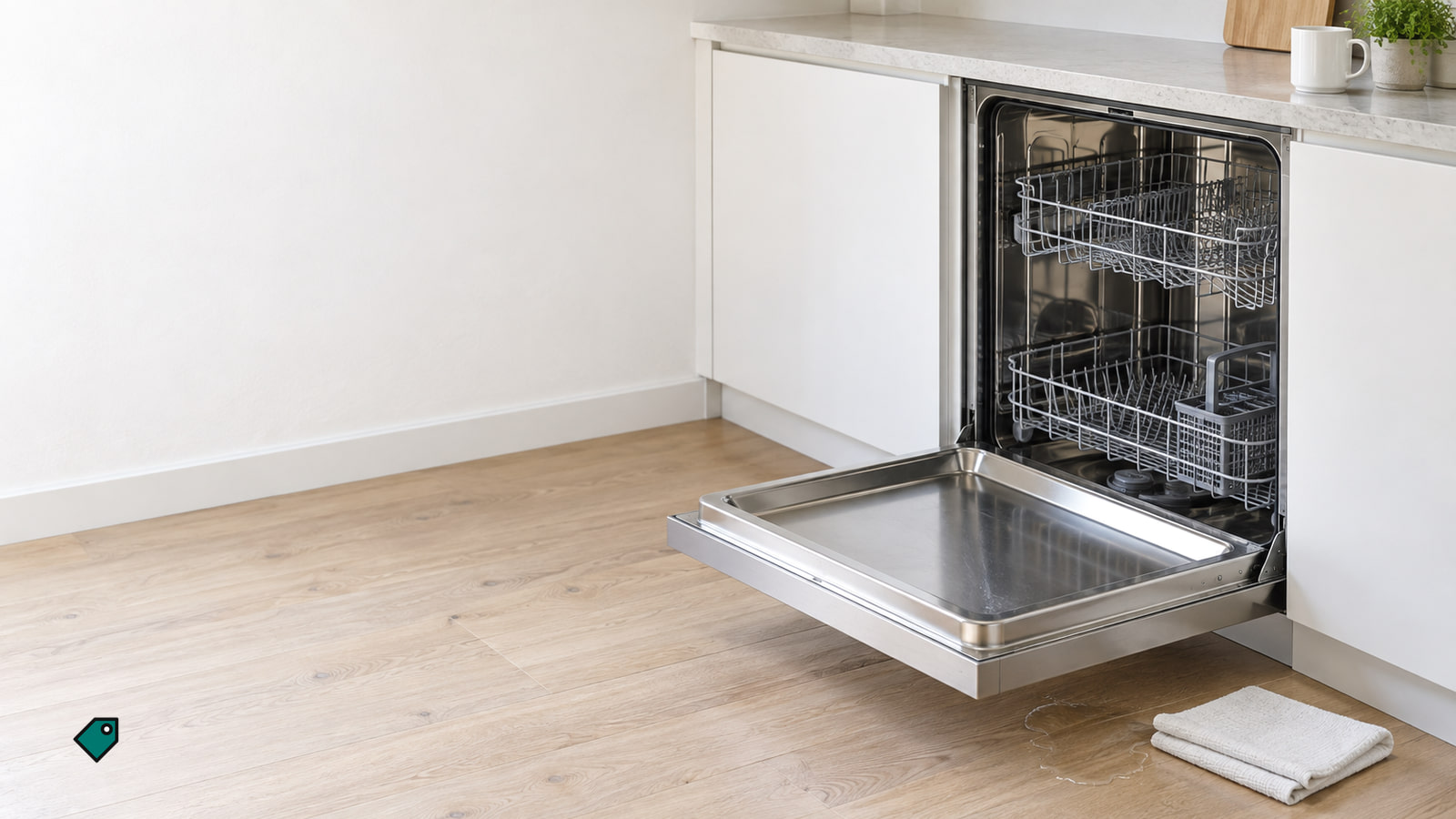
What to do with water on the floor
Stop an active cycle and close the dishwasher's supply valve under the sink. Keep the machine off if water is still escaping, has appeared beneath it, or a leak warning or continuous drain pump returns.
- Use towels or a sponge to dry the floor and the area under the sink. Dry wet flooring promptly so water doesn't remain against cabinets or floorboards.
- Note or photograph the first place that was wet and the cycle phase when you found it. A drip first seen during draining points toward the sink-side drain connection; a supply fitting wet while the machine is off points toward the supply line.
- Look again only at connections you can see and reach without moving the dishwasher or opening a cover. Water should stop spreading after the supply is closed. If it continues, leave the machine off.
If the display shows E15, follow Bosch's E15 support instruction (opens in a new tab): keep the water supply off. Drying the visible floor won't empty or diagnose water trapped in the base.
Use the timing to narrow the leak
A drip at the drain-hose connection under the sink during draining points to that hose or its clamp. Moisture at a supply fitting while the dishwasher is idle points to the supply connection.
Water first seen at the lower door corners directs you to the door checks below. Water emerging beneath the tub can come from a supply connection, drain line, inlet valve, pump or sump area. A continuously running drain pump or a returning leak warning points back to protection in the base.
Use the timing you already observed. Running another leaking cycle solely to discover where an unidentified leak begins can put more water beneath the cabinet.
If water escaped at the door
Start here when water first appeared at the front or its lower corners. Food or grease can keep the rubber seal from meeting the door, while a rack item can keep the door from closing or redirect spray.
- With the machine off, wipe the door edge and the rubber seal with a damp cloth and mild soap. Press any loose section back into its channel. The seal should sit evenly, and the door should close without catching.
- Look along the seal for a tear, crack or flattened section. Damage that remains after cleaning calls for a replacement matched to your dishwasher's E-Nr. Find that number on the rating label inside or along the inner edge of the open door, and copy the slash and digits after it. The lower door seal can be a separate part from the seal around the sides and top, so identify the damaged piece before ordering.
- Move tall dishes and utensils away from the door and spray arms. Turn each arm by hand to confirm it clears the load. Clear buildup from visible spray holes with a soft brush; a damaged arm needs replacement.
- If you saw foam, let it subside and wipe up any spilled rinse aid. Use only automatic dishwasher detergent at the amount on its package. Hand dish soap or too much detergent can push foam and water past the door.
- If the leak began after installation or cabinet work, place a level across the front and check side to side and front to back. The machine should sit level and the door should close squarely; adjustment that requires removing a panel or anchors is past the exterior checks.
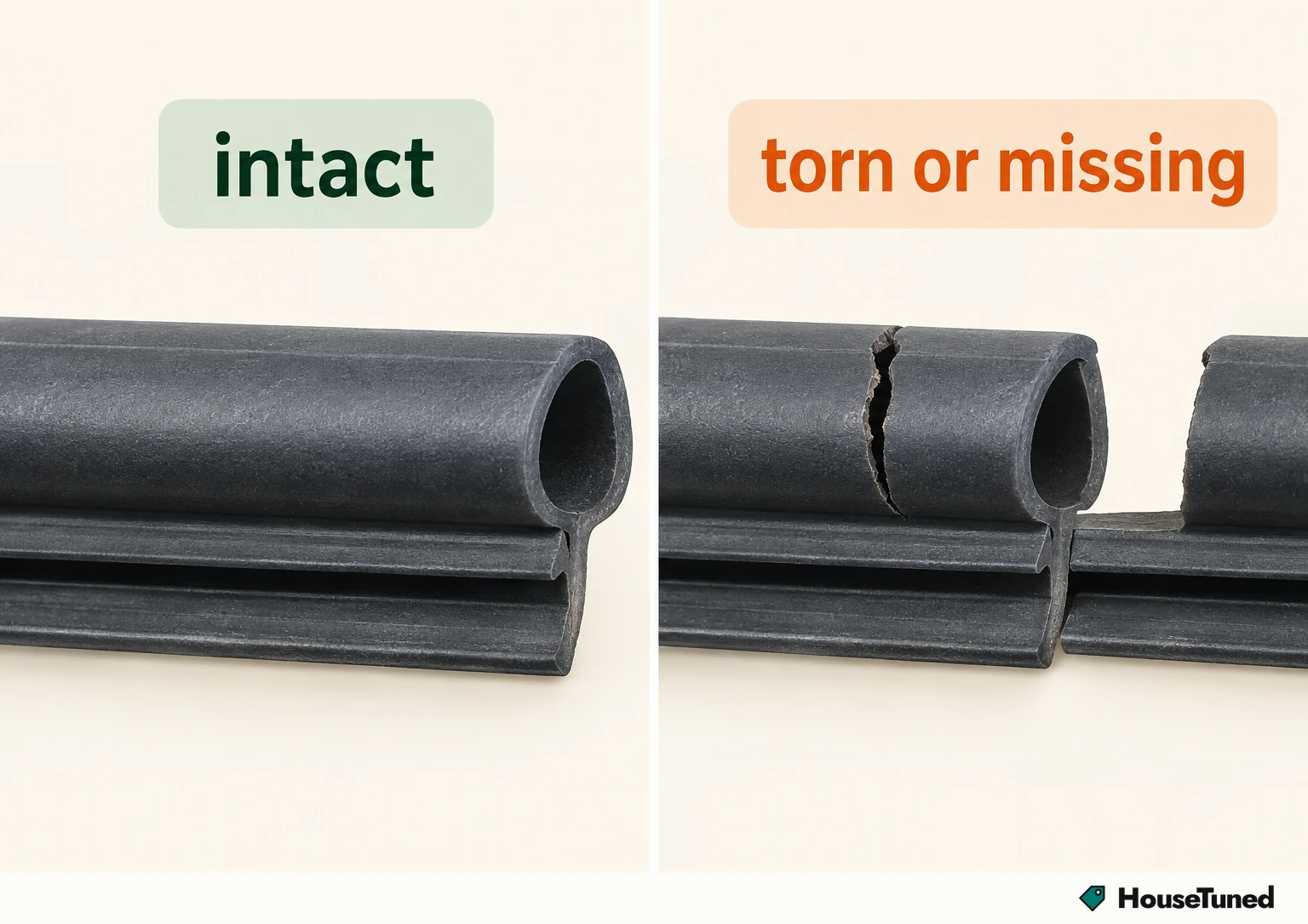
After cleaning, reseating or correcting the load, the door should close evenly and the supervised test below should stay dry. If water returns, a torn or flattened seal points to seal replacement; an even seal with a blocked spray hole, damaged arm or obstructing dish points to the spray direction instead. Our guide to a dishwasher leaking from the door seal explains how to identify the affected seal.
If the cabinet under the sink is wet
This is an owner check only for the dishwasher's supply and drain connections you can reach under the sink. Keep water and power off while handling a connection. A split hose behind the built-in machine, exposed wiring or water coming from its base ends the exterior work.
- Use a flashlight and dry paper towel to find the first wet fitting. Look at the supply line and its fittings, then the dishwasher drain hose where it joins the sink plumbing. A towel that becomes wet at one joint gives you a place to repair.
- If the drain connection is wet and the hose is sound, place a towel and shallow container beneath it. Seat the hose fully on the fitting and tighten its loose clamp with a screwdriver or nut driver.
- If the hose end under the sink is visibly split, leave the water and power off. The whole hose needs replacement, including its connection at the dishwasher; releasing the sink-side clamp alone won't complete the repair. Access that requires pulling the built-in unit or removing a cover ends the exterior work. Preserve the existing high-loop or air-gap route. For Bosch installations that use a high loop, its top is commonly at least 33 inches above the floor; confirm the height for your E-Nr. in the Bosch installation instructions (opens in a new tab) before changing the route.
- Dry a repaired connection. Once the fault at that joint is corrected and wet electrical areas are dry, restore water and power for the supervised test. The fitting should stay dry during draining. If it wets again, stop the machine.
If the first wet joint is the dishwasher's supply-hose fitting, keep its valve closed and dry the coupling, shutoff body and fixed pipe separately. A loose coupling needs tightening without overtightening; a worn seal or damaged hose needs replacement. Once that joint is repaired, restore the water and watch the dry fitting while the dishwasher fills. Fresh moisture means close the valve again. A leak from the shutoff body or fixed pipe is a household plumbing repair.
A high loop or air gap keeps drain water from flowing back toward the dishwasher. Preserve the drain route your Bosch installation uses.
How to tell whether it stayed dry
Test after you've corrected a door or under-sink connection problem and any wet electrical area has dried. Dry the floor and visible connections first so fresh moisture is easy to spot.
- Restore the dishwasher's water supply and power. Watch a supervised cycle as it fills, washes and drains, keeping an eye on the door, floor and under-sink connections.
- After the cycle, touch a dry paper towel to the same visible fittings and inspect the floor again. Look there again while the machine is idle.
- A dry result, no returning leak warning and a drain pump that stops normally support the repair. If fresh water or a warning returns, stop the cycle, close the water valve and record the first wet place and the cycle phase.
If the leak returns, what might the repair cost?
A recurring leak-protection warning, continuous protective pumping, fresh water beneath the machine or a repair requiring removal of the built-in unit ends the owner checks. The source in the base must be found before replacing an inlet valve, pump, sump or internal hose.
| Quoted work | Price | What it includes |
|---|---|---|
| Independent leak diagnosis, built-in dishwasher | $100 to $150 | One visit without an authorized repair. |
| Independent drain-pump replacement, built-in dishwasher | $110 to $260 | A pump and one to two billed labor hours. |
| Standard entry-tier built-in replacement | $990 to $1,760 | New unit, hookup kit, installation and old-unit removal. |
The price for accessible Bosch drain-pump replacement, common factory part includes the common Bosch drain pump at $39 to $56.
A seal or hose bought alone is a part price, while an installed total includes labor. Independent shops bill one hour for an accessible seal, hose or valve repair and one to two hours for pump or sump work at $70 to $100 an hour. Shops may mark parts up over retail, so the parts line on a quote can be higher.
Bosch's US limited warranty covers the entire dishwasher, parts and labor, for one year under its terms. For an older machine outside warranty, compare the written repair total with the installed cost of a comparable replacement; a major repair near half that replacement cost is a point to reconsider. Ask whether the diagnostic fee is credited if you authorize the repair.
For a leak-protection warning, call Bosch Customer Support at 1-800-944-2904 or a Bosch-authorized appliance technician. Give them the E-Nr. and FD numbers, the code or pump behavior, the first wet location, the cycle phase and what you already cleaned or tightened. If the leak is in household plumbing beyond the dishwasher connection, call a plumber.
Will resetting E15 or tipping the dishwasher fix the leak?
No. Emptying or drying the base can silence E15 temporarily, but the switch responds again when water returns. Tipping a built-in unit doesn't repair the source. Keep the water off until that source is corrected and a supervised full cycle stays dry.
How can I stop it from leaking again?
Keep the door edge clean, give the spray arms room to turn and use automatic dishwasher detergent at its package dose. After the machine is moved or serviced, look for new moisture at the supply fitting while idle and the drain connection during draining; a returning E15 means the remaining leak needs to be found.
More in this category