What happens when the tank fills?
- If the hiss ends when the tank finishes refilling, you're hearing water move through the fill valve.
- If it continues after the tank fills, watch for water entering the overflow tube.
- If it starts again without a flush, check the flush seal and the small refill tube.
- If you see water outside the toilet, stop the tank checks and arrange repair for the external leak.
Watch one refill from the moment you flush until the tank reaches its full level. We'd do that before choosing a part, because the fill valve should shut off at the right water level, while a continuing hiss means water is still passing through it. A sound that stops with the refill gives you a different next step from one that carries on or returns later.
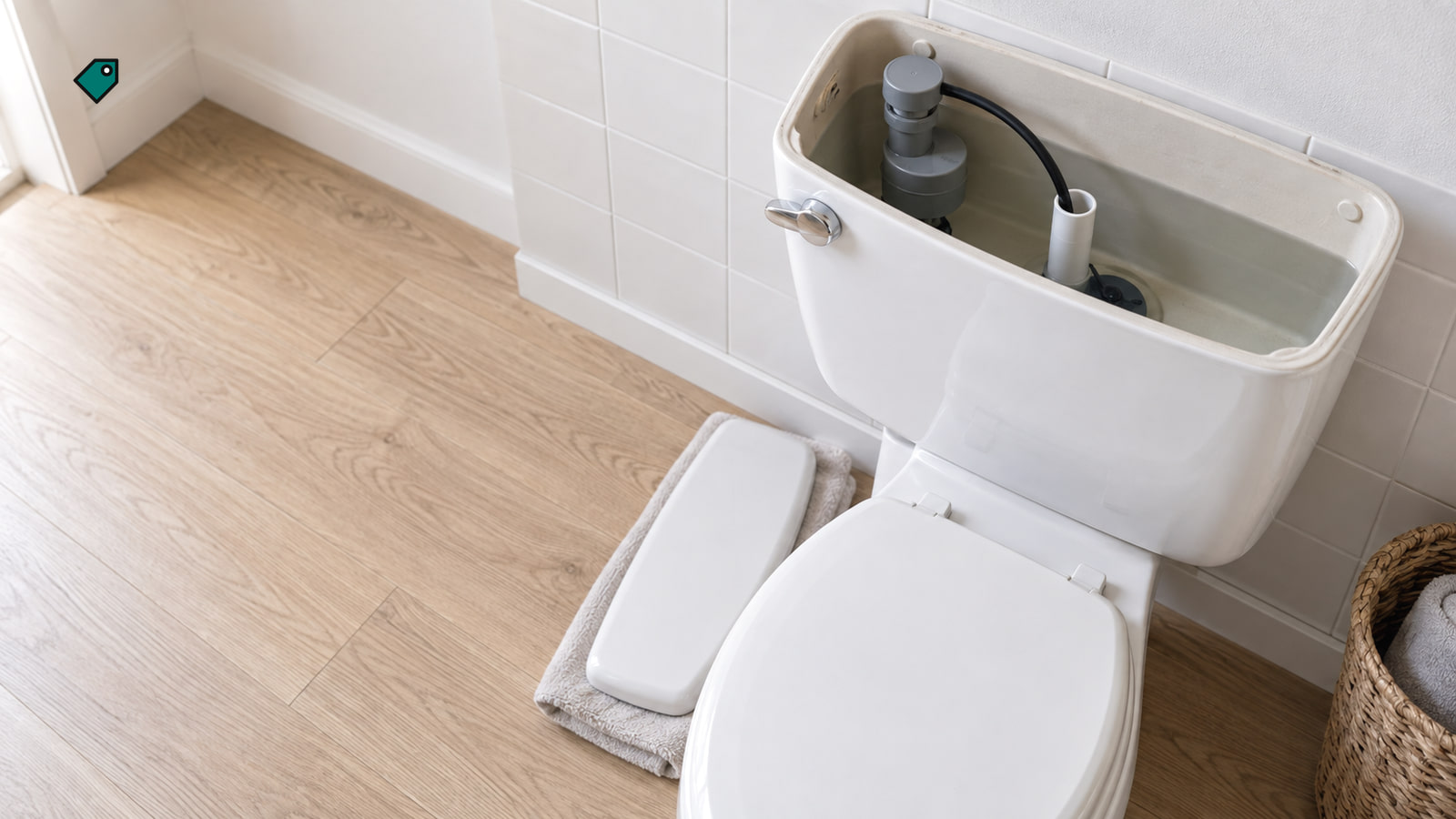
With the tank lid lifted, note whether the sound stops, whether water goes into the overflow tube, and whether the valve starts filling again without another flush. Check the floor and toilet exterior as well. Water outside the toilet points to an external leak that needs repair, while a dry exterior lets you follow the tank checks below.
The hiss keeps going after the tank fills
Look into the overflow tube as the tank approaches its full level. Water spilling into it points toward a water level set too high or a fill valve that isn't shutting off fully. If the flow stops after spilling into the tube, the tank water level needs attention.
On Kohler one- or two-piece toilets, continuous filling can also show up as a slight ripple in the bowl. A binding trip lever arm or debris under the fill-valve cap can keep water running. If water enters the overflow and then stops, the water level needs adjustment; if the toilet still runs after its fill valve has been flushed, the recommended next repair is a replacement valve matched to the toilet model.
Check whether the chain is catching on the trip lever arm as the tank fills. On the Kohler arrangement, roughly one to two links of slack keeps excess chain from catching. Korky's stated water-level target is 1/2 inch below the top of the overflow tube; use your toilet's instructions for its adjustment control.
The hiss returns between flushes
Water escaping from the tank into the bowl can make the fill valve open again to replace it. Inspect the flapper or flush-valve seal for wear, and see whether the chain holds the flapper open or lies across the drain opening. A worn seal points to seal replacement.
Look where the seal meets the flush-valve opening. Mineral deposits or damage there can interfere with the seal, so include that surface in your check before choosing a replacement part. A chain caught at the opening is a different problem from a worn seal: move it clear and leave enough slack for the flapper to close.
The small hose sits below the waterline
Follow the small refill tube to its end. If it has been pushed down into the overflow pipe, pull it out and clip it to the pipe's edge. A hose end below the tank waterline can siphon water into the bowl, lowering the level until the fill valve starts again.
On a Kohler tank without a canister flush valve, a missing clip can leave the hose too low. Clip part 51261 holds one end at the hose and the other at the tube's edge. If you use a paperclip temporarily, replace it with a stainless steel or copper clip as soon as possible because the paperclip can corrode quickly. You can check the hose placement steps (opens in a new tab) for that arrangement.
On a Kohler tank with a canister, the hose instead connects to a port at the top of the flush valve. If it has come loose and its end sits below the waterline, reconnect it to that port. A slow siphon through a misplaced hose can explain a refill that starts again after a quiet stretch.
Choose the repair the water path points to
Let the observed water path guide the repair: a worn flush seal points to seal replacement, while a tank that spills into the overflow calls for its water level or fill-valve shutoff to be addressed. If the chain, seal, flush-valve opening and water level check out but the hiss continues, fill-valve replacement is the next recommended action.
Korky says a worn flapper or flush-valve seal most often causes hissing and also calls fill-valve replacement usually the best fix. Its hissing sequence checks the seal, chain, opening and water level first, then recommends replacing the fill valve if the sound continues. Use the checks you've made to decide which repair to arrange.
Listen for the refill to end
After correcting a misplaced hose or chain, flush once more and watch the refill. The fill valve should refill the tank and bowl, then shut off when the water reaches the right level. Listen between flushes too: the result you want is a full tank that stays quiet without starting another refill on its own.
More in this category