Moisture can be present without a puddle
- LC means the dishwasher detected moisture where it shouldn't be. A visible puddle isn't required.
- Before the physical checks below, disconnect power or switch off the dishwasher's circuit breaker.
- Check the visible hoses, door gasket, spray nozzles and detergent use. Recent movement also matters.
You can have a dry kitchen floor while the dishwasher's sensor detects water elsewhere. We'd begin with visible hose and door-gasket checks because they address places water can escape without taking the appliance apart.
Minor moisture buildup and misaligned components are possible explanations for the warning. LC reports moisture detection, not a particular failed part, so use what you find during the checks to guide the next decision.
There are two useful threads to follow: signs of water escaping and conditions that can contribute to moisture detection. The first includes hoses and seals; the second includes detergent residue and water splashed near the sensor after movement.
Use the guidance for your model
Use your model's user manual alongside these checks. Samsung's UAE guidance for LE and LC errors (opens in a new tab) says its troubleshooting applies to most Samsung dishwashers, including the DW80K, DW50R and DW80N series.
Those series are examples within Samsung's stated coverage. The practical instruction for you is the same whether your series appears in that list or not: refer to your own model's manual for specific guidance before working through the checks.
Keep this job to visible inspections and cleaning you can do without disassembly. Removing panels, reaching underneath to access the sensor and repairing internal components are outside these owner checks; leave the dishwasher assembled as you work through them.
Look along the hoses, not only their ends
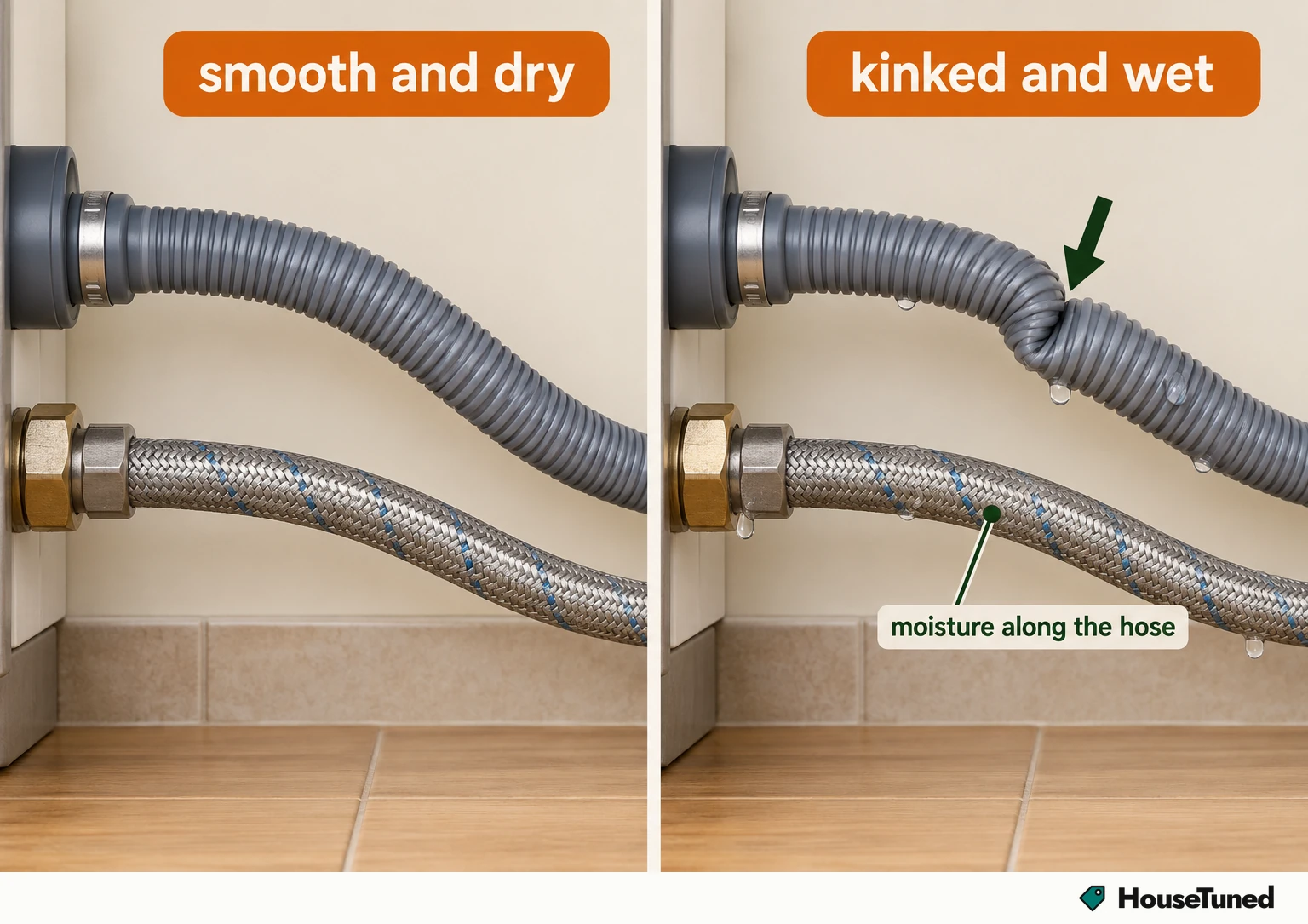
With the power disconnected, look at both the water supply hose and the drain hose. Check for leaks, kinks and loose connections, and look for moisture along each hose's length, including the visible sections between its connection points.
Give the hose itself and its connections separate attention. Looking only at the ends can leave part of the inspection unfinished: Samsung's check includes moisture along the entire length as well as loose connections.
Keep your findings specific. A wet section of hose, water at a connection and a kink are different observations; note which hose you're looking at and where you see the problem so you can describe it accurately if you need help.
This is an inspection, so keep hose connections in place. If the accessible sections look dry, continue to the door gasket and spray nozzles, which address other possible routes for water to escape.
The door seal needs a close look
Examine the rubber gasket around the door for debris and sections that sit out of alignment. Look at both its cleanliness and its position: gaps in a door or tub seal can allow water to escape.
If the door gasket needs cleaning, use a damp cloth and mild soap. Samsung's door-gasket guidance (opens in a new tab) pairs that cleaning method with the check for debris and misalignment.
After cleaning, look again at the area you worked on. The useful observation is whether you removed the debris and whether any section still appears out of position; cleaning and alignment are separate parts of this check.
Keep this step to cleaning and observing the gasket. If you see a gap or a misaligned section, record its location rather than expanding the job into seal removal or replacement.
Food particles can send water toward the seal
Food debris in a nozzle can redirect water toward the door seal. That makes the spray system relevant even when the gasket itself looks clean and you haven't found a wet hose.
Remove food particles from the spray arms and nozzles, keeping the work to accessible cleaning without disassembly. The purpose is to prevent uneven water distribution, so include the spray openings in your inspection as well as the arms.
A clean gasket and clear nozzles address different concerns. The gasket check looks for debris or misalignment at the seal; clearing food from the nozzles addresses water being directed toward that seal. Both belong in the checks before you move on to detergent use.
Check how you're using the dispenser
Review how you've been filling the detergent dispenser as part of these powered-off checks. Avoid overfilling it, and make sure you're placing detergent correctly for your model.
Excess detergent residue matters because moisture associated with it can trigger the sensor. You therefore have a useful check to make here even if the hose inspection and door-gasket cleaning haven't revealed water escaping.
Treat amount and placement as two separate questions. Check whether you've been filling the dispenser too far, then compare where you put the detergent with your model's instructions. Correct placement still matters when you haven't overfilled the dispenser.
Use the dispenser guidance for your own dishwasher to make that comparison. The change to carry into your detergent routine is a correctly filled dispenser with detergent in its intended place.
Was the dishwasher recently moved?
Think back to whether the dishwasher was recently moved. Water may have splashed near the sensor during movement, which gives you another possible explanation when the visible checks haven't turned up a leak.
For that situation, allow the moisture to dry while the dishwasher remains disconnected from power. Samsung's recent-movement advice (opens in a new tab) expressly offers allowing it to dry as an option.
Keep this passive: leave the appliance assembled and let the moisture dry. This branch is tied to recent movement, so include that history when considering what happened before the warning appeared.
A persistent code is the point to call Samsung
If LC persists after these checks, contact Samsung Support or schedule a service visit. Samsung identifies a persistent LE or LC error as a condition that may require professional repair, including when the owner checks haven't revealed the cause.
When you request help, give your model and the LC code, then describe your findings in plain terms. Mention the location of any hose moisture or gasket gap, and distinguish what you saw from what you cleaned or changed.
Include food particles you removed, any dispenser overfilling or placement issue you noticed, and whether the dishwasher was recently moved. Those details give Samsung a concrete account of the checks you've completed instead of only saying that you couldn't find a leak.
More in this category