Two similar names describe different heating methods
- A conventional oven uses top and bottom heating elements, without a fan circulating hot air around your food.
- First, separate what the oven can do from the mode it's using. Many convection ovens also cook conventionally.
- Convection adds circulating air. True convection adds a third heating element as well.
If you've seen both names attached to the same appliance, we'd begin with the cooking method, because many convection ovens function conventionally until convection is activated. That explains the apparent overlap: an oven can have convection available without using it for every dish.
“Regular” and “traditional” are other names for conventional ovens. You may also encounter “thermal” or “radiant,” which describe the same category rather than additional oven types you need to distinguish.
The useful comparison is how heat reaches your food. Conventional heat comes from the elements without fan-driven cooking-air circulation, while convection moves hot air through the cavity. That difference affects where dishes cook fastest and the kinds of finishes the oven can help produce.
The upper and lower elements do different jobs
The lower element supplies the primary heat in a conventional oven. The upper element delivers intense heat downward, so the two elements have different roles even though they're part of the same cooking cavity.
Whirlpool's explanation of conventional heat (opens in a new tab) connects the bottom element with roasting large cuts of meat, including turkey and whole chickens. It connects the top element with broiling and browning casseroles. Those examples explain how a conventional oven supports more than one kind of cooking.
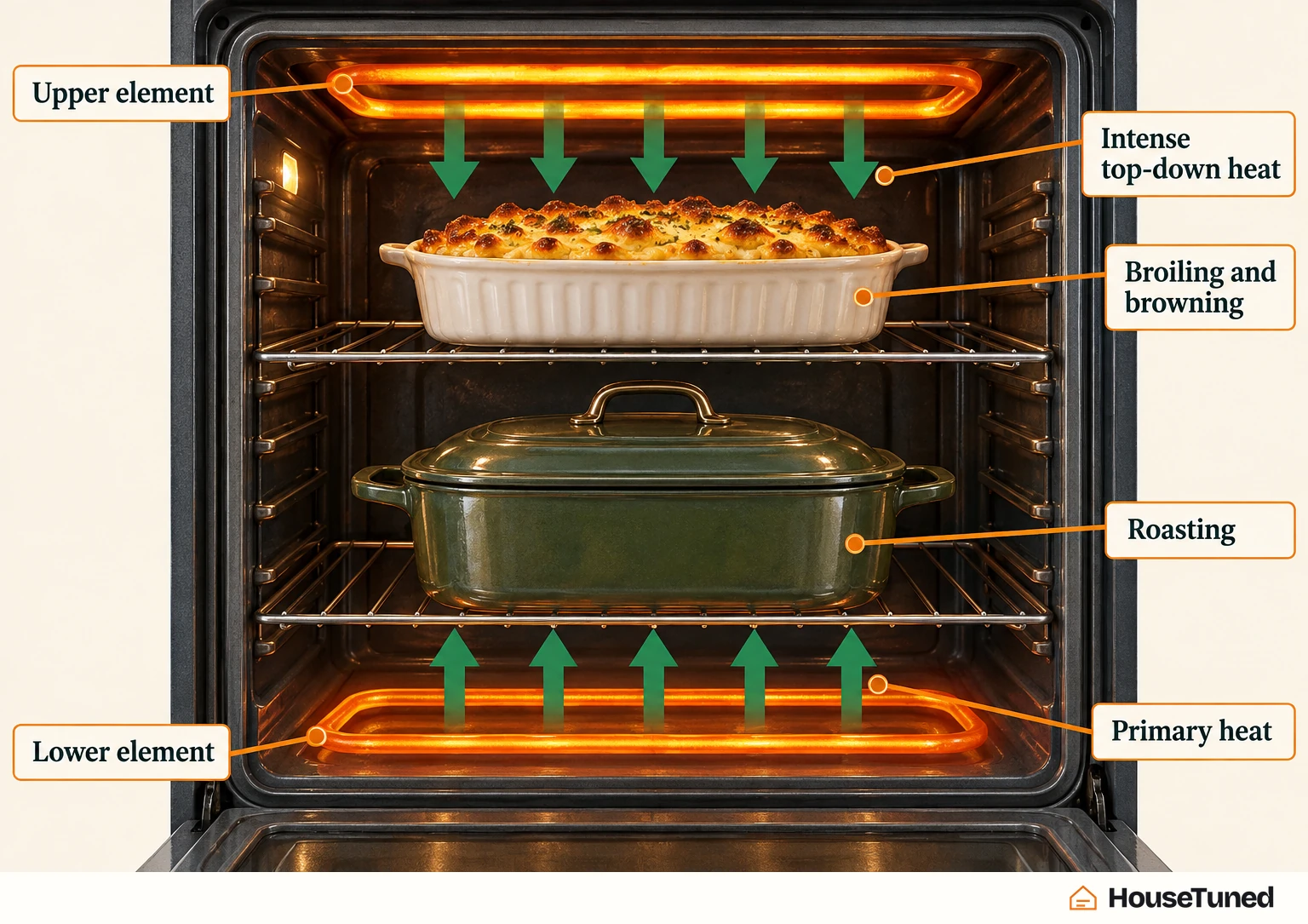
A browned casserole top, then, isn't a result exclusive to convection. Conventional cooking already has intense heat from above available for that purpose. The difference is in how the heat is delivered, with convection bringing circulating hot air into the comparison.
When you read that conventional ovens have “no fan,” keep the phrase attached to cooking-air circulation. The defining feature is the absence of a fan distributing hot air around the food during conventional cooking.
Why different racks can give different results
A dish nearer an active heating element may cook faster than one farther away. That's why position matters with conventional heat: two dishes in the same cavity can experience the heat differently, even though they share an oven.
Convection retains the upper and lower elements and adds a fan that circulates hot air throughout the cavity. That movement can help dishes on different racks bake at a similar rate. The benefit is especially relevant to the comparison between one rack's results and another's.
Picture two dishes at different heights. With conventional heat, closeness to the active element can favor one dish. With convection, circulating air helps spread the cooking heat between those positions, which is the reason behind the claim of more even multi-rack results.
Maytag's explanation of heat distribution (opens in a new tab) connects that circulation with less need to rotate dishes between racks. It's a practical consequence of moving the hot air, separate from whether a particular food cooks faster overall.
True convection adds another heating element
The extra hardware behind “true convection” is a third heating element working alongside the fan. Whirlpool describes that combination as distributing hot air evenly over, under and around food to help it cook faster.
Whirlpool's wording differs within its convection comparison (opens in a new tab). Its overview says some convection models have a third element at the back of the cavity, while another paragraph describes convection categorically as using a third element, fan and exhaust system.
We'd use the more specific distinction when interpreting those names: convection identifies fan-circulated cooking heat, and true convection identifies the added element. That keeps the overview's “some models” qualification intact and fits Whirlpool's separate description of true convection.
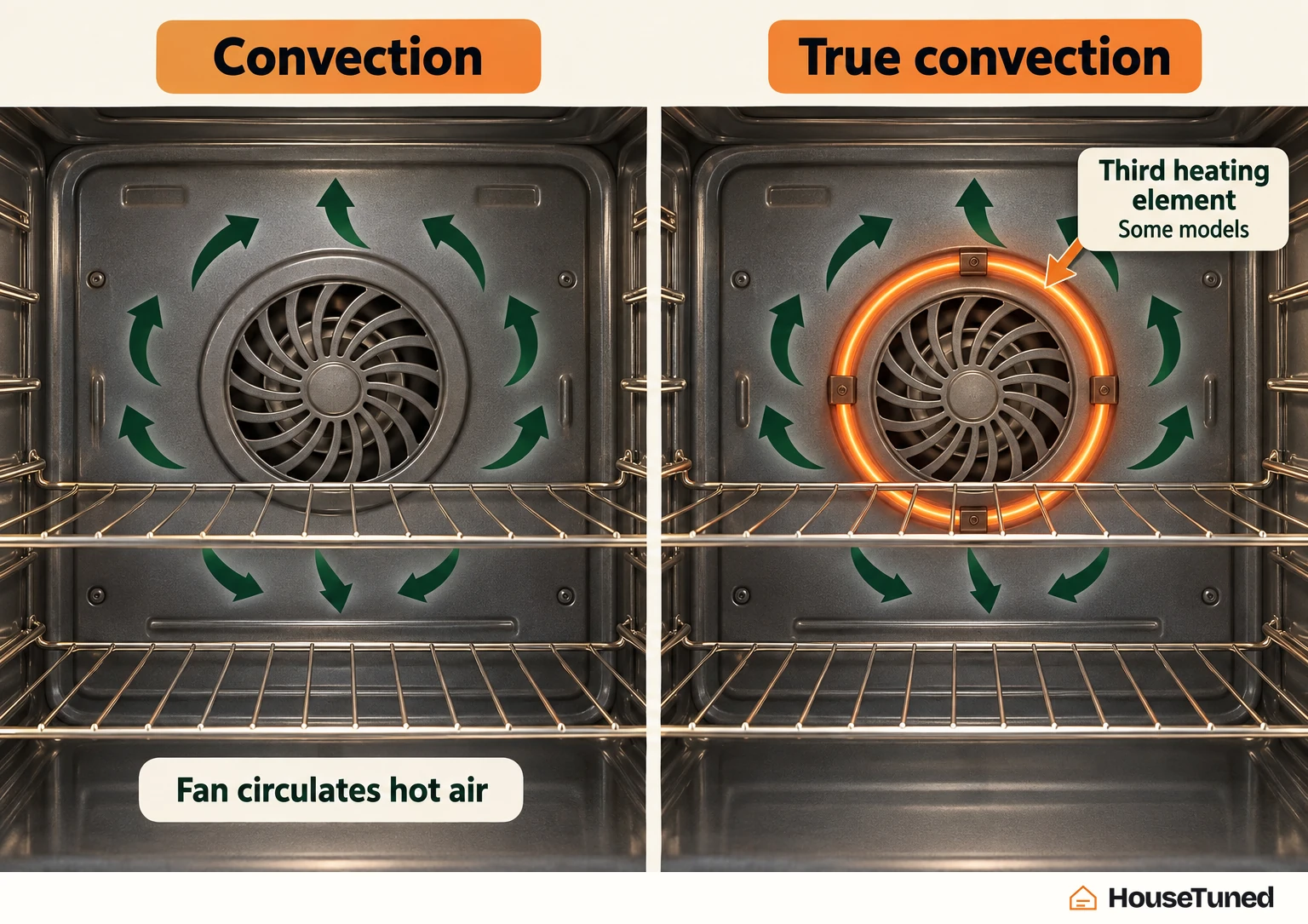
Maytag also identifies true convection as one type of convection oven. Its alternative names are “European convection” and “third-element convection.” If you're comparing those descriptions, they refer to the additional heating element alongside the fan, rather than three separate kinds of cooking technology.
Gas and electric are a separate distinction
Both conventional and convection ovens can be gas or electric. The fuel description and the cooking-air description answer different questions, so “electric” and “convection” can both describe the same oven.
Likewise, a gas oven can belong to either category. In Maytag's comparison of oven types (opens in a new tab), the distinction remains the fan and exhaust system circulating hot air, with models offering different features within that category.
This helps untangle a longer appliance description. Gas or electric describes one aspect of the oven, conventional or convection describes its approach to cooking heat, and true convection identifies the added third element. Those terms can work together without describing competing appliances.
The benefits include texture as well as speed
Rapid air circulation can help produce crispy, caramelized and browned finishes. Whirlpool says convection can also cook some dishes faster, keeping that speed advantage tied to the food rather than making it a promise for everything you put in the oven.
For baked goods, Whirlpool gives pie crusts and chocolate chip cookies as examples (opens in a new tab). Convection's intense heat may help create a flaky crust on a pie or a crisp outer edge on a cookie. Those examples describe particular textures, not a single preferred result for all baking.
Evenness, speed and browning are different benefits. Evenness concerns how dishes compare across rack positions. Speed concerns how quickly a dish cooks, while browning and crispness concern its finish. A food can make one of those differences more useful to you than the others.
Still heat has a place with delicate batters
Delicate cakes and pastries with liquid batters can benefit from a still cooking environment. That's the reason Whirlpool gives for conventional ovens sometimes being preferred for those foods.
The comparison with a crisp cookie edge helps explain why there's no single baking winner. A cookie's appealing outer texture and a delicate batter's preferred cooking environment are different considerations. More intense, moving heat may serve the first result while still heat may suit the second.
The preference is qualified, rather than a blanket ban on convection for desserts. Whirlpool says convection may not be ideal for all baked goods and conventional heat may be preferred for these delicate examples. That leaves room for the food and the desired result to matter.
Capability and cooking mode aren't the same thing
Many convection ovens function as traditional ovens until convection is activated. In that arrangement, the appliance has both capabilities, while the cooking mode determines which method is being used for a particular dish.
There can also be a distinction between separate cavities. Maytag describes a double oven range with one thermal oven and one convection oven (opens in a new tab). That's a different arrangement from having both methods available within one cavity, and it shows why the terms can appear together in an appliance description.
Whirlpool describes dual-mode availability as a feature of many convection ovens, so keep that qualification when interpreting the category. For your own oven's description, distinguish the capability being advertised from the cooking method being named: conventional describes heat without fan circulation, while convection describes the circulating-air option.
More in this category