Let the water's location narrow the cause
- First, identify where the water appears and whether it follows ice dispensing, water dispensing or neither.
- Ice residue in the chute and a seal gap that lets ice melt can cause dispenser drips.
- Some models have separate water-line or dispenser checks, so match your model before proceeding.
- A frozen bucket or an ice maker covered in a sheet of ice needs service.
If you've found water below the dispenser, we'd check its location and timing before choosing a fix, because melted ice and water-dispenser drips follow different paths. For the ice-chute branch, residue and an air gap are useful starting points because Samsung connects both to dripping and provides visible checks.
Look at where the water first appears: at the ice chute, at the water dispenser, or elsewhere in the refrigerator. Water below the drawers, around the filter or under the fridge belongs to a different leak branch. A pool inside the compartment can also come from condensation or an unnoticed spill.
Use Samsung's US refrigerator leak guidance (opens in a new tab) to match that location. Keep the distinction between water escaping from the ice maker and ice melting into the dispenser: the second can happen when the chute seal lets warmer refrigerator air into the ice compartment.
A few drops after filling a glass
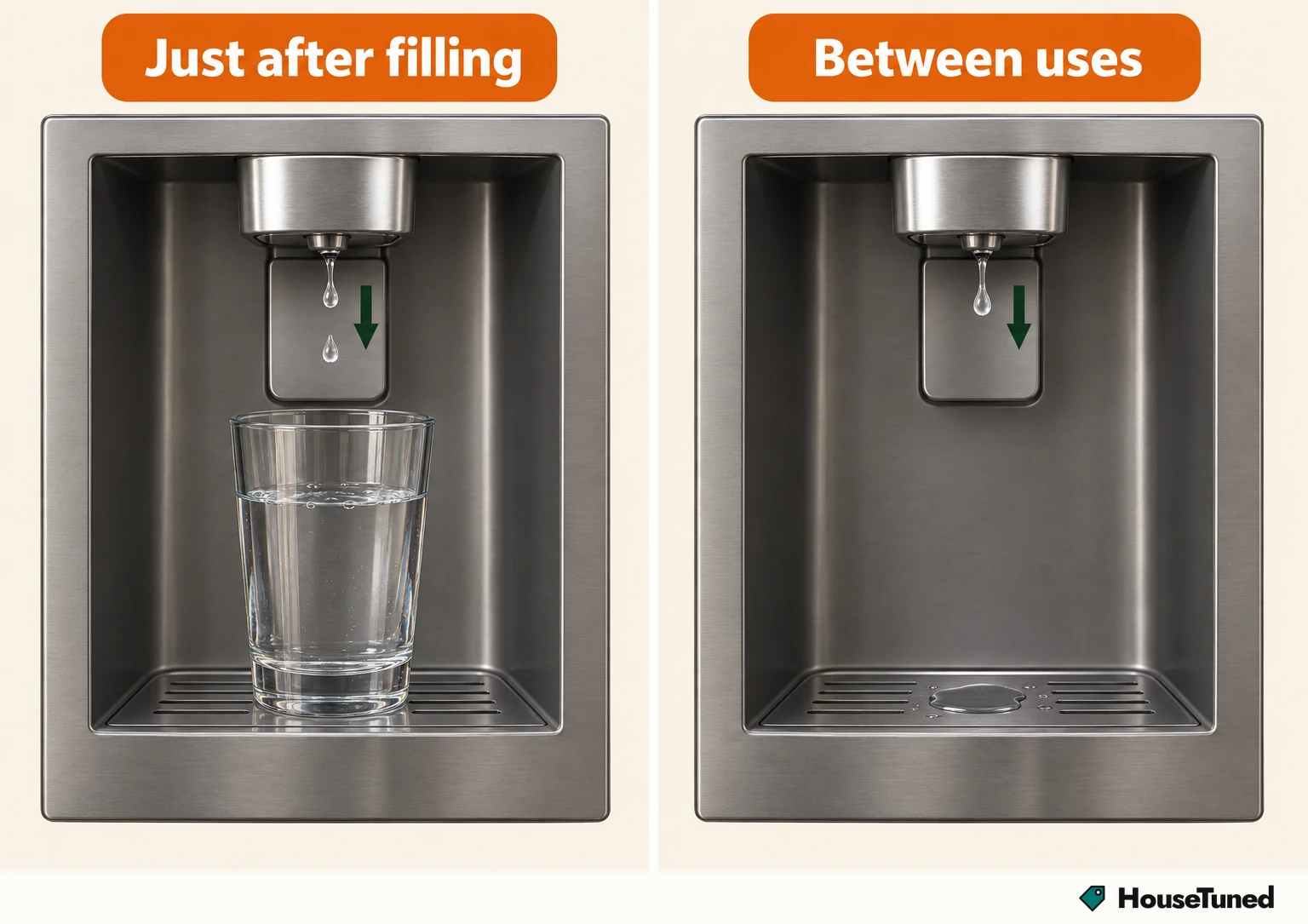
A couple of drops immediately after you fill a glass can be normal. Samsung describes a few seconds of dripping after water dispensing and recommends keeping your glass underneath for about 3–5 seconds after the flow stops to catch those drops.
That timing matters: water appearing just after you release the dispenser is a different observation from water appearing while nobody is using it. When describing the problem, say whether it follows a glass of water, accompanies ice dispensing or continues between uses.
There's also a separate instruction for refrigerators with both an Autofill pitcher and a dispenser. Samsung says these models have an extra valve to prevent dispenser leaks and directs you to request service through its Support Center if the dispenser leaks.
For that pitcher-equipped configuration, we'd follow the specific service direction because it addresses your refrigerator's water system. Samsung's US guidance (opens in a new tab) gives both that instruction and the general normal-drip guidance; the brief-drip statement doesn't cancel the pitcher-equipped model's service direction.
RS27T and RS22T water and ice functions act swapped
On RS27T and RS22T models, two crossed water lines can swap the water and ice functions. The telltale combination is water leaking from the ice maker when you try to dispense water, and water coming out of the dispenser when the ice maker tries to make ice.
This is a model-specific example with a useful installation clue. If you have one of these models and the dispenser hasn't worked since installation, Samsung identifies the two water-line connections as a check. The combination of your model, the swapped behavior and when it began is the useful information to report.
Correcting the connections resolves this crossed-line issue. Ask Samsung support for help with that correction and describe the swapped functions using its US leak guidance (opens in a new tab). Keep your own check to the model and observed behavior, leaving water-line reconnection and concealed access to service.
A beverage-center nozzle is missing
For RF30BB, RF29BB, RF24BB and RF23BB models, look at the ceiling of the beverage center. The water dispenser should have a nozzle projecting downward from it. This gives you a specific visible item to check when water at the beverage center has you looking toward the ice maker.
If that nozzle is missing, contact Samsung for a replacement through the contact option in its US leak guidance (opens in a new tab). Give Samsung your model and say that the beverage-center dispenser nozzle is absent, so your request identifies the part and location.
Clear residue from the chute
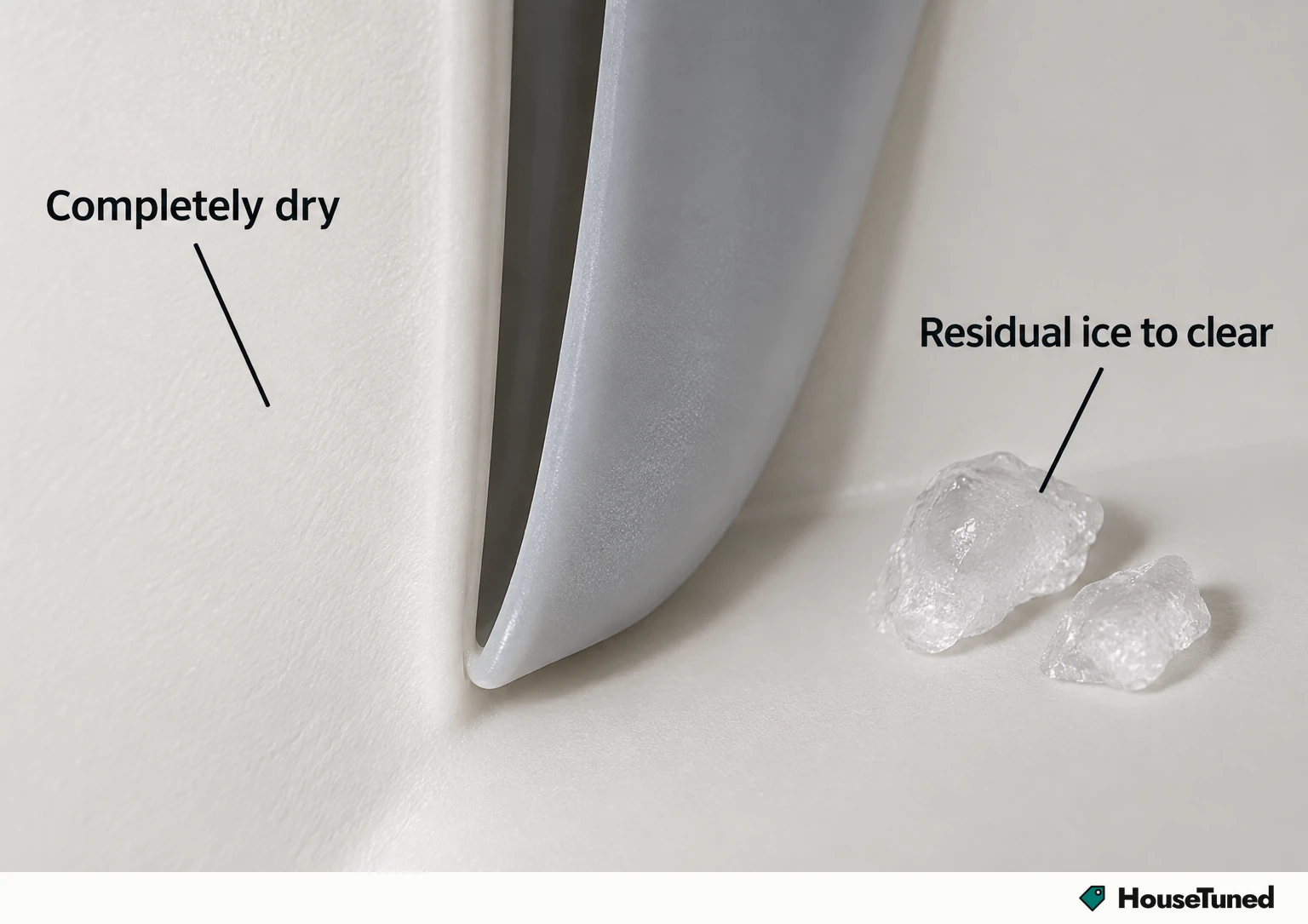
For dripping associated with the ice chute, clean the chute and its seal. Ice buildup or leftover ice in that passage is one of Samsung's documented dispenser-drip causes, so clearing residue addresses something directly connected to this symptom.
Finish with all residual ice cleared from the chute and the chute completely dry. Those are the visible completion checks in Samsung's US cleaning guidance (opens in a new tab): look for remaining ice and moisture before considering this cleaning step finished.
Keep chute cleaning separate from thawing a frozen assembly. Samsung's US frozen-ice guidance (opens in a new tab) provides the Support Center route for those frozen conditions, which take you beyond the residue-cleaning check.
Look for a gap against the ice bucket
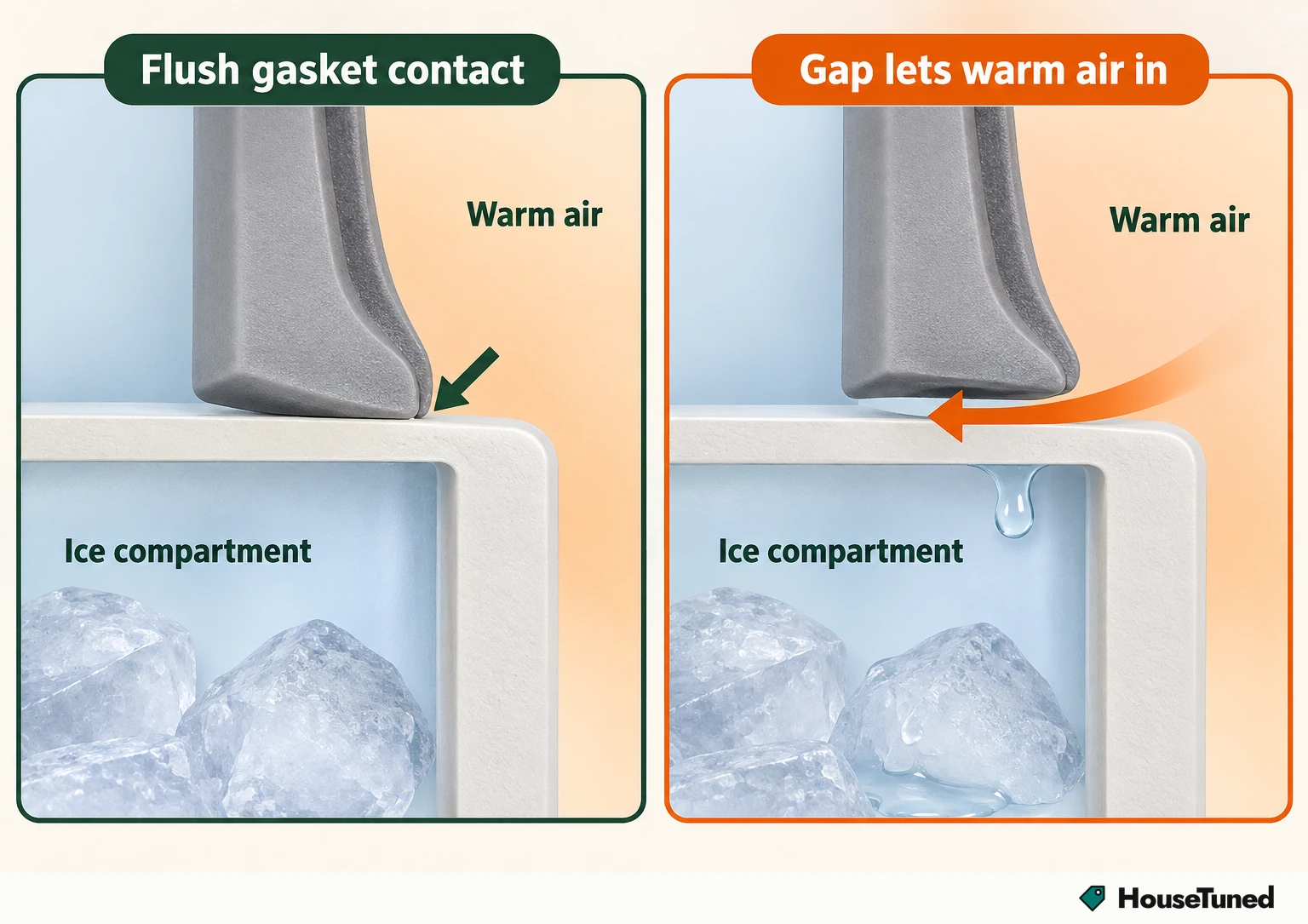
If your refrigerator has the ice maker and chute attached to the left door, open the right-side door and look across at those parts. Check where the gasket meets the ice bucket. It should sit flush against the bucket, with no gap between them.
A gap lets warm air from the refrigerator enter the ice maker compartment. That air melts ice, and the resulting water can drip from the dispenser. This explains why the seal where the chute meets the bucket matters even though you notice the water outside at the dispenser.
If you see a gap, Samsung directs you to its refrigerator-leveling guidance. Follow that referral from the US leak support page (opens in a new tab). The result you're looking for at this inspection is flush gasket contact; the visual check itself doesn't require removing the bucket or replacing the gasket.
The dripping began after installation or a filter change
If the water-dispenser dripping began after a filter replacement or a new refrigerator installation, trapped air in the water line is another documented possibility. This explanation belongs to the water-dispenser branch, so include that recent change when you describe the leak.
Keep the two observations together: where the water comes out and what happened before it started. Samsung's US leak guidance (opens in a new tab) identifies those installation and filter-change circumstances for trapped air, while the chute checks address ice residue and sealing.
The dispenser keeps dripping between uses
If the dispenser still drips while it's idle, or its water stream continues to sputter, request service through Samsung's Support Center. You can reach that service referral from Samsung's US refrigerator leak guidance (opens in a new tab). Continued idle dripping is the practical handoff point after the applicable basic checks.
When you contact support, give your model and describe the location and timing of the water. Include whether you found chute residue or a gasket gap, and whether the problem began after installation or a filter change. Report what you observed so the next check follows your refrigerator's symptom.
More in this category