The Pressing Is the Easy Part
A juicer does not earn its place with one good glass. It earns it on an ordinary weekday, when the choice is between making juice and not bothering. So the useful question about the Nama J2 is not how well it presses, which is very well, but what it asks of a household across a week.
For four weeks this spring the white J2 was used every single day, more than anything else on our counter. By the third week we would load the hopper, close the lid, turn the knob and go and pack the children's bottles or pour coffee while it worked. The rest of the routine happens where the machine cannot help: the prep Nama asks for, the sink and the fridge. Those three decide whether you juice every morning or in batches.
- Tested
- Four weeks of daily juicing, April to May 2026
- Pressing time
- Three to four minutes for a full green juice recipe
- Juice per load
- 20 to 30 ounces, depending on the produce
- Rinse time
- Two to three minutes if done at once
- Keeps
- Up to three days, refrigerated and sealed, per Nama
- Size
- 17.7 inches tall, 12.1 pounds
The pressing and rinsing times are ours, from those four weeks. Everything credited to Nama comes from its manual, guides and product pages, and the food-safety points come from the FDA.
It Wants a Permanent Spot, Clear of Low Cabinets
Start with where it lives, because a juicer kept in a cupboard is easy to stop using. The J2 is 17.7 inches tall and 12.1 pounds, and Nama's manual says to move it by the base with both hands, since held by the chamber the base can drop. Ours stayed on the counter all month, and the design suits that.
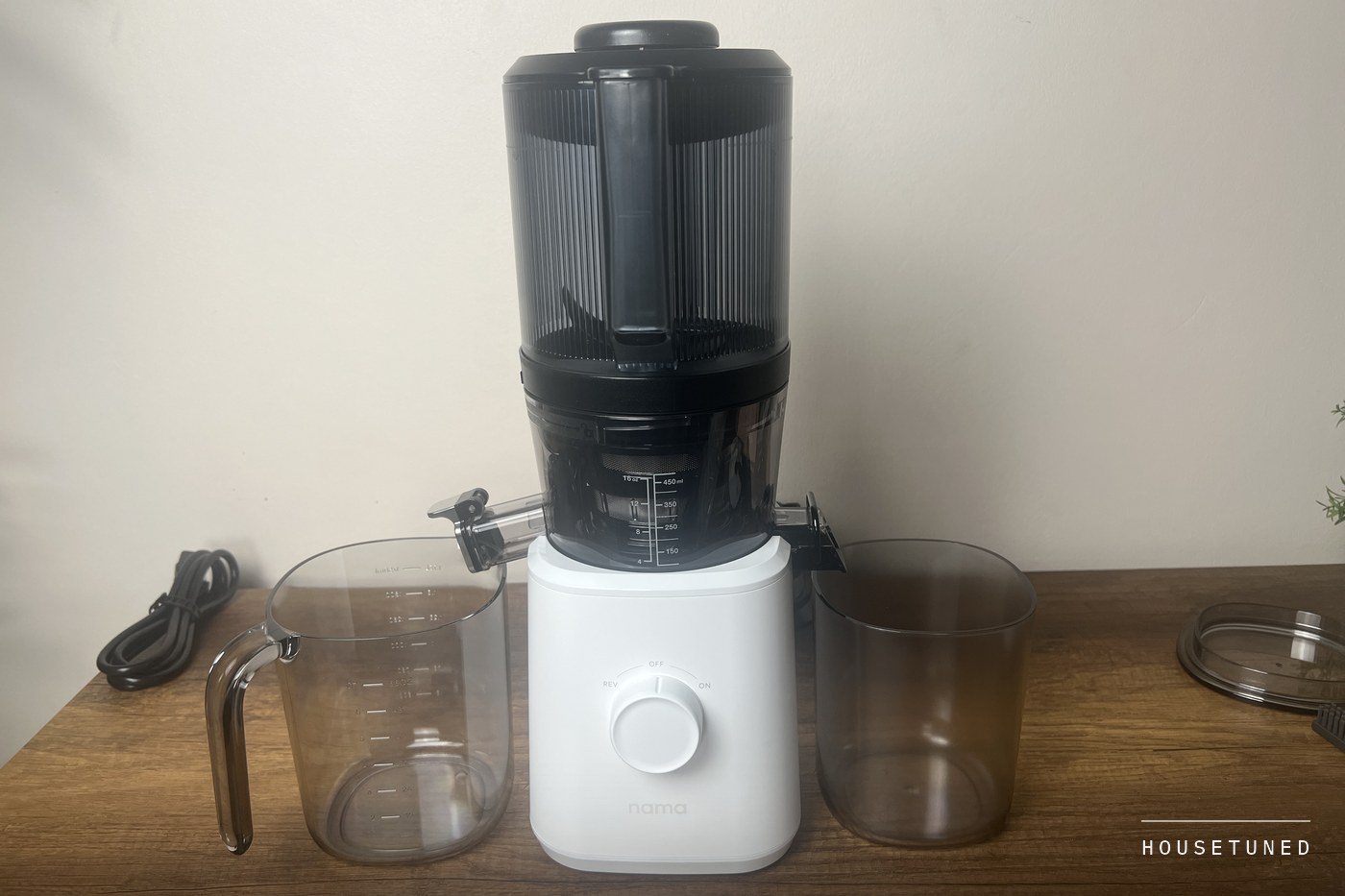
Kitchen planning guidelines count counter space toward a kitchen's recommended total only where it has at least 15 inches of clearance above, and the J2 is nearly three inches taller than that. Under cabinets hung near that minimum it will not fit at all. It also needs room above to open the hopper lid and to lift the chamber set off the base for cleaning, so where it only just slides under, expect to pull it forward every time.
The standard detachable cord plugs into the back of the base, so nothing juts out behind, and our white J2 sat flush against the wall. Keep the base dry and clear of splashes, as the manual asks, and leave elbow room for the juice and pulp containers, which sit under two separate outlets.
The Knife Work Comes Before You Turn the Knob
The 70 ounce hopper takes a whole recipe at once, and nothing in our month had to be cut small. Nama still asks for some knife work. Its manual says smaller pieces extract better even though the hopper accepts large ones, and its J2 prep guide has you core apples and remove the seeds, pit stone fruit, cut celery stalks and kale leaves into thirds, which it says keeps kale from wrapping around the processing blade, and take the rind off melon and the skin off pineapple.
Washing comes first. For juice made at home, the FDA says to wash your hands for at least 20 seconds, cut away bruised parts, and wash all produce under running water without soap, scrubbing firm things such as cucumbers with a clean brush and washing even what you will peel. Nama adds that dirt left on root vegetables can damage the juicer.
Our times cover pressing and rinsing, not chopping, so treat prep as the variable in what follows. By Nama's guide, a green juice needs little beyond washing, coring the apple and cutting the celery, cucumber and kale into thirds.
Load It in the Right Order, Then Leave It
How you fill the hopper decides whether you can walk away. By the end of the first week we had a loading order: soft leaves such as mint, parsley and greens went in first, with firmer apple, cucumber, beet and ginger stacked above them. The weight of the top layer pushes the leaves into the auger instead of letting them wrap around it, and the yield improved. It matches the principle of Nama's layering guide.
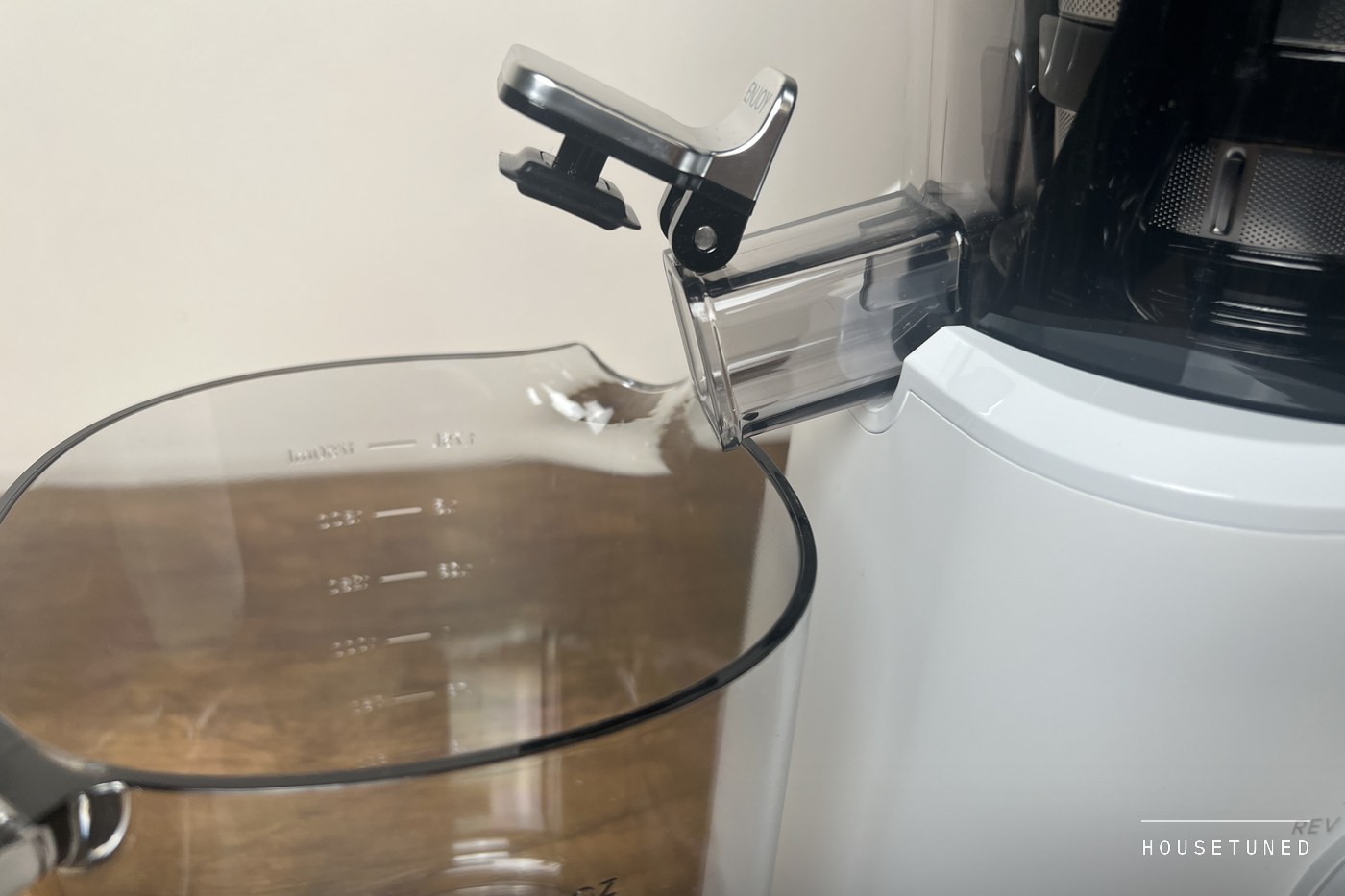
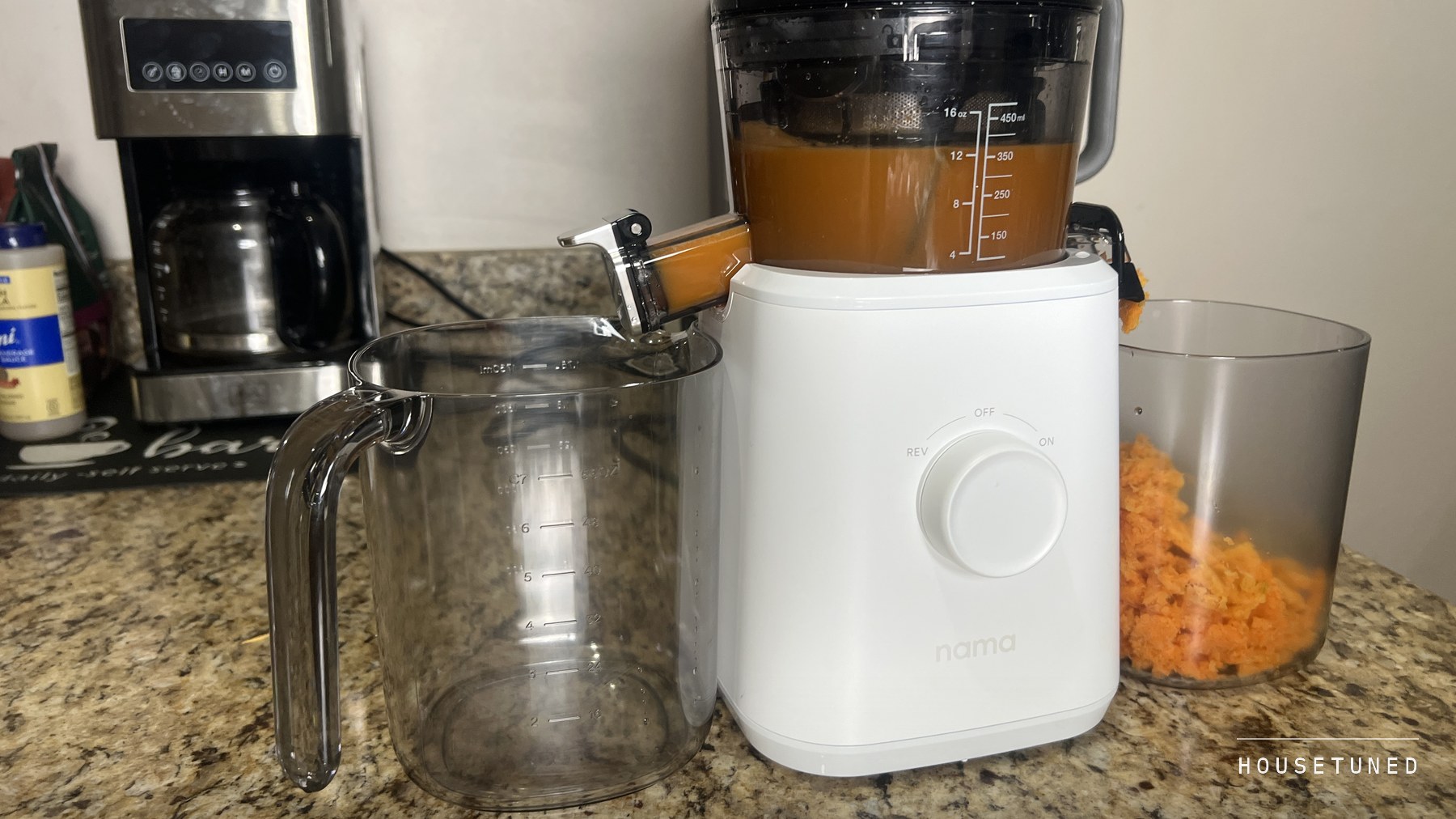
Packed like that, a full green recipe ran for three to four minutes until the last drip and needed no attention while it did. Nama says to open the juice cap as the chamber nears 16 ounces, or juice can back up into the hopper, so open it before walking away from a full load. It also recommends letting the machine run a minute after the last piece goes down.
The exception was ginger. When we loaded too much of it at once, a brief spell in reverse cleared it without taking anything apart. The manual's method is to hold the knob on REV for three to five seconds, two or three times over.
It is quiet enough for the hour before everyone else is up. It was quiet enough to press juice while on the phone, and early enough in the day not to wake the children. The heavy base stayed put, and over long sessions the motor base warmed slightly while the juice still came out cool.
What Goes In, and What Comes Out as Pulp
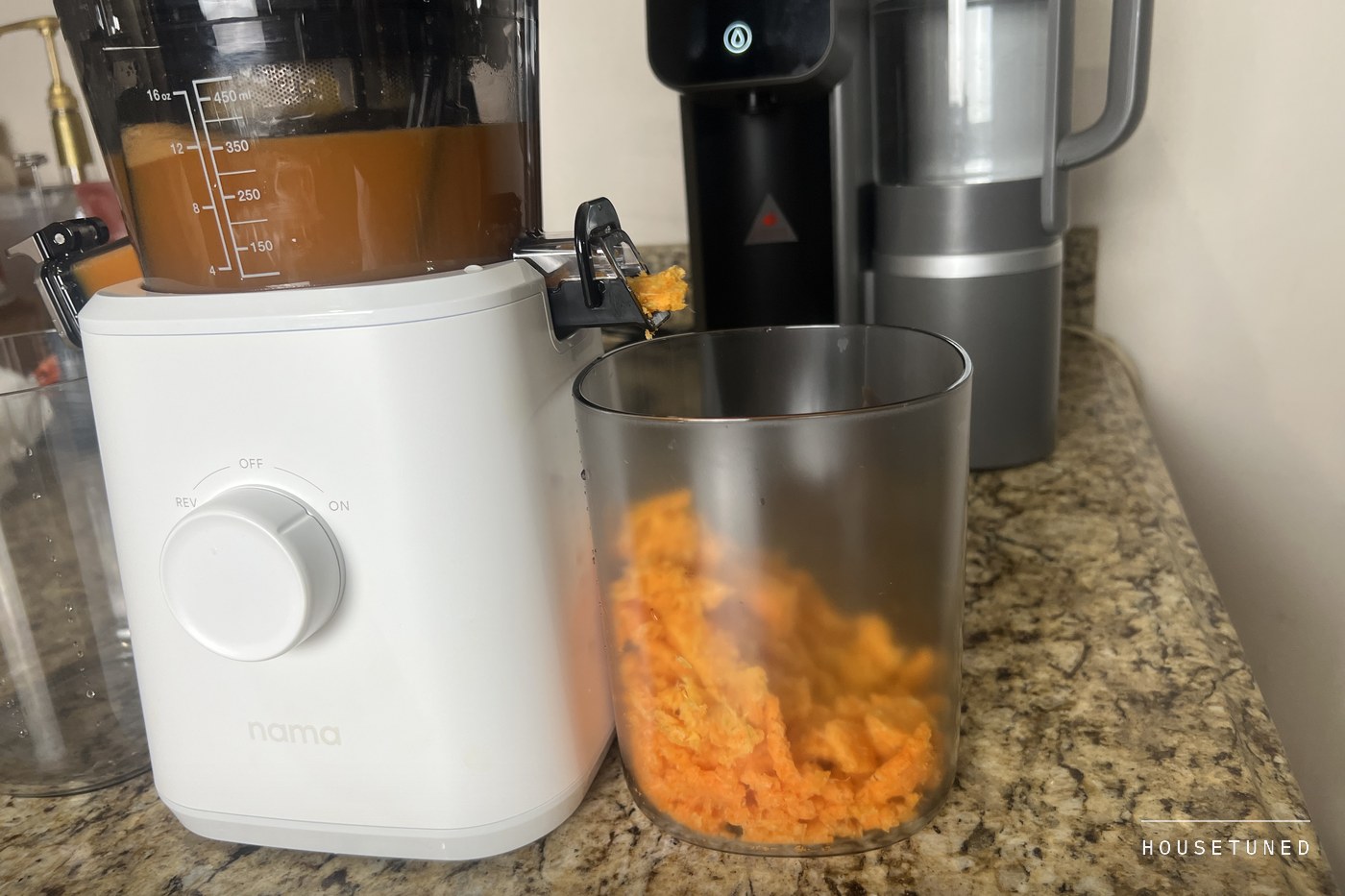
Nama rates a full hopper at 20 to 30 oz, with the exact yield set by what goes in. Apples, oranges, carrots and ginger left dry pulp, celery and cucumber a little damper, and foam barely appeared even with apples, oranges and greens.
| Produce | How it goes in | What we got |
|---|---|---|
| Apples | Cored, seeds out, cut to fit | Dry pulp, almost no foam |
| Oranges | Peeled, or peel on for a more bitter juice, cut smaller | Pulp-free juice, dry pulp |
| Carrots | Washed well, cut into 1 to 3 inch pieces | Dry pulp |
| Ginger | Washed, skin on | Pressed thoroughly, a big load needed reverse |
| Celery and cucumber | Cut into thirds, cucumber peel on | Smooth celery juice, slightly wet pulp |
| Leafy greens and herbs | Kale cut into thirds, all loaded at the bottom | Clean when layered under hard produce |
The fitted fine strainer was the one we reached for most, and the coarser one, which the manual calls the smoothie strainer, gave apple and beet drinks more body. Nama says not to run the pulp through a second time, so the pulp container goes straight to the compost or the bin.
Eight Parts in the Sink, and None in the Dishwasher
Every session ends at the sink. Nama says to hand wash right away: lift the whole chamber set off the base, twist the hopper open and take out the strainer set. That is the hopper with its processing blade, which Nama calls pointy but not sharp, the lid, auger, strainer, spinning brush and chamber, plus the juice and pulp containers. Eight main pieces, going by Nama's parts list.
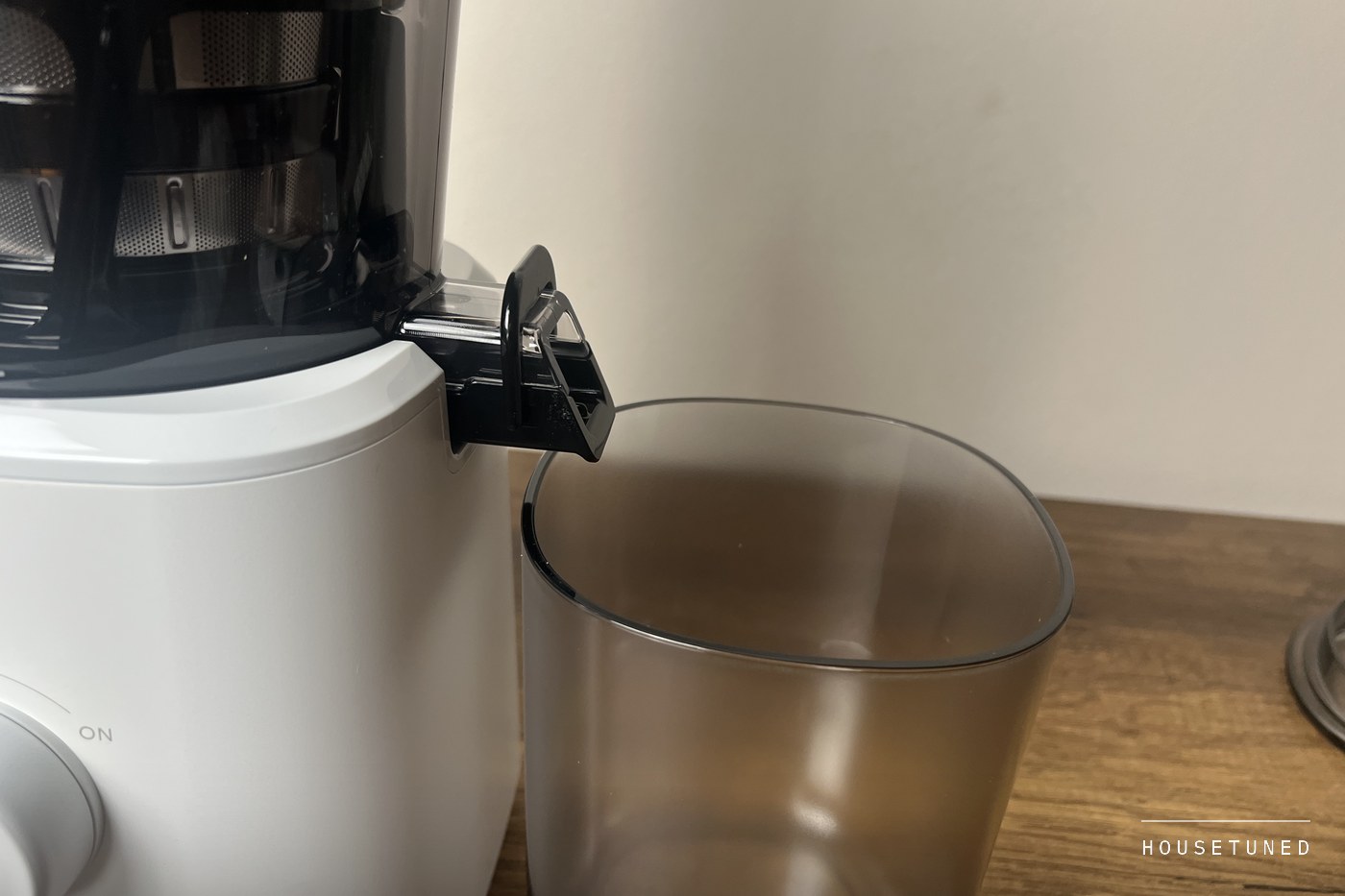
Rinsed straight after juicing, they took us two to three minutes, and closer to five once the pulp had dried. The biggest help is the pulp outlet on the chamber. Rotate its locking loop down, swing the cover open and run water through, and the packed fibre flushes out in seconds. The silicone gaskets made the first week a small puzzle of what comes off and what stays. By the third week it was automatic, and Nama only wants them out now and then for a deep clean.
- Hold the knob on REV for 15 seconds, then unplug with dry hands once it stops.
- Lift the chamber set off the base and take it apart in the sink.
- Flush the chamber with the pulp outlet cover and juice cap open.
- Brush the strainer and parts clean, then dry them fully before reassembling.
- Wipe the base with a damp cloth, keeping water off the knob and cord socket.
The dishwasher is out for every part, and so are washing at 176°F (80°C) or hotter and abrasive sponges, per the manual. It matters for the warranty, which depends on following the manual and excludes stains, and Nama's guide says to dry parts by hand straight away so residue cannot stain them. For a deep clean, the manual suggests an overnight soak in warm water with baking soda or citric acid.
Three Days in the Fridge Sets the Schedule
Nama's manual recommends drinking the juice straight away for the best nutrition, or within three days, refrigerated in an airtight sealed container. Its bottle guidance adds two habits worth copying with any jar: fill it to the top, and keep it at 32 to 39.2°F (0 to 4°C). Stored cold in a sealed mason jar, our juice still looked and tasted right two or three days later, with no separation.
That window is Nama's recommendation, not a safety guarantee. Home-pressed juice is unpasteurised, and the FDA notes that bacteria from produce can end up in fresh-squeezed juice, that washing reduces bacteria without eliminating them, and that the acid in orange or apple juice does not reliably kill them. Keep it refrigerated and sealed, and treat three days as the limit rather than a target.
Every Morning or Every Third Day
Those limits leave two ways to run a J2. The first is how we used it, a load every morning. Each session is prep, three to four minutes of pressing that asks nothing of you, and two to three minutes at the sink, and any juice we kept held up for two to three days in a sealed jar.
The second is batching, two or three loads every third day, bottled and refrigerated. It swaps seven rinses a week for two or three, but most of the juice is drunk a day or two old. Nama recommends no more than 30 minutes of continuous running and emptying the pulp container often when juicing in bulk. Our green juice recipes took three to four minutes each, so two or three in a row sit well inside that.
| Routine | Every morning | Every third day |
|---|---|---|
| Sessions a week | Seven | Two or three |
| Rinses a week | Seven, two to three minutes each | Two or three |
| Juice when drunk | Fresh, any extra kept sealed | Fresh to two days old |
| Fridge space | A jar or two | Several sealed bottles, filled to the top |
Juice each morning if you drink it fresh and can rinse at once. If mornings are tight, batch every third day, and press only what your household will finish inside Nama's three days.
Whose Mornings It Fits
It suits a household that juices most days or feeds several people, with a spot that has open space above and a socket nearby. For them the J2 removes the standing at the machine, and the rinse it leaves takes minutes if done at once. No juicer before it stayed out on our counter once the novelty had gone.
Occasional juicers are less well served. Counter space and a hand-washed clean-up are a lot to give a machine used once a week, and Nama's own smaller J3, with a 34 ounce hopper and a 15.4 inch height, is aimed at smaller kitchens and one or two servings at a time.
The warranty is Nama's long answer on value: 15 years on every part, motor included, for an original owner who bought from Nama or an authorised retailer and kept the order number. The manual says to stop using it if a part is damaged or visibly cracked, and to contact Nama if it gives off an unpleasant smell, excess heat or smoke, or if the auger keeps stopping after reverse. Four weeks cannot vouch for year ten, though the parts we handled every day felt built for it. With every part hand wash only and a height that rules out low cabinets, it stops short of a higher score.
The J2 makes the pressing effortless and quiet, so the habit is decided at the sink and in the fridge. Rinse it straight away, drink the juice inside three days, and it earns its counter space.
Can any J2 parts go in the dishwasher?
No. Nama's manual rules out the dishwasher and dish dryer for the whole juicer. Rinsed by hand straight after juicing, the parts took us two to three minutes.
How long does the juice keep?
Nama says within three days, refrigerated in an airtight sealed container, and recommends drinking it straight away for the best nutrition. Ours held its colour and flavour for two to three days in a sealed jar.
Can I put whole apples in?
Small ones will go in, but Nama recommends coring apples and removing the seeds, and says smaller pieces extract better.
More in this category