Aim for 37°F, then check the result
- Aim for about 37°F (3°C) in the fresh-food compartment. FDA guidance sets the ceiling at 40°F.
- Check with a separate refrigerator thermometer, using the placement and waiting time for your measurement method.
- If the fridge is too warm, assess the food's exposure before waiting for a settings change to work.
If you've been relying on the number beside a dial or on a control panel, we'd check an independent thermometer first. Many refrigerators have temperature controls without a thermometer that confirms the temperature inside, so a measured reading gives you a useful basis for adjustment.
The goal is enough cooling to slow harmful bacterial growth without freezing your fresh food. Excessive cooling also uses extra energy, while insufficient cooling can make food spoil prematurely.
Why you'll see several different ranges
Keep the recommended setting, food-safety ceiling and measured range separate when you compare numbers. GE recommends a 37°F fresh-food setting, while FDA refrigerator guidance (opens in a new tab) calls for an actual temperature of 40°F or below.
| Guidance | Temperature | What it describes |
|---|---|---|
| GE | 37°F | Recommended fresh-food control setting |
| FDA | 40°F or below | Refrigerator temperature ceiling |
| GE | 32–40°F | Normal fresh-food reading when checked first thing in the morning using GE's method |
| PNNL | 35–40°F (2–4°C) | Refrigerator range in its temperature-check procedure |
| KitchenAid and Whirlpool | 33–40°F (0–4°C) | Range described as generally safe for most purposes, with about 37°F (3°C) ideal |
The wording differs even within individual guidance. Pacific Northwest National Laboratory (PNNL) also advises keeping the fridge below 40°F to reduce bacterial growth, and KitchenAid likewise recommends below 40°F, ideally around 37°F. Those precautions favor a target below the ceiling.
At the cold end, KitchenAid and Whirlpool warn that temperatures below 33°F may freeze food. GE's broader morning measurement range serves a different purpose from its recommended setting, so use that range when interpreting GE's measurement procedure, not as a reason to select 32°F on your controls.
Deal with warm food before adjusting
A reading of 45°F or 50°F is above the ceiling for ordinary refrigerated perishables. Whirlpool's allowance for more flexible temperatures applies only to a refrigerator used strictly for soda and wine, so it doesn't cover a fridge holding milk, eggs, meat or other fresh food.
Before eating food after excessive warmth, check the thermometer and the exposure history. FDA says food should be safe if the fridge is still at or below 40°F, or the food has been above 40°F for two hours or less. A corrected reading alone doesn't establish that earlier exposure was safe.
Use that time-and-temperature history to make the decision. Food can cause illness while looking, smelling and tasting normal because illness-causing bacteria differ from the bacteria that cause obvious spoilage. FDA's food-safety guidance (opens in a new tab) explains this distinction.
Timely refrigeration still matters when the appliance is working correctly. Refrigerate leftovers within two hours, as Whirlpool advises. The adjustment waits below are for judging the appliance's response, not for extending safe food exposure.
Using a freestanding thermometer
For routine monitoring, get a freestanding refrigerator thermometer. PNNL notes that these are available at most hardware stores and that most are designed to stand on a shelf or hang from a wire rack.
With PNNL's thermometer method (opens in a new tab), place it in a spacious area inside the refrigerator and leave it for 5–8 hours before reading it. Avoid frequent door openings during that time so the reading isn't repeatedly disturbed.
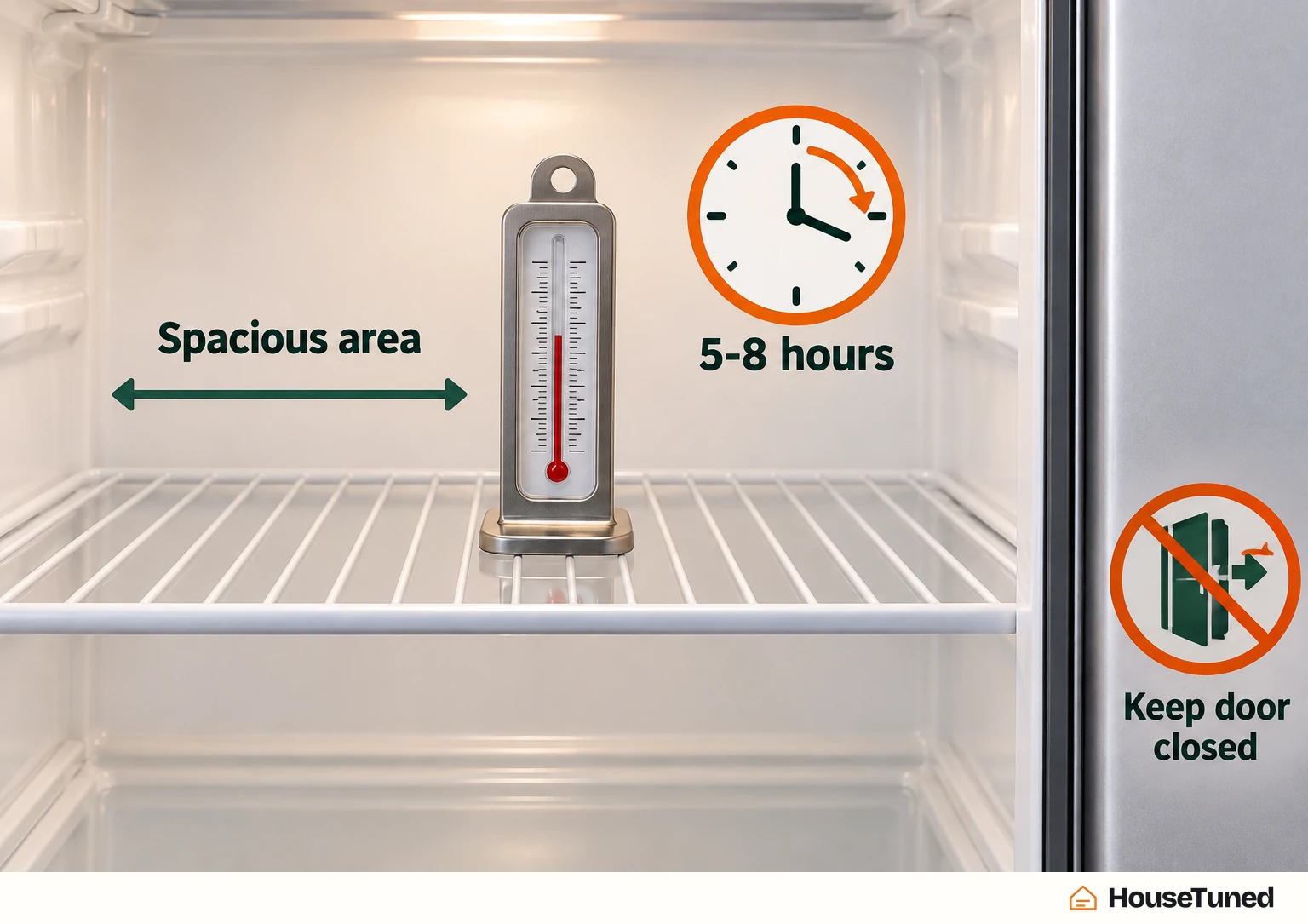
PNNL mentions that some sources recommend measuring in a glass of water. Its shelf-or-rack method and GE's food-or-liquid method below have different instructions, so choose the applicable method and keep its placement and timing together.
GE's food-or-liquid measurement method
For a GE refrigerator, GE's temperature-check method (opens in a new tab) measures food or liquid. GE explicitly says never to measure the compartment air for this check because air temperature fluctuates during defrost cycles and door openings.
Use a bulb-type or candy thermometer capable of reading below-zero temperatures. Put it directly into a container of food or liquid that has already been refrigerated for at least 24 hours. That requirement concerns how long the contents have been refrigerated, rather than a new 24-hour thermometer placement period.
The center of the fresh-food compartment is GE's preferred measurement location. For GE Bottom Freezer models, use the bottom fresh-food shelf or the top of the vegetable pans instead. Take the reading first thing in the morning for comparison with GE's morning range above.
Give cold air room to circulate
Before changing the setting, look at the space around your groceries. Keep air vents clear and avoid overcrowding shelves, because cold air needs to circulate around food to chill it properly. Move items that are blocking the vents.
Whirlpool recommends a stocked fridge, but keep that advice within the airflow limits: fully stocked must still leave vents unobstructed and room for circulation. Blocked vents can contribute to either excessive warmth or food freezing.
Get what you need and close the door promptly, and minimize repeated openings. GE explains that more opening and closing produces more temperature fluctuation, so repeatedly checking inside works against a steady reading.
If you're checking a garage or basement fridge during changing weather, pay attention to its thermometer too. KitchenAid's temperature guidance (opens in a new tab) says settings may need adjustment for environmental conditions and humidity. PNNL particularly recommends monitoring these extra refrigerators because they may experience bigger temperature swings and get checked less often.
Change the setting a little, then give it time
Write down your measured temperature before changing the control. Start with the setting recommended in your refrigerator's owner's manual, then use the reading to decide whether you need more or less cooling.
Controls vary: some let you choose degrees, while others use numbers for general temperature ranges. Your model's manual gives the control location and adjustment directions. Use those directions for a numbered dial instead of treating its numbers as Fahrenheit temperatures.
Make only a small adjustment. Whirlpool's adjustment guidance (opens in a new tab) calls for at least 24 hours between changes so the refrigerator can respond. GE also requires 24 hours for stabilization after the first setting or an adjustment, and KitchenAid specifies 24 hours after changing its settings.
PNNL gives a different interval: record the temperature, adjust as needed and recheck after 12 hours. We'd follow your manufacturer's longer interval before making another change, because its stabilization instructions specifically allow the appliance time to respond. PNNL's earlier recheck and the manufacturers' wait between adjustments are distinct instructions.
Use the next reading to judge the result
After the applicable wait, take another reading with your chosen method and record it alongside the first. Compare the achieved temperature with the target and ceiling, then use that result to decide whether another small adjustment is needed.
Ice forming on fresh food is another useful clue. Whirlpool identifies a setting that's too low as one possible cause, and says an emptier fridge can also let cold air sink to the bottom instead of being absorbed by items throughout. Check the measured temperature before deciding how to change the control.
If the fridge keeps failing to reach the recommended range after adjustment and the airflow checks, contact a refrigerator repair service. PNNL identifies persistent temperature problems as a reason to seek repair help. Keep your recorded readings available to describe what happened before and after the change.
Once the temperature is where it should be, keep the refrigerator thermometer in place and check it regularly. Ongoing monitoring lets you catch a change in actual temperature and adjust when necessary.
More in this category