The seal isn't the only possible cause
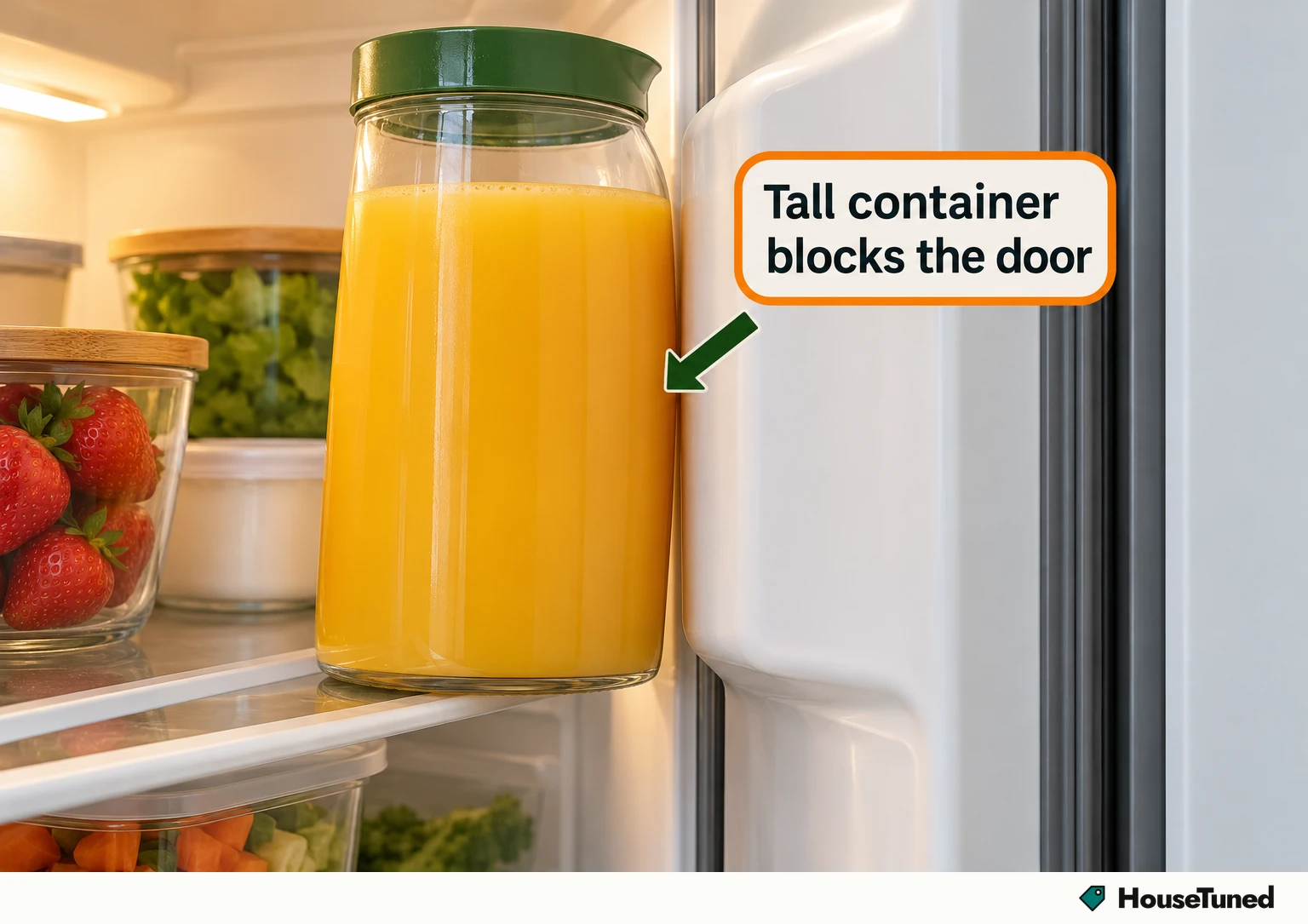
- Check for food packages and misplaced bins or drawers keeping the door open.
- Other possibilities include a dirty or damaged gasket, an unlevel refrigerator, shipping packaging, or incorrectly installed doors.
- On Maytag French-door refrigerators, check the left door's hinged center seal before closing.
If the trouble started after loading groceries, we'd check the space around the food and bins first, because tall containers and displaced drawers can physically prevent full closure. That gives you a useful correction to try before deciding the rubber seal needs attention.
Think of the checks as looking at what blocks the door, what meets the cabinet, and how the refrigerator sits. An obstruction can stop the door short, a deteriorated gasket can leave gaps, and an unlevel cabinet can let the door swing open or keep it from sitting flush.
Installation adds another possibility: shipping materials can interfere with closure, and doors removed during delivery may have been installed incorrectly. These are different paths to the same symptom, so choose the next check from what you can actually see and from when the trouble began.
Give the door room to close
Move food packages away from the door's path. Pay attention to tall containers and overfilled door bins, then look at the drawers and ice bin: a component sitting out of position can prevent full closure even when the food itself looks clear of the opening.
Return displaced bins, shelves, drawers, and the ice bin to their correct positions. Look for interference outside the refrigerator too, including items behind it that are pressing on the door. The point of this check is to give the door an unobstructed path to the cabinet.
For an Amana top-freezer refrigerator, there's a particular detail worth checking around the crisper. Amana's door-sealing guidance (opens in a new tab) says to push the crisper cover into place so its back rests on the supports, as well as returning bins and shelves to their correct positions.
After correcting the obstruction, close the door and look at whether it now reaches the cabinet fully. If it still stops short, move on to the other checks below. A clear opening lets you inspect the gasket and cabinet position without a food package or displaced shelf still getting in the way.
If the problem started after installation
On a newly installed refrigerator, look for shipping packaging that remains in the way of the door. Its job during shipping was to protect the appliance, but material left where the door needs to close can become an obstruction.
Also consider whether the doors were removed to get the refrigerator into place. Incorrect reinstallation can leave a door unable to close or seal properly, so that history matters when the problem appears immediately after installation.
For an Amana refrigerator with this installation history, use its owner's manual or installation instructions to check the installation requirements. Amana connects incorrectly installed doors with closure problems, frost or moisture concerns, and temperature fluctuations. Keep those observations together when deciding whether the installation needs further attention.
Look closely at the rubber gasket
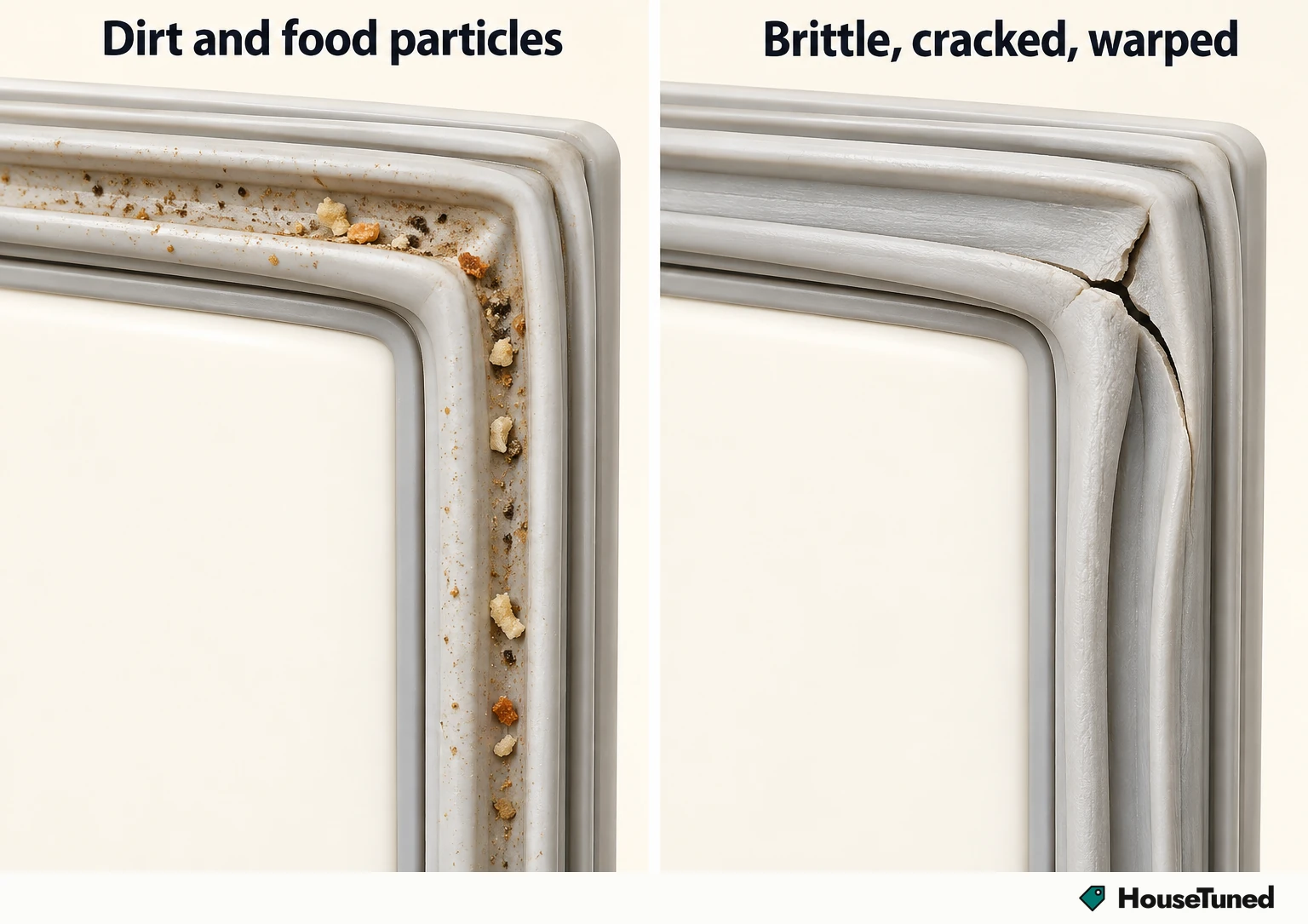
Look over the rubber gasket for dirt and food particles, then for brittle areas, cracks, or warping. Keep surface buildup and visible deterioration separate in your observations: both belong in this check, but a food particle and a crack are different findings.
Small gaps matter because they reduce suction and let warm air into the refrigerator. That can make the door feel as though it won't stay shut. A seal doesn't need a dramatic tear to deserve attention when you can already see that its shape has changed.
Include this inspection in your regular care, too. Dirt and other particles can build up on the gasket surface and create resistance as the door opens or closes. Checking for that buildup gives you something concrete to notice before treating every change in door feel as damage to the rubber.
Check how the refrigerator sits
Use a level to check the refrigerator in both directions: side to side and front to back. Checking only one direction leaves part of the question unanswered, since an unlevel refrigerator can let the door swing open or prevent it from sitting flush against the cabinet.
This deserves attention after installation as well as when the floor looks uneven. Floors can be uneven, and a new installation may settle during its first few days. A door that won't stay in position can therefore point you toward the cabinet's position as well as the gasket.
If the level shows a problem, consult your refrigerator's own owner's manual or installation instructions for its specific leveling procedure. Amana's leveling guidance (opens in a new tab) makes that same distinction: check both directions, then use the appliance's instructions for the adjustment details.
Maytag French-door example
On Maytag French-door refrigerators, the left refrigerator door has a vertically hinged seal at the center opening. When you open that door, the seal normally folds inward to stay out of the way. This is a separate check from looking over the rubber gasket for cracks or dirt.
If the hinged seal is folded outward while the left door is open, fold it inward by hand before closing the door (opens in a new tab). Keeping it inward before closure puts it out of the way as the door moves into place.
In this Maytag arrangement, you can open and close the two doors separately or together. With both doors closed, the hinged piece automatically forms the seal between them. That's the expected position to look for after correcting an outward-folded piece.
When it still won't close securely
Your goal is a door that closes securely and sits flush, with the applicable hinged center seal in position. Judge the correction by what happens at closure: the door should reach its closed position instead of remaining obstructed or swinging open.
Give persistent incomplete closure attention because it can lead to temperature fluctuations, higher energy use, frost buildup, and food spoilage. Those consequences make a door that repeatedly remains open worth following up, even if you've already found and corrected one obstruction.
If you still need help after these checks, contact your refrigerator manufacturer's support team or arrange appliance service. For an Amana refrigerator, its US door-sealing support page (opens in a new tab) offers contact and service-scheduling options.
More in this category