What the pattern tells you
- Start with the load: bunched bedding can thump, and loose items can rattle inside the drum.
- Clear anything touching the dryer, then check its level and adjust the feet if needed.
- A light thump after disuse may fade. Grinding or a rumble that persists calls for professional help.
We'd check the load and nearby objects first, because bunched fabric and things touching the cabinet can make noise during a cycle. If the cabinet still shakes after those checks, look at its footing. An uneven surface can cause both rattling and vibration.
Notice when the sound happens. A heavy item can knock as it tumbles, while a washer beside the dryer can pass its vibration into the cabinet. That difference points you toward the next check.
When certain laundry brings on the noise
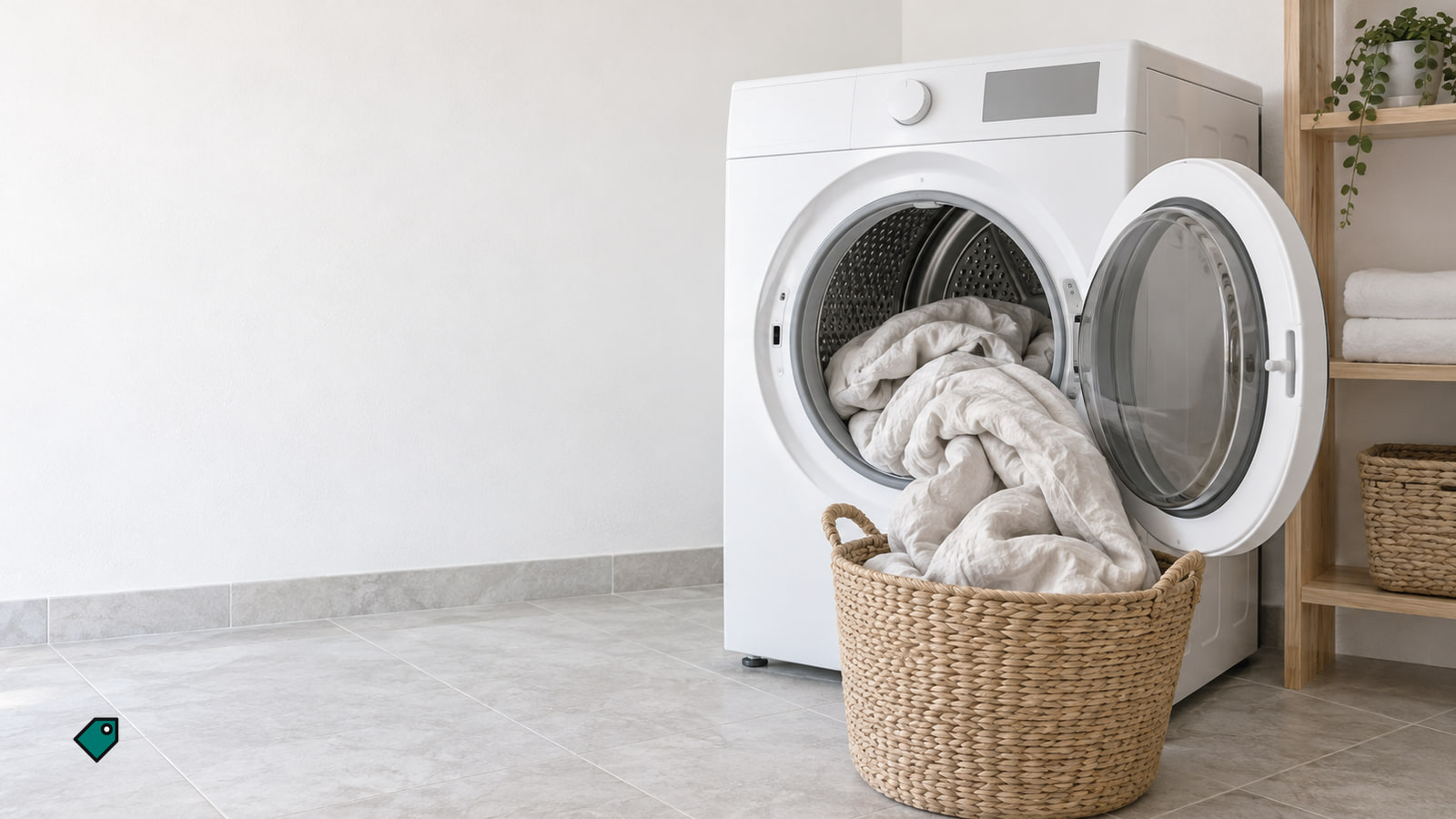
Sheets, curtains and bedspreads can roll into a ball and thump as they tumble. Stop the cycle, untangle them and put large items back in loosely. Listen for whether the thump eases when the load can tumble without bunching.
Heavy items such as bathmats or jeans can knock during a cycle. Tumbling tennis shoes can make the dryer shake, so air dry them on a drying rack and listen for the change with your next load.
Coins, keys, buckles and buttons can rattle in the drum. Empty pockets before loading because metal objects can damage both clothes and the drum. If zippers or latch hooks jingle as garments tumble, turn those garments inside out.
On a Samsung dryer, stop a cycle that starts squeaking or squealing under a heavy load and take some laundry out. Check your model's manual for its permitted load weight before running that load again.
When the rattle seems to come from outside
Take objects off the dryer and clear anything leaning against its sides. Those items can knock or rattle while it runs. If a washer stands beside it, check whether the cabinets touch; leave space between them so the washer's vibration doesn't affect the dryer.
If your dryer sits on a pedestal, check the drawer too. Items inside it can rattle or vibrate, making the sound seem to come from the dryer above. Listen again after clearing the drawer to see whether that rattle has gone.
When the whole cabinet shakes
Check whether the dryer sits on a level, solid surface. An uneven surface can cause rattling and vibration, so inspect the leveling feet at the bottom if the cabinet moves noticeably.
Use a carpenter's level to find which feet need adjustment. Turn the leveling feet with a wrench as needed, then tighten the legs. Listen on the next run for whether the cabinet is steadier or a squeak has eased.
When the thump appears at startup
After a long spell without use, the dryer may make a light thump when it first starts. Its drum support rollers can flatten slightly where they rest against the drum, then regain their shape as it runs. The thump should fade.
Listen for that change during the cycle. If the thumping continues, check for bunched laundry and uneven footing. A sound that fades after startup fits the temporary roller pattern; one that keeps going needs the other checks.
When the sound keeps going
Grinding can point to worn drum bearings or glides. A loud rumble can involve a blower wheel that's loose, off balance or obstructed. Those parts are inside the dryer.
A squeak heard toward the front may involve an idler pulley. Toward the back, possible causes include bearings, roller shafts, glides or a drive belt. The sound's location helps you describe it, but doesn't identify a failed part on its own.
If grinding, persistent rumbling or excessive vibration remains after the external checks, contact a professional appliance technician. These repairs can require disassembly. Tell them what the sound is like and whether changing the load or leveling the legs affected it.
What changes on the next load
If you found bunched laundry, an outside rattle or uneven footing, pay attention on the next load after correcting it. Listen for the thump or rattle to ease and watch whether the cabinet stays steadier.
A light thump after a long pause should fade as the dryer runs. Hearing it disappear, or hearing a load run without the rattle you cleared, gives you a useful check that your change addressed the sound.
More in this category