Start with the smell and what you can see
- Notice whether the smell hits when you open the door, starts during draining, or returns after a wash.
- Wash the removable filter and clear its well, then wipe the door seal, door edge, and tub.
- Run one empty hot cycle with dishwasher cleaner if the machine drains normally.
- If the odor returns, look for water across the tub floor and inspect the sink-side drain.
- Pause use for dirty standing water, backflow, a leak, or a burning smell.
This is for a dishwasher that completes and drains its cycles. If it will not drain at all, use the drain checks below; if the sink smells while the dishwasher stays clean, focus on the sink drain. A burning smell is a different fault: stop using the dishwasher until a qualified technician inspects it.
Food and grease can stay in the filter, beneath it, or around the door after wash water leaves. The drain hose carries that water to the sink, so a smell that appears during draining sends you toward the connection under the sink. We'd start with the filter because trapped food is a leading cause of dishwasher odor and you can see the buildup directly.
| What you notice | What it points toward | First move |
|---|---|---|
| Sour food smell when you open the door | Scraps in the filter or its well | Remove the lower rack and clean both. |
| Musty smell after the machine sits closed | Damp residue around the door or tub | Wipe the seal folds and bottom door edge. |
| Sewage-like smell during draining | Stagnant water or the connected sink drain | Look for pooled water and smell the sink separately. |
| Smell returns after an empty cleaning cycle | Missed residue or a drain-path problem | Inspect the filter well, then the sink-side connection. |
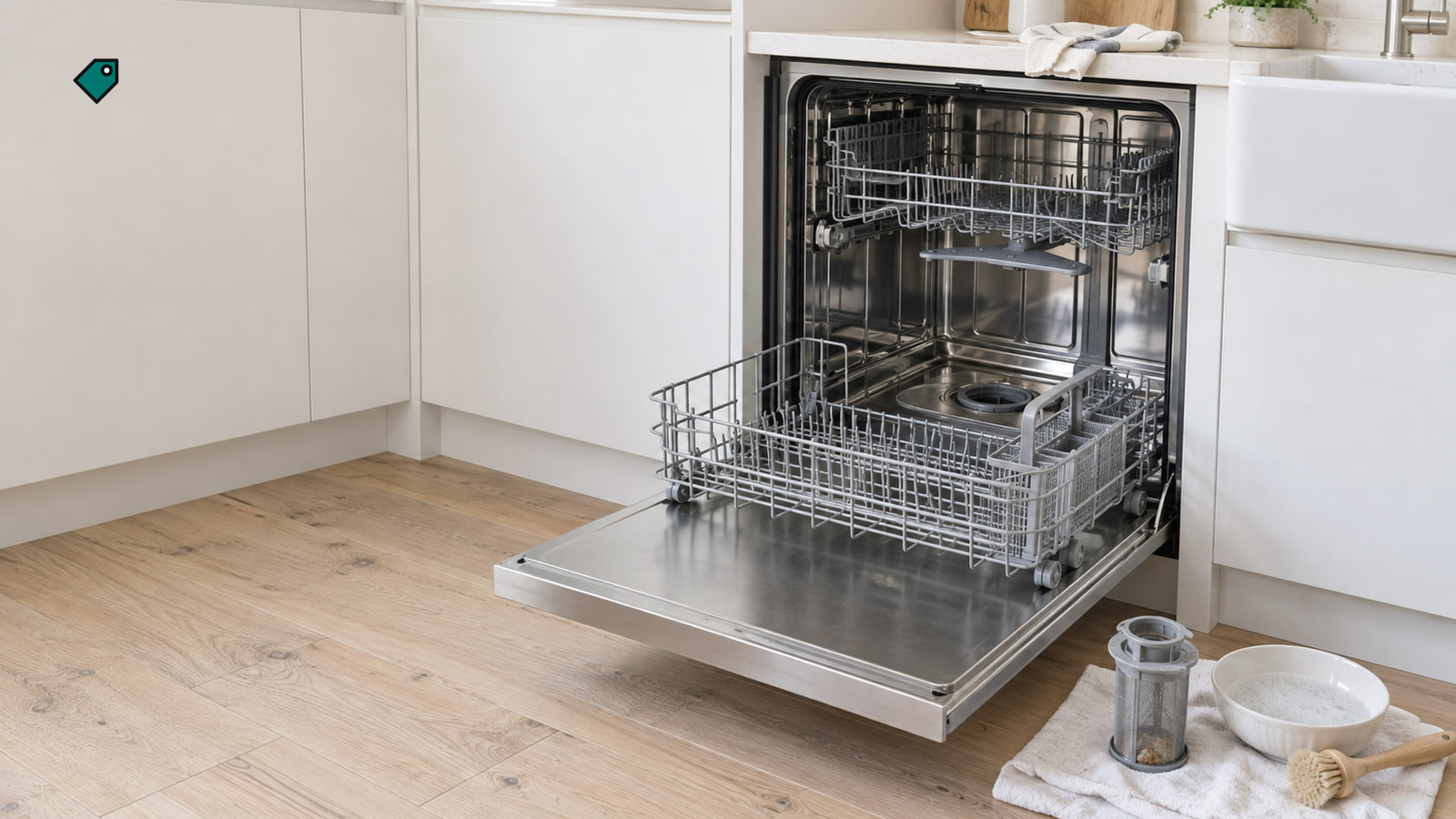
Wash the filter and clear the space beneath it
Start here for a food-like smell, visible scraps, or water left after a cycle. The filter is at the tub floor, usually near the lower spray arm. A removable cylindrical filter commonly turns counterclockwise and lifts out. If it does not release gently, wipe the reachable drain area; some dishwashers have a self-cleaning filter with no removable screen.
- Turn the dishwasher off and remove the lower rack. Unlock and lift out only the filter pieces intended to come out.
- Rinse the pieces under warm running water. Check your filter's cleaning instructions before removing stuck food; for GE Ultra Fine Filters, use a sponge and avoid brushes, abrasive pads, and steel wool.
- Look into the filter well for scraps, labels, seeds, or glass. Carefully lift out reachable debris, then wipe the well with warm, soapy water.
- Put every filter piece back, seat it flat, and turn a twist-lock filter until it locks. The screen should stay seated when you touch it lightly.
- Run a rinse or drain test. If visible water remains across the tub floor, move to the drain checks.
For more detail on the removable pieces, use our dishwasher filter cleaning steps. Whirlpool's filter care instructions (opens in a new tab) show an illustrated release and wash.
Wipe the places a wash cycle misses
If the filter is clean but the smell is musty, wet a soft cloth or sponge with warm, soapy water. Wipe inside the gasket folds, along the bottom edge of the door, and across reachable tub surfaces. Lift away loosened residue and dry the seal with a towel. The seal should be free of visible residue and dry to the touch.
Look at the accessible spray-arm holes. If food blocks a hole, gently loosen it with a toothpick until the opening is clear. Then empty the machine, add dishwasher cleaner as its package directs, and run the machine-clean cycle or a full hot cycle. Let water noises stop and steam subside before opening the door fully or reaching inside to wipe the tub. Wipe out loosened debris afterward and let the interior dry. The holes should be clear, and the odor should ease after the empty cycle.
If the smell comes back, inspect the areas you just cleaned for missed residue, then move to the drain path. Our full dishwasher cleaning routine covers the same interior surfaces when buildup extends beyond the odor.
The smell came back after cleaning
First, look under the filter and along the door seal again. Then run water in the connected sink and see whether it drains freely; smell the sink and disposal separately. A dishwasher empties into a disposal inlet or sink tailpiece, and a blockage there can hold up its water. A smell that begins during draining makes this sink-side check especially useful.
Under the sink, follow the dishwasher hose to the disposal or tailpiece. Straighten a visible kink without pulling on the joints. Look for a hose loop secured high beneath the countertop or a small capped air gap beside the faucet. That raised route keeps sink wastewater from flowing back into the dishwasher. Without an air gap, set the loop's high point near the top of the cabinet. Required minimum heights run from 20 to 32 inches above the floor, so use the height in your dishwasher's installation instructions.
- If there is no air gap and the hose has fallen or runs flat, pull the available hose upward so it arches before descending to the drain connection.
- Fasten its high point beneath the countertop or near the top of the cabinet with a bracket or zip tie. Keep the hose free of kinks and make sure its connection stays secure.
- Run a drain or short wash cycle and watch the connection for leaks. After using the sink, look in the tub again. The fix worked if the hose stays raised and dry and dirty water does not return.
At a sink air gap, lift the outer cap and brush reachable debris from the opening with a soft bottle brush. Water spilling from the top during draining points to a blockage in the gap or downstream hose. Run a drain test after clearing the opening; water should leave without spilling from the cap. Keep the air gap in place while you clear it: local rules can require one.
Smelly water remains after a finished cycle
A little water hidden below the filter can be normal. Dirty water across the visible tub floor after a completed cycle, especially about an inch deep or approaching the door, calls for a drain check. If water leaves during Drain or Cancel and Drain but returns after sink use, inspect the high loop and sink connection. If it never leaves, follow the separate dishwasher drain checks.
- Turn off dishwasher power at the circuit breaker and unplug the disposal or switch off its breaker. Stop: Do not pour chemical drain opener into the dishwasher, and if you have already used one, do not open the drain connection yourself. If the visible hose end or sink inlet appears blocked, put towels and a shallow pan below the joint. Loosen its clamp with pliers or a screwdriver, detach the hose end, and remove visible debris from the hose and inlet without using a sharp tool that could puncture the hose.
- If a disposal was just installed, look into its dishwasher inlet while the hose is off. If its knockout plug remains, tap it out with a screwdriver and hammer as the disposal's installation instructions show. Remove the loose plug from inside the powerless disposal with a tool, never your hand.
- Reconnect the hose, snug the clamp, and preserve its raised route. Restore power, run Drain or Cancel and Drain, and watch the joint and air gap. Water should leave the tub without a spill or leak.
- Turn off dishwasher power at the circuit breaker before removing the pump cover. Stop: Sharp debris, including glass, may be beneath the cover, so wear gloves, use a flashlight, and remove only debris you can see and reach. If a pump cover is identified as owner-removable beneath your filter, remove it as its cover instructions show. With power off, sponge out reachable water, carefully lift out visible debris, then secure the cover and filter before another drain test.
If dirty water still will not drain, water returns, or a leak persists, stop using the dishwasher and wash dishes that contacted dirty or backed-up water by hand. Call a plumber when the sink drains slowly, the air gap spills, or sink water backs into the tub. If the sink drains freely but the dishwasher fails its drain test, call an appliance repair technician; use a qualified technician for electrical symptoms. Tell them when the smell occurs, when water appears, what the sink does, and which filter, hose, and drain checks you completed. A diagnostic visit or accessible hose clearing within the first service hour for a standard dishwasher costs $70 to $130 total, including diagnosis. Replacing an aftermarket hose costs $95 to $180 installed, built from a $25 to $50 hose and the $70 to $130 first-hour minimum. A confirmed failed pump costs $110 to $350 installed, built from a $30 to $100 aftermarket pump and 1 to 2 hours at $75 to $125 per hour when the diagnostic fee is credited or waived. Odor alone does not establish that the pump has failed.
Choose one cleaner at a time
After removing visible debris, use one cleaning product in an empty hot cycle. A dishwasher cleaner can lift interior grease and deposits, but a cleaning cycle cannot clear a blocked sink-side drain.
The CDC's chlorine safety guidance (opens in a new tab) explains the danger from household bleach mixtures.
Keep the smell from coming back
Scrape large scraps from dishes before loading; a full hand rinse is generally unnecessary. Clean a removable filter about once a month, sooner if debris collects, and wipe the door seal when you see residue. If dirty dishes must wait, use a rinse-only cycle without detergent and run a full wash later. Run an interior cleaning cycle roughly monthly with frequent use, then leave the door slightly ajar long enough for moisture to dry.
Should I use vinegar, baking soda, or bleach to get rid of the smell?
Use dishwasher cleaner first. If your machine permits vinegar, put about 1 cup of white vinegar in a dishwasher-safe cup or bowl for an occasional empty cycle without detergent; frequent use can damage parts. Baking soda can deodorize but cannot clear a blockage, and bleach can damage a stainless-steel tub. For the mixing hazard, follow the Stop notice above.
Can I keep using a dishwasher that smells bad?
With a mild food or musty odor and normal draining, clean it and test a full cycle. Pause use for visible dirty standing water, backflow, a continuing leak, or a burning smell, and wash affected dishes by hand until the fault is corrected.
How much will it cost if I cannot get rid of the smell myself?
The standing-water section gives installed prices for a visit or first-hour clearing, a hose replacement, and a confirmed pump replacement. For a machine around 10 years old, compare a confirmed major repair with replacement if the repair exceeds half the replacement cost. Odor alone is no reason to replace a pump.
How do I stop the dishwasher from smelling again?
Keep up the scraping, filter, seal, rinse, cleaning-cycle, and drying routine above. If the same odor returns promptly after a fresh cycle, revisit the sink-side drain path instead of repeating cleaner cycles.
More in this category