Fresh broccoli starts with a covered bowl
- Cut fresh broccoli into roughly 1-inch pieces. Put about 2 cups in a microwave-safe bowl with 2 to 3 tablespoons of water.
- Cover with a microwave-safe plate or a loose, vented lid. Microwave on high and begin checking at 3 minutes; 3 to 4 minutes is the starting range.
- Let the covered bowl stand for 1 to 2 minutes, then lift the cover away from your face. Serve when a fork enters the thickest stem with slight resistance.
- Frozen florets go in without thawing. Check them around 4 minutes, stir, and keep cooking in 30-second intervals until hot throughout.
A little water turns to steam under the cover and cooks the broccoli without submerging it. We'd start at the low end of the time range because you can add cooking time, while broccoli left heating past crisp-tender turns soft. An ordinary bowl and plate do the job; the useful test is the thickest stem, not the timer alone.
- Rinse fresh broccoli under running water. Cut the florets into similar pieces roughly 1 inch across. If you're using a thick stalk, trim its woody base, peel the tough outside with a vegetable peeler, and cut the tender center into pieces smaller than the florets.
- Put about 2 cups of cut broccoli in a microwave-safe bowl. Add 2 to 3 tablespoons of water. You want a small pool at the bottom to make steam, not water deep enough to cover the pieces.
- Set a microwave-safe plate over the bowl with a small gap at the edge, or use a loose, vented microwave-safe lid. The cover holds moisture around the broccoli while letting some steam escape.
- Microwave on high for 3 minutes. If you can see through the cover, the florets should be turning bright green. Leave the bowl covered for a 1- to 2-minute stand before testing it.
- Take the bowl out with oven mitts and lift the cover away from you. Pierce the thickest stem with a fork. For crisp-tender broccoli, the fork should enter with slight resistance and the florets should still be bright green.
- If that stem is hard, re-cover the bowl and microwave for 30 seconds more, then test again. Once it's done, drain off excess water and season the broccoli before serving.
A thick stem is the last part to soften, so testing only a delicate floret can make the batch seem done too early. If you prefer softer broccoli, keep cooking in short intervals until the stem reaches the texture you want.
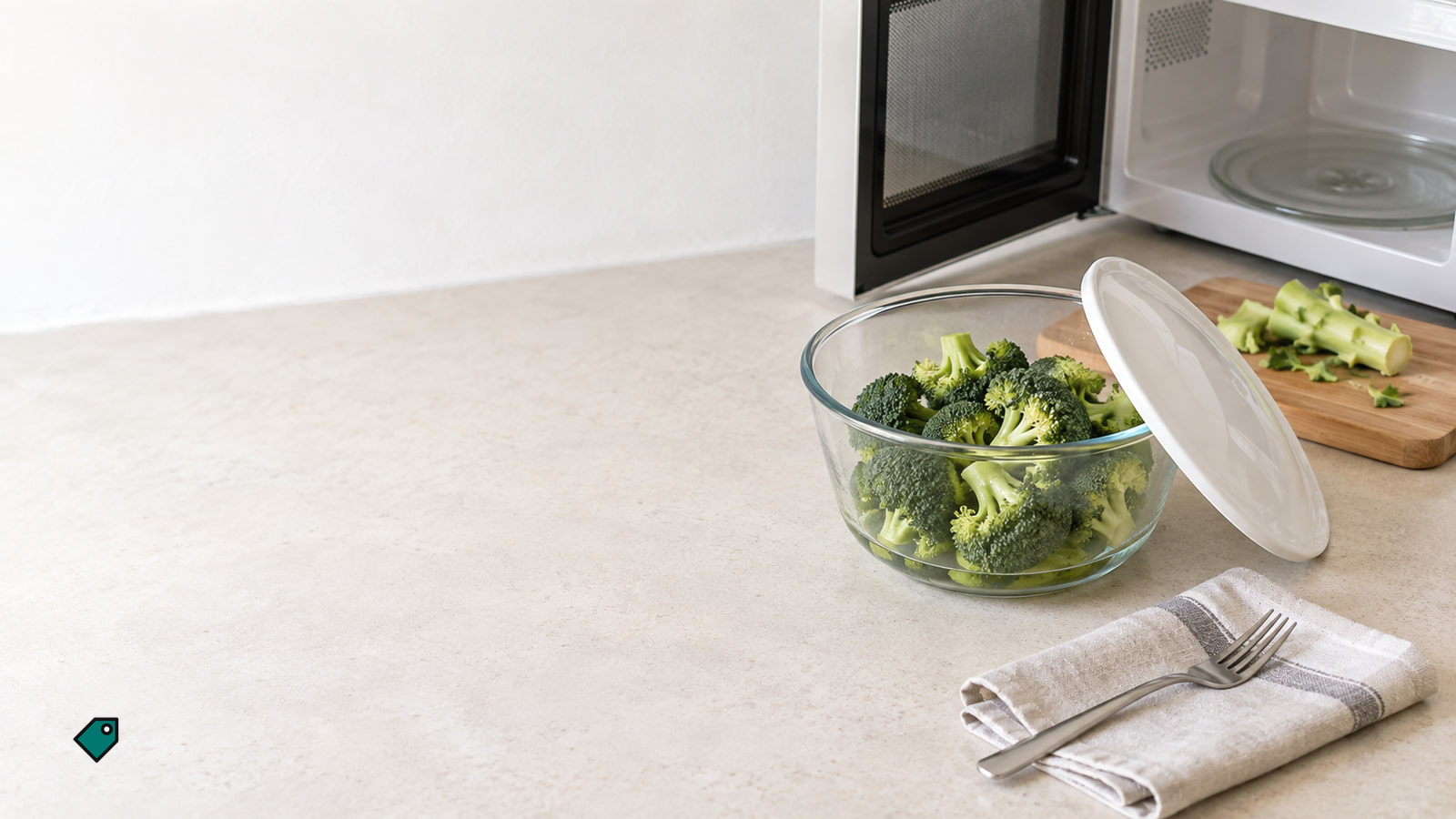
The bowl and cover need room to vent
Choose a bowl and cover marked microwave-safe. A plate that fits over the bowl without sealing against its rim works well; set a lid loosely or open its vent. A damp paper towel approved for microwave use can cover a small portion, though a plate or lid holds steam more reliably. Vented microwave-safe wrap is another option if you make the vent holes before cooking.
Skip a single-use food tub or an unmarked takeout container: heat from the food can melt unsuitable plastic. For a plate or bowl, leave out metallic trim, foil, and metal utensils. Metal can reflect microwave energy, cause sparks, and damage the oven; the FDA's microwave-oven guidance (opens in a new tab) explains the cookware risk.
- For an unmarked ceramic or glass bowl or plate, look for its care instructions first. Do not test a dish with metallic trim.
- Put the empty dish in the microwave with a microwave-safe cup containing 1 cup of water beside it.
- Heat on high for 1 minute. If the water is hot and the dish stays cool, use the dish. If the dish heats up, choose cookware marked microwave-safe instead.
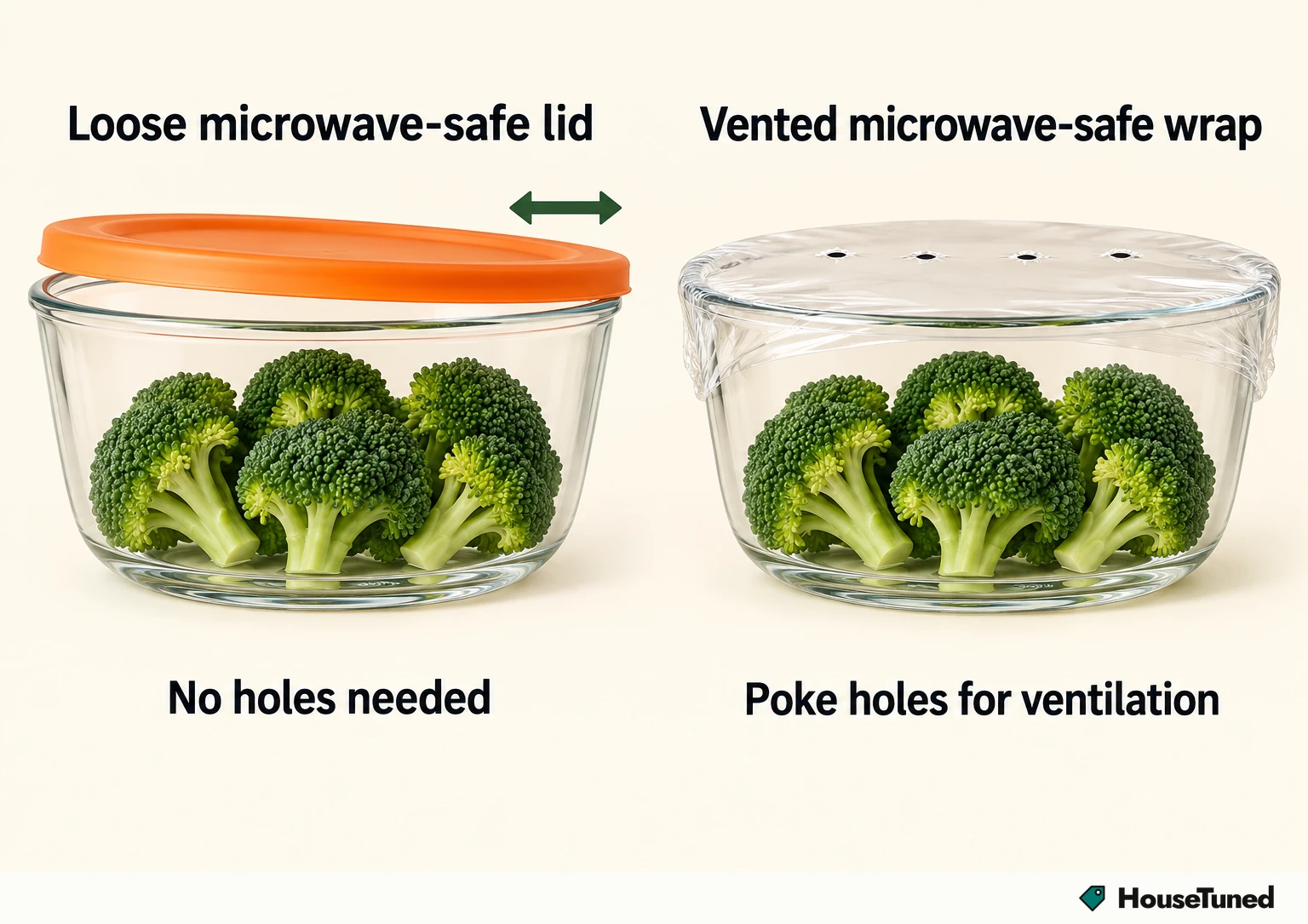
The cover has two jobs: keep enough moisture around the florets to steam them and let pressure escape. A lid sitting ajar does both. If a puddle remains after cooking, drain it so the broccoli doesn't keep sitting in hot water.
How long to cook your batch
For about 2 cups of fresh, roughly 1-inch florets, start at 3 minutes on high and expect about 3 to 4 minutes of cooking. Let the covered bowl stand for 1 to 2 minutes before the final fork test. Start at the low end even if you like softer broccoli; you can reach that texture with another 30-second interval after seeing how the stems cooked.
One serving generally finishes sooner than 2 cups. A larger bowlful needs more time and usually more water, but doubling the broccoli does not mean doubling the time. Give the pieces room in the bowl and stir them or turn the bowl partway through when a large batch is heating unevenly. A deep, crowded pile leaves some pieces away from the steam and heat longer than others.
Look at your microwave's output wattage when choosing a starting time. A lower-output oven needs more cooking time than a higher-output one, so use the 3-minute mark as a first check, then add 30 seconds at a time. Piece size, the amount in the bowl, and how soft you want the broccoli also change the finish. A fork entering the thickest stem with slight resistance gives you a clearer answer than another minute chosen in advance.
We'd keep florets close to the same size before adjusting the timer. Tiny pieces can soften while an unpeeled, thick stalk stays hard, even when the oven is working normally. If you've cut unusually large pieces, test the stem and continue in short intervals instead of transferring a small-floret time to them. Bright green florets with stems that cut easily are ready for a crisp-tender side.
Frozen florets can go straight into the bowl
Put plain frozen florets in a microwave-safe bowl without thawing them. Cover with a plate or vented lid and cook on high. Ice on the florets often melts into enough moisture to make steam; if the broccoli has little frost or the bowl looks dry, add a small splash of water.
- For about 2 cups of loose frozen florets, microwave on high and pause around 4 minutes. Treat that as a first check, since frozen pieces begin colder than fresh ones.
- Lift the cover away from your face and stir the broccoli, bringing the cooler pieces toward the outside of the bowl. Re-cover and cook for 30 seconds more if any part is still cold or hard.
- Repeat the short interval and stir as needed until the florets are hot throughout and a fork enters a thick stem at your preferred tenderness. Drain the water released during cooking before seasoning.
A whole 12- to 16-ounce bag is a different amount from a measured 2 cups, so give it its own checks rather than stopping at the 2-cup checkpoint. If the bag is expressly labeled for steaming in its packaging, follow its printed cooking and opening directions. Cook loose florets in the bowl; an ordinary freezer bag is not a microwave steam bag.
Frozen broccoli can release more water as it cooks. Tip that water off after the final fork test so it doesn't dilute your seasoning or keep softening the pieces. If some florets are hot and others are still firm, stir and re-cover before adding time; that moves the cooler pieces into a better position for the next interval.
Sparks appear during cooking
Sparks call for an immediate stop because continued arcing can damage the oven. A metal utensil, foil, metallic trim, or an unsuitable paper towel can be the cause.
- Stop the microwave immediately.
- Once it has stopped, look for a metal utensil, foil, metallic trim, or an unsuitable paper towel. Remove the item and use microwave-safe cookware or a plain paper towel approved for microwave use.
- If the sparks came from the vegetables and no metal is present, cover them and add a little water before trying again. Cooking should resume without sparks. If it sparks again, stop using and unplug the microwave.
Some pieces are still hard
If one stem resists the fork while the florets are tender, look at the cut before adding much more time. Thick, unpeeled stalks and mixed-size pieces cook unevenly. Trim and peel thick stalks for the next batch, then slice the tender center into smaller rounds or lengthwise pieces. Test one of those thick pieces before serving.
If several pieces remain hard, stir to redistribute them or turn the bowl, then re-cover and microwave for 30 seconds. Add a small splash of water first if the bowl is dry. Repeat the fork test after each interval. A crowded bowl, escaping steam, or a lower-output microwave can all leave the middle behind while the exposed florets soften.
If the entire covered bowl remains cold after you set manual cooking to high or 100% power, test whether the microwave heats at all. Put 1 cup of water in a microwave-safe cup on the turntable and heat it on high for 1 minute. A noticeable temperature rise means the oven is heating, so return to the broccoli and adjust its portion, cover, and cooking time.
If the water stays cold, the broccoli is no longer the problem. Check that the door closes and the controls are set for cooking. If the water still stays cold, or if sparks continued after you removed the offending item, contact the microwave maker's support team or an appliance service provider. Tell them the make and model, whether the light and turntable work, the power setting, and the result of the water test or what sparked.
Keep the next batch from getting mushy
Already mushy broccoli cannot regain its crisp texture. For the next batch, cut the florets to similar, roughly 1-inch pieces and start at the low end of the cooking range. Very small florets soften sooner, so test the thickest stem before giving the bowl more time. Stop when it yields to a fork with slight resistance and the fresh florets are still bright green.
Use only a small splash of water for about 2 cups of fresh broccoli. A large pool leaves the pieces sitting in hot water, while keeping the lid on after cooking lets them continue to soften. After the brief stand, lift the cover carefully, drain promptly, and add time only if the stem is still hard. Dark green broccoli with a strong sulfur smell has cooked past the usual crisp-tender point.
If a batch came out soft despite a short cooking time, look at the floret size and the time it stayed covered after the oven stopped. Make the next batch's pieces more even, check at 3 minutes, and uncover after its 1- to 2-minute stand. If steam left splatters or an odor in the oven, clean the microwave after it cools.
Questions while you cook
Do I need a steamer or a special lid?
No. Use the covered-bowl steps above. An insert-style steamer can require a different amount of water in its base than the 2 to 3 tablespoons used in an ordinary bowl.
Can I microwave fresh broccoli without adding water?
A few freshly rinsed pieces may carry moisture, but 2 to 3 tablespoons of water for about 2 cups is the reliable covered-bowl method. Frozen florets often need less added water because their ice melts as they heat.
Can I microwave the broccoli stems too?
Yes. Thin, tender branches can go in without peeling. For a thick stalk, use the peeling and cutting step above, then let the fork test on the thickest piece tell you when it is ready.
What should I add to broccoli after microwaving it?
Drain it first, then try salt and pepper with butter or olive oil, lemon juice, garlic, or grated cheese. Adding seasoning after cooking keeps the basic steaming time useful for each batch.
More in this category