Read both temperatures before choosing a check
- Put an appliance thermometer in each compartment. Look for 40°F or below in the refrigerator and 0°F or below in the freezer.
- If the refrigerator seems off, check its light and power. If it runs warm, check the doors and vents. If cooling is fine but ice is scarce, check the ice maker.
- If cooling stays poor after those checks, contact the refrigerator's maker to arrange service.
A quiet machine and a warm shelf can send you in different directions. We'd take both temperatures first because a GE refrigerator can stop its compressor and fans during defrost; the readings tell you whether cooling needs attention. Then follow the symptom you can observe.
Before changing a control, find the owner's manual for your exact model. It tells you how that refrigerator's cooling and temperature settings work.
If the power went out, protect the food first
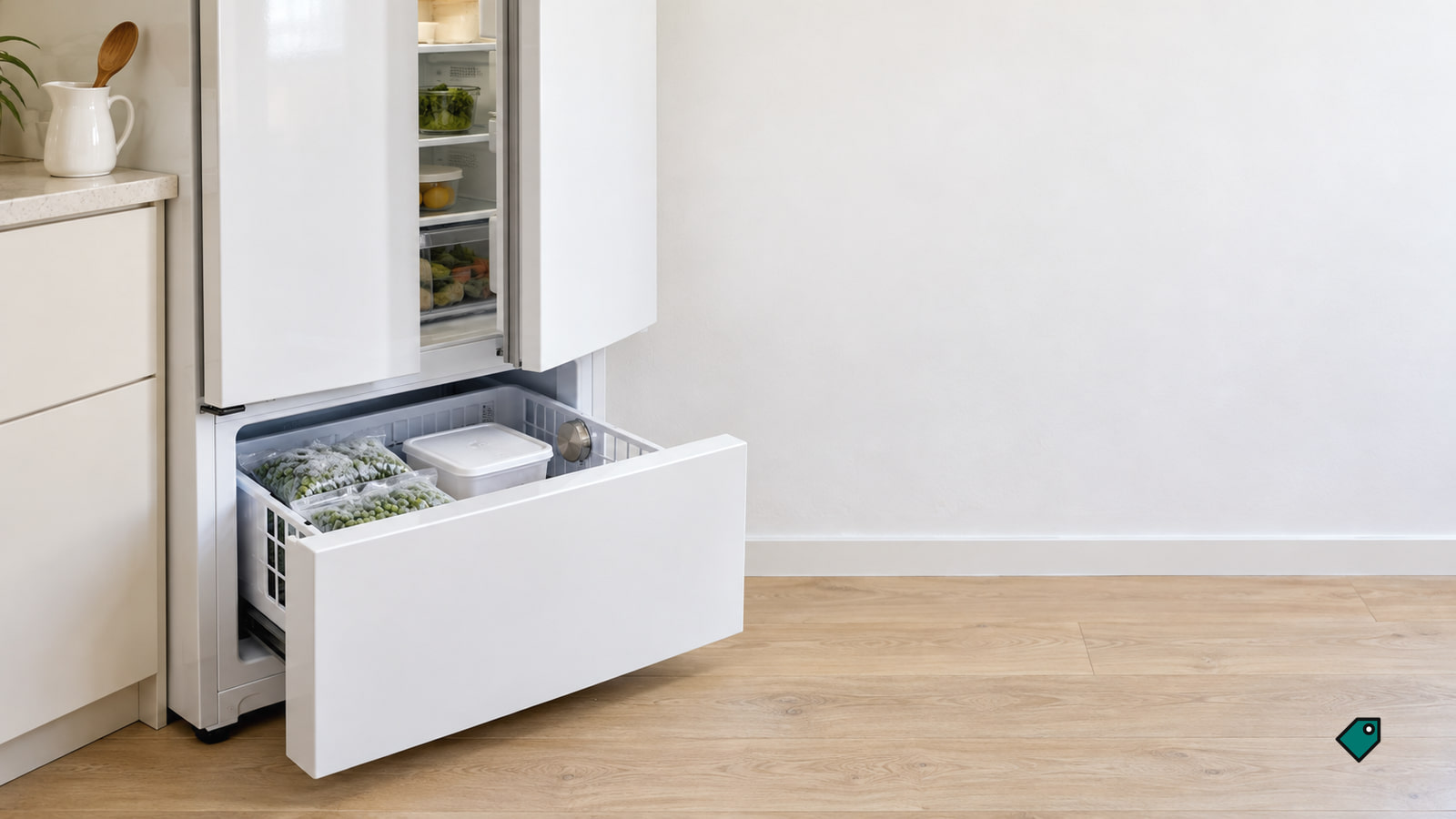
During a temporary power outage, open the refrigerator and freezer only when necessary so they keep their cold air. Keep an appliance thermometer in each compartment and watch for a refrigerator temperature of 40°F or below and a freezer temperature of 0°F or below.
An unopened refrigerator can keep food safe for up to four hours without power. After four hours, discard refrigerated perishables, including meat, poultry, fish, eggs and leftovers. Never taste food to judge its safety; use the item-by-item chart reached from the outage food guidance (opens in a new tab) for other foods.
If its door stays closed, a full freezer can keep food safe for up to 48 hours during an outage; a half-full freezer has a 24-hour window. For temporary cold storage, move food to a cooler with ice or frozen gel packs. Add enough ice to keep the food at 40°F or below, and add more as it melts.
The refrigerator seems to have stopped
Open the fresh-food door and look for its light. On a GE refrigerator that seems silent and isn't cooling, an unlit compartment is a cue to check that the plug is in the wall outlet and that the outlet has power.
If the light works, check whether the temperature controls were turned off. A quiet interval can also be part of operation on a GE refrigerator: its compressor and fans stop during defrost, which can last as long as 30 to 45 minutes and occur once or twice a day, depending on the model. Compare the thermometer readings with the quiet spell.
After a short outage, a GE refrigerator's compressor may pause before cooling resumes. That recovery happens automatically, so leave the power alone and watch for the compartment temperatures to return to their targets.
The lights work, but cooling hasn't started
Check whether cooling has been switched off, then use your exact model's manual to set the controls. If the refrigerator was just installed, check its instructions for Showroom or Demo mode and how to turn that mode off.
A newly installed refrigerator can take about 24 hours to cool and stabilize. On a Whirlpool refrigerator, a recent outage or a large addition of food can also mean several hours before the temperature returns to normal. Watch the thermometer readings while the appliance cools.
On a Whirlpool refrigerator with cooling on and Showroom or Demo mode off, set the temperature colder and allow 24 hours for the adjustment to take effect. Read both thermometers again after that period to see what changed.
It runs, but the compartments stay warm
Check that each door closes fully. A large tray or food package can get in the way; on GE refrigerators, ice behind the ice bin can do the same. Look for a gasket that doesn't make full contact, and wipe away visible debris. A door left open raises the inside temperature and makes the refrigerator work harder to bring it down.
Next, locate the vents in the refrigerator and freezer compartments and move food away from them. Cold air moves between those compartments through the vents, and large containers at the back can obstruct it. Bring tall items forward, then give the temperatures time to respond.
Read both thermometers again and note whether both compartments remain warm or the fresh-food section is warmer while the freezer is colder. That pattern, together with what you found at the doors and vents, is useful to report if cooling remains poor.
Cooling is fine, but ice production is low
On a Whirlpool refrigerator, check whether the ice maker was switched off. A newly installed Whirlpool refrigerator can take 24 hours to begin making ice and 72 hours to reach full production. After a large amount of ice is removed, replenishing it can take around 24 hours.
For Whirlpool and Maytag refrigerator ice makers, check that the water-supply valve is fully open and the line is securely connected. Look for a visible kink or blockage that restricts water flow. Don't push the refrigerator farther back against the wall or cabinet, because that can pinch the line.
For ice production, Whirlpool and Maytag specify a freezer control setting between 0°F and 5°F. The food-storage target is a measured freezer temperature of 0°F or below. If ice production and dispenser flow are both low on a Whirlpool refrigerator, a clogged or improperly installed water filter is another possible cause.
On a Whirlpool refrigerator, an ice maker that's on without a connected water supply may buzz, and food in the crisper may freeze or the freezer may get too cold. Check its on/off state alongside the water supply, then use the applicable installation or refill window to judge whether ice production has returned.
The temperatures stay high after the visible checks
If cooling is still poor after the power, control, door and airflow checks, contact the refrigerator's maker to arrange service. Some remaining problems need a professional to access and service refrigerator components. Tell the maker which compartment is warm, what each thermometer reads and which checks you've completed.
For a newly installed GE refrigerator, correctly set controls and continued warmth after about 24 hours are also a reason to arrange service. Leave a GE refrigerator plugged in until the technician arrives so its symptoms remain available for diagnosis.
Check that cooling has returned
After a corrected setting, closed door or cleared vent has had time to affect cooling, read both thermometers again. Look for 40°F or below in the refrigerator and 0°F or below in the freezer. As you put food back, keep the vents clear and check that each door seal makes full contact.
More in this category
Take a closer look
Why Is My Refrigerator Not Cooling?
Why Is Water Leaking Inside My Refrigerator or Freezer?
What Is the Proper Refrigerator Temperature?
- What Is a Counter-Depth Refrigerator?
- How to Fix a Whirlpool Refrigerator Ice Maker
- Why Isn't My Whirlpool Refrigerator Making Ice?
- Why Is My Samsung Refrigerator Light Not Working?
- What Should the Temperature Be Inside a Refrigerator?
- Why Is My Washing Machine Not Draining?
- How Does an Induction Stove Work?