The cartridge claim gives you the answer
- Yes. Most refrigerator filters use activated carbon designed to reduce chlorine taste and odor.
- Check your exact cartridge for a certified chlorine taste and odor claim, then follow its replacement schedule.
- If taste or smell changes, check that schedule. For a water quality concern, consider a test or ask your local utility.
If the water from your dispenser has a chlorine smell, we’d check the cartridge’s claim first, because filters differ in what they’re certified to reduce. That gives you a useful answer about the water you actually drink from the fridge before you consider another treatment.
Think of “remove” as a question about a specific claim. Activated carbon in most refrigerator filters is designed to reduce chlorine taste and odor. The amount a particular filter can address depends on its model, condition and the water entering your home.
Decide what you want to change before reading the label. For a chlorine flavor or smell, look for a chlorine taste and odor claim. If your concern is a different substance, look for that substance by name in the same cartridge’s information.
Why the water may taste different
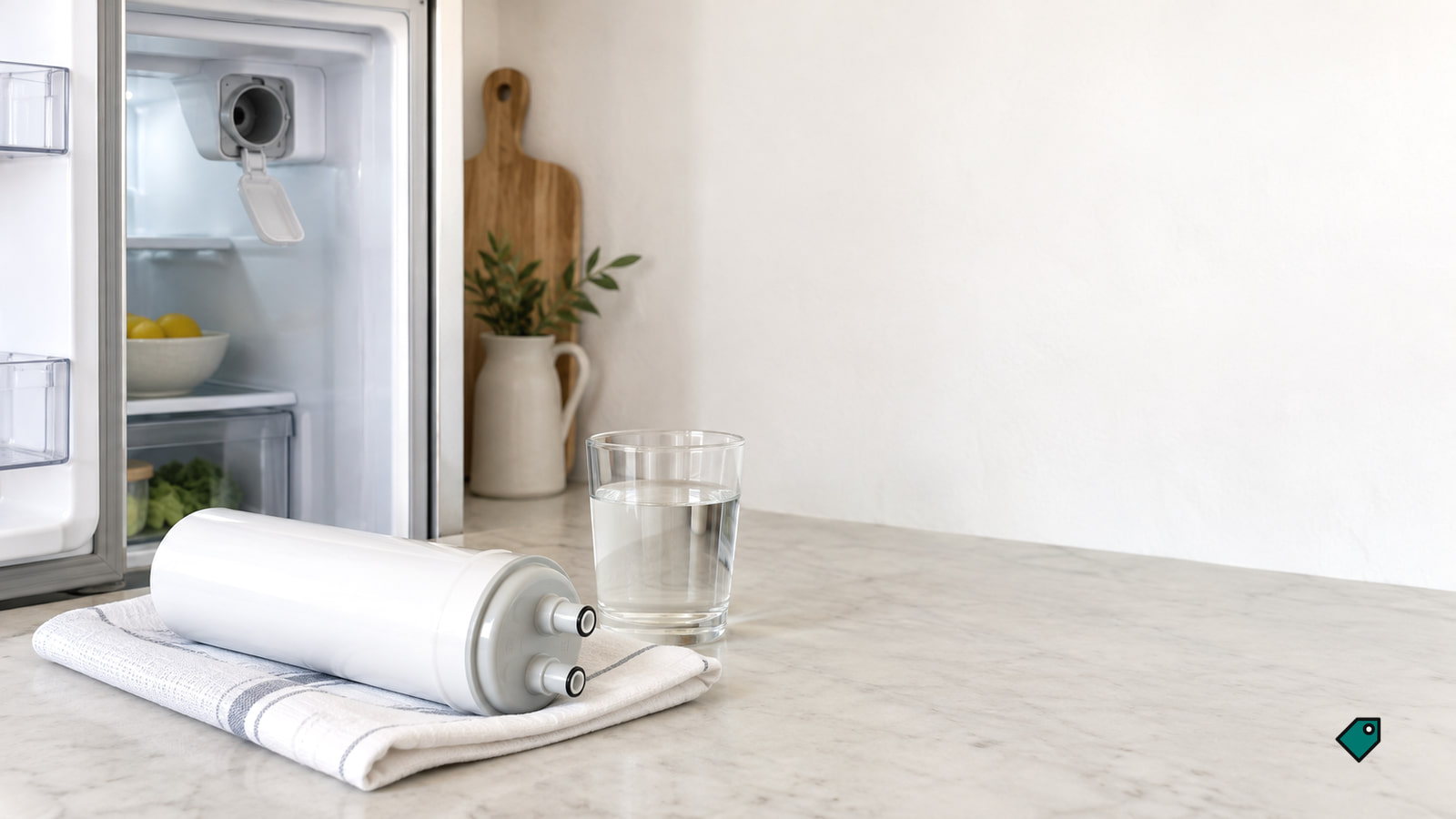
Many refrigerator cartridges use activated carbon because it can reduce the chlorine taste and odor that reaches your glass. Coconut shells are a common source of this carbon. Their tiny pores can help remove impurities, including chlorine, that affect how drinking water tastes and smells.
A chlorine smell may begin with the tap water: utilities sometimes add chlorine to control pathogens. Filtration can improve that water’s taste and odor after it passes through the cartridge. That’s the practical benefit described by a chlorine taste and odor claim.
Read the word “reduce” carefully when you choose a filter. It describes the treatment goal, while the exact cartridge’s certified claims describe its reach. Keep its condition and the quality of the incoming water in mind when judging what it can do in your home.
Check the claim for your exact filter
Use the information for the cartridge in your refrigerator, or the exact replacement you’re considering. A product label can name several things at once, so connect the certification mark, the standard number and the substance claimed before you make a choice.
- Find the certification logo or certification wording on the cartridge, its packaging or supporting information. Note the standard number attached to it.
- Look for a specific chlorine taste and odor reduction claim alongside NSF/ANSI 42. You should now have both the standard and the substance named for that product.
- Read the cartridge’s performance data sheet for that claim, or check the exact product in a third-party certification listing. Confirm that the listed claim belongs to the cartridge you’ll use.
The home water treatment guide (opens in a new tab) tells you where to look for certification marks and recommends reviewing the performance data sheet for the targeted contaminant. Keep the exact product name in view as you check: a claim printed for one cartridge tells you what that cartridge is certified to address.
What NSF/ANSI 42 tells you
NSF/ANSI 42 generally covers aesthetic concerns, including chlorine taste and odor. For this question, the useful combination is the standard number plus a specific chlorine claim. A certification mark by itself gives you a place to start reading, while the named claim tells you what to expect from the product.
Certification under one standard covers stated concerns. Read the specific substances listed for the cartridge when you want more than better taste or smell. This keeps a chlorine taste and odor claim in its proper role as you compare filters.
Some refrigerator filters carry certified claims for additional contaminants, while others focus on chlorine taste and odor. Check the product label or manufacturer information for the filter you have. If another substance is your reason for filtering water, find that substance in its performance data sheet or certification listing.
What the filter leaves beyond its reach
What remains in the water depends on the filter model, its certification and condition, and the water coming into your home. No single treatment system removes every contaminant. That’s why a list of things one refrigerator filter reduces cannot stand in for the claims on another cartridge.
Depending on the model, a refrigerator filter may have certified claims for substances such as dirt, rust or lead. Treat each one as a separate product claim. If lead is your concern, for example, look for lead on the exact cartridge’s product information instead of relying on its chlorine claim.
The refrigerator treats only the water and ice it dispenses. Water from another tap, a shower or another appliance stays outside that treatment. If you’re choosing filtration for water used elsewhere in the house, use that broader goal when you compare treatment options.
When taste, smell or flow changes
A change in taste, odor or dispenser flow is a reason to check whether the cartridge needs replacing sooner than its scheduled date. Start with the replacement instructions for your refrigerator or filter, because timing depends on the model, water use and water quality.
Taste and smell answer a different question from water safety. Most harmful contaminants have no noticeable taste or smell, so use a water test or consult your local water utility if you notice a change or have a water quality concern. A pleasant glass of water is an observation about taste, not a safety result.
If the change is specifically that the dispenser has slowed or stopped, follow the fridge dispenser checks for that symptom. For the chlorine question, return to the exact cartridge claim and its maintenance instructions to judge whether the filter still matches your goal.
Keep the claim useful over time
Check the replacement schedule in your refrigerator or filter instructions and follow it for the cartridge you use. Water treatment needs ongoing maintenance to remain effective, and neglected maintenance may make water quality worse. Keeping the filter on its schedule is part of using its reduction claim.
There isn’t one replacement date that fits every cartridge. Timing changes with the filter model, water use and water quality. Whirlpool recommends replacing its refrigerator filters every six months; use the instructions for your own refrigerator or filter to set your schedule.
Keep the cartridge’s product information with that schedule. When it’s time for a replacement, check the new cartridge’s named reduction claims and its maintenance instructions so the water and ice you dispense continue to receive the treatment you chose.
More in this category