Decide whether your filter belongs in the sink
- Check your filter type first. Clean a reusable filter as its instructions allow, and replace a disposable one.
- Switch the AC off, remove the filter carefully and gently vacuum loose dust. Wash only a filter designed for water.
- Air-dry it completely, fit it securely and replace the access cover before restarting.
A dusty filter doesn't automatically need a soak. We'd check its cleaning instructions and start with gentle vacuuming, because that removes loose dust and larger particles without adding a washing step a lightly dirty filter may not need.
Your system and filter type determine whether cleaning is appropriate. For central heating and cooling filters, follow the package instructions for regular cleaning or replacement. Check specifically for permission to wash before carrying a reusable filter to the sink.
Never clean and reuse a disposable HVAC filter. Washing can leave contaminants behind in its folds and is likely to damage the material. Reusing it can reduce system efficiency and strain the motor, so replacement is the appropriate route.
Switch off before opening the filter access
Switch off the air conditioner before handling the filter. That prevents accidental operation while you're working, which could cause injury or damage. Leave removal until the unit is off.
Look behind the front panel or for a designated filter slot along the side, bottom or top of the unit. Use your equipment's instructions to identify the access point and removal method. Filter locations and access aren't the same across all units.
Ease a sliding filter out carefully, keeping your handling gentle. The part you're removing needs to remain intact for cleaning and reinstallation, and incorrect handling can damage either the filter or the AC.
Lift loose dust with a vacuum
Use the brush attachment on your vacuum to gently lift loose dust and larger particles from a cleanable filter. Vacuuming is particularly useful when the filter isn't excessively dirty, so the amount of dirt matters when choosing what comes next.
Look at what's left after that first pass. If loose dust was the problem and the filter is clean, proceed to reinstallation. If residual dirt remains on a washable filter, use the permitted water-cleaning method.
A brush attachment is a cleaning tool, not a reason to press harder. Keep the movement gentle throughout the job, because rough or incorrect handling can damage the filter.
Use water only when washing is allowed
Hold a washable filter under lukewarm running water to rinse away residual dust. Keep this step conditional on the filter's care instructions. A reusable filter's approved cleaning method determines whether water belongs in the routine.
For washable TCL filters needing a deeper clean, use a basin of warm water with mild detergent and soak for about 10 to 15 minutes. Gently agitate the water to release embedded dirt. This is an optional deeper-cleaning step, so you don't need to build a soak into every cleaning.
Match the cleaner and method to your unit's instructions before adding detergent. The room-AC examples below distinguish a plain-water wash from the extra cleaning permitted for a very dirty filter.
Room AC cleaning varies by unit
On Whirlpool air conditioners with a side-sliding filter, turn the unit off and slide the filter out from either side. Check your owner's manual for your unit's specific removal and cleaning details before using that access method.
Vacuum the Whirlpool filter first. If it's very dirty, wash it in warm water with mild detergent, but don't use chemical cleaners or put it in the dishwasher. Air-dry it completely, slide it back into either side and keep the AC off until the filter is installed.
On GE room air conditioners, use your model's instructions for the filter location and removal. Gently vacuum with a brush attachment, or wash in warm water, adding a little mild dish detergent if the filter is very dirty. Handle it carefully so you don't tear or damage it, and never clean it in a dishwasher.
Don't reinstall a damp GE filter or operate the unit with its filter missing. Wait for complete dryness before fitting it back in place. Keep the filter-care instructions (opens in a new tab) handy if you need to check the permitted cleaning options.
Keep small enzyme filters out of the water
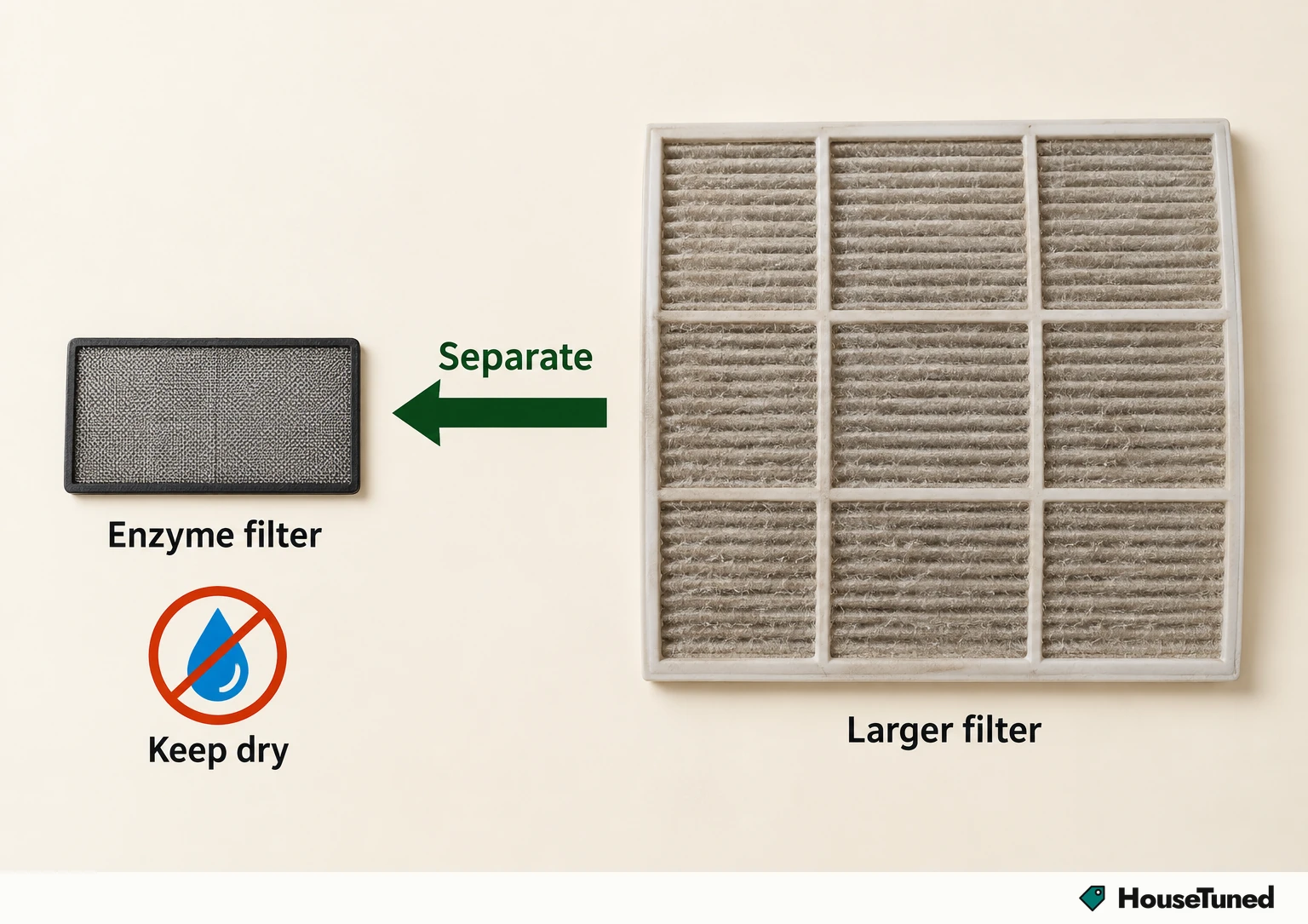
On Trane mini-splits with small enzyme filters clipped to the larger filters, the two components need different treatment. Use your owner's instructions alongside the mini-split cleaning steps (opens in a new tab) for this arrangement.
- Switch off the mini-split, then lift off the panel to expose the filters.
- Gently remove the filters without shaking off dust. Unclip the smaller enzyme filters and keep them dry, leaving the larger filters separate for cleaning.
- Vacuum the large filters with a brush attachment and low suction. If debris remains, gently handwash them in the sink with lukewarm water and the faucet's spray attachment to remove the remaining dirt.
- Let the large filters dry thoroughly, then snap the enzyme filters back on. Reinstall the dry assemblies and close the panel, with both filter components back in place.
- Turn the mini-split back on with the panel closed and the cleaned filters installed.
Wait for dryness and check the fit
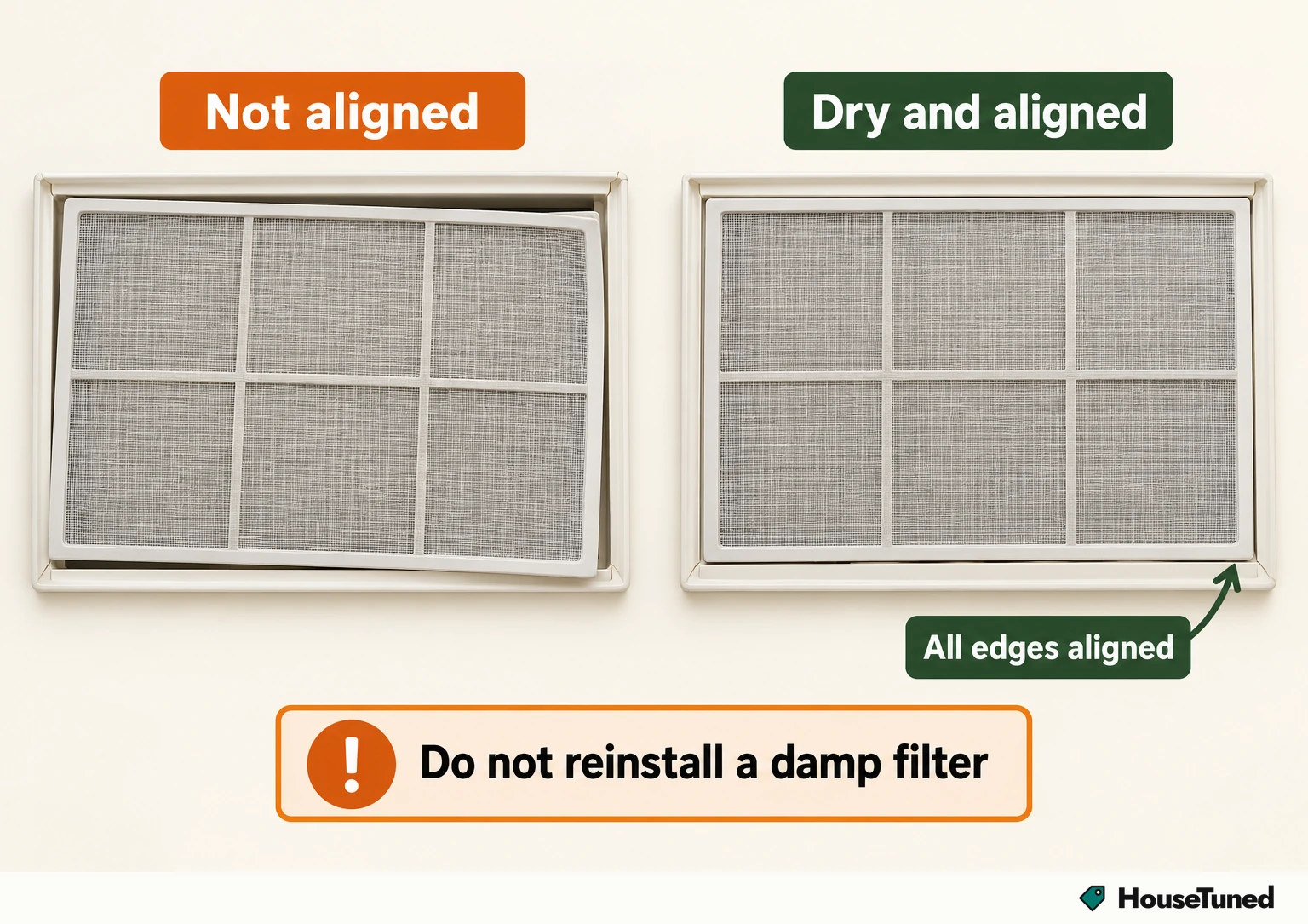
Set a washed filter in a well-ventilated area and let it air-dry completely. Moisture can allow mold or mildew to develop and spread through your home when the AC runs. Complete dryness is the endpoint to use before reinstallation.
Fit the dry filter securely, with all its edges properly aligned. Replace any filter-access covers or panels you removed before turning the air conditioner back on. If the filter isn't sitting securely, correct its fit before restarting.
A clean filter supports airflow and efficient operation by removing the dirt buildup that can restrict air movement. Cleaning isn't a guaranteed repair for a cooling problem. For care beyond the filter, continue with the checks that fit your equipment in our air conditioner maintenance guide.
Plan the next check around your equipment
Use your equipment's interval to plan the next inspection or cleaning. An inspection tells you whether the filter needs attention, while a cleaning interval tells you when to carry out the job. Keep those two instructions distinct when setting your routine.
- For Whirlpool air conditioners, check the filter every two weeks to see whether it needs cleaning.
- For GE room air conditioners, clean the filter every 30 days to support unrestricted airflow and performance.
- For TCL air conditioners, inspect and potentially clean monthly during peak-use seasons. Pets or a dustier environment can mean more frequent checks and cleaning.
- For central heating and cooling filters, clean or replace regularly according to the filter-package instructions.
Between scheduled checks, extra household dust or rising energy bills with unchanged usage are reasons to inspect the filter. A dirty or fuzzy appearance also signals that it needs attention. Clean an eligible dirty filter or replace a disposable one promptly, because a clogged filter can strain the system and affect indoor air quality.
More in this category
Take a closer look
How to Clean a Dishwasher Filter
Honeywell Thermostat Not Working? What to Check First
6 Humidifiers That You Can Refill From Above
- What Is a Swamp Cooler? How It Cools Dry Air
- Heat Pump vs Furnace and Which Fits Your Home and Climate
- Heat Pump Is Not Heating? What to Check Before You Call
- How to Snake a Toilet and Clear the Clog Safely
- How to Bleed a Radiator and Know When to Close the Valve
- Dishwasher Leaking Door Seal? Causes and Tightening Checks
- How to Install a Wall Oven and When to Call an Electrician