The engine turns but won't start
- Cranking means the engine itself turns when you pull the cord or use the starter.
- Start outdoors with fresh fuel, an open fuel valve and the right choke or primer setting.
- If it fires briefly, follow the fuel-flow checks. If it never fires, inspect the filter and plug.
- Stop if fuel leaks, the blade struck something or a safety control behaves incorrectly.
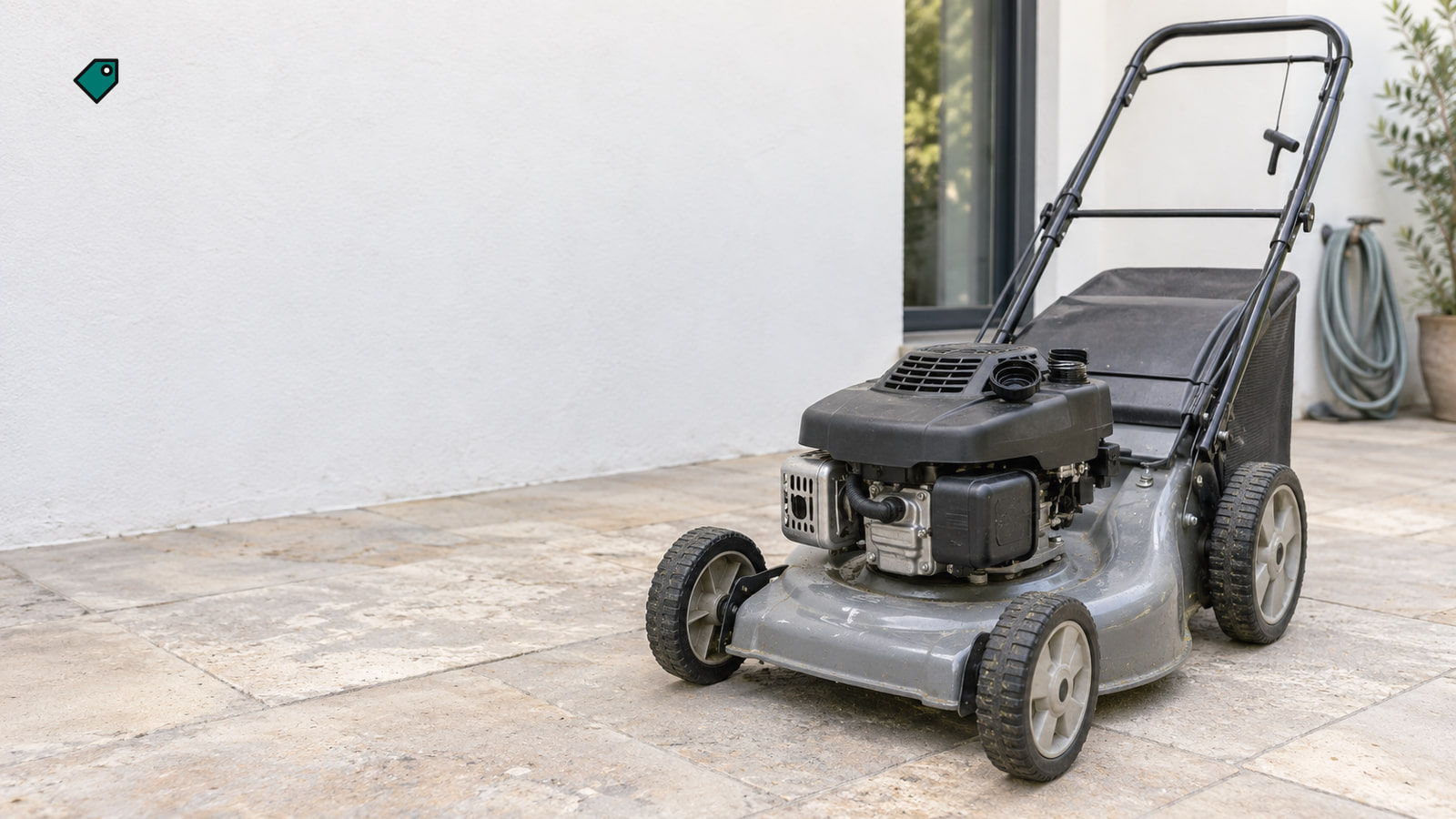
These checks are for a gas walk-behind mower whose engine turns at its usual speed. It needs fuel, air and spark to fire, then steady fuel flow to keep running. We'd start with fuel age and the controls because stale gas and a wrong starting setting can stop it before any part has failed.
| What you notice | What it points toward | Try first |
|---|---|---|
| Fuel was left in the mower over winter | Stale fuel or deposits | Replace the tank and carburetor-bowl fuel. |
| The tank is empty or the fuel valve is closed | No fuel supply | Add fresh fuel or open the valve. |
| It never fires after a cold start | Starting controls, air or spark | Set the primer or choke, then inspect the filter and plug. |
| You smell gas after repeated attempts | Possible flooding | Stop priming and let excess fuel clear. |
| It fires, then dies | A starting setting or restricted fuel flow | Move the choke to RUN, then trace the fuel supply. |
| It ran before striking an object | Possible blade, crankshaft or ignition-timing damage | Stop starting attempts and have the damage inspected. |
Prepare for one clean starting attempt
- Stop repeated attempts. An engine with separate gas and oil fills uses fresh unleaded gas rated at least 87 octane with no more than 10% ethanol. An older engine with one combined fill needs the two-cycle mix printed on its cap. Replace fuel left from last season using the steps below, and open a closed fuel valve.
- Before starting a four-cycle mower, let it cool on level ground. Wipe the dipstick, insert it as the engine directs and read the marks. Add oil a little at a time if low, or correct a reading above Full before running. SAE 30 is a common warm-weather grade; confirm your engine's grade. Low-oil protection can prevent a restart on engines that have it.
- Seat the spark-plug boot and hold the handle bail. For a cold start, set a manual choke to CHOKE or press the primer three times, more if its label says so. Leave the choke off for a warm start; an automatic choke needs no setting. Make the starting attempt outdoors in step 4.
Start it outdoors and watch what happens
- Start outdoors, following the U.S. Environmental Protection Agency's carbon monoxide guidance (opens in a new tab). Wear eye protection while pulling the cord. For electric start, release the key when the engine starts. Crank for at most five seconds, then wait one minute before retrying. Move a manual choke to RUN when it catches. Steady running means the change worked; continued cranking or a brief catch sends you to the next checks.
If the gas has been sitting, replace all of it
- Let the engine cool. Remove the key or electric-start button if your mower has one, then disconnect the spark plug wire. Put the mower and gas can on the ground so static can't ignite the fuel. Keep the mower upright and use a hand pump to move old tank fuel into an approved gasoline container. Keep it closed and separate from used oil. Take unusable fuel to a household hazardous-waste collection program (opens in a new tab).
- If the carburetor has a drain screw, catch the fuel, loosen the screw, empty the bowl and retighten it. If its instructions permit bowl removal instead, close the fuel valve or clamp the line, catch the fuel, remove the permitted fastener, inspect the gasket and refit the bowl. Leave any fastener the instructions prohibit removing in place.
- Reconnect any opened line and restore fuel flow. Refill with fresh gas. Look for leaks and wipe up spills. Move the closed fuel container away. Once vapors clear, reinstall the removed key or button, reconnect the plug lead and start outdoors. Steady running with dry connections means the fuel change worked; continued cranking sends you to the filter and plug.
If fresh fuel changes nothing, look at air and spark
- Let the engine cool, disconnect the plug boot, remove an electric-start key and open the air-filter cover. Replace dirty or damaged paper. Wash serviceable foam in soapy water, dry it fully and oil it only if the engine uses an oiled foam filter. Refit the filter and cover, reinstall the removed key, reconnect the boot and try starting. Steady running means it worked. If it still won't run, stop it, let it cool and pull the boot off again before inspecting the plug.
- Brush away dirt and remove the plug with a spark-plug socket. A fuel-wet tip shows fuel reached it; missing spark can also leave it wet. Replace a cracked, heavily sooty or worn plug.
- A common walk-behind plug gap is 0.030 inch. Find the engine ID on its housing or model sticker and use its model, type or serial number to confirm the plug and gap in the engine maker's parts lookup. Use that ID and the parts list to match the air filter and a serviceable in-line fuel filter. Set the gap with a gauge; replace a platinum or iridium fine-wire plug instead of regapping it. Start the plug by hand. For a gasketed plug, tighten it another half-turn when new or one-eighth to one-quarter turn when reused; confirm your engine's rule to avoid damaged threads. Reconnect the boot and try starting. Steady running means it worked; otherwise test spark.
- If it still won't fire, connect the plug lead to a spark tester and clip the tester's ground lead to clean engine metal. Set the stop control to RUN, hold the bail and crank while watching for spark. If spark appears, follow the fuel-flow checks. If none appears, inspect visible plug and stop-switch wires for damage and repeat the test. Reconnect the plug lead afterward.
If it still will not run, follow the fuel
- With the engine off and cool, disconnect the plug lead and inspect the visible in-line filter and hose. Deposits can restrict fuel flow; cracks or a leak mean the hose needs replacement before another start.
- For a clogged in-line filter, close the fuel valve or clamp the line. Catch the fuel, fit an engine-matched filter with its flow arrow toward the carburetor and secure the clips. Restore flow, wipe up spills and look for leaks. Reconnect the plug lead before starting. Dry joints and steady running mean it worked; continued stalling sends you to the inlet test.
- Stop the engine, let it cool and disconnect the plug lead again. For a damaged or blocked hose you can reach, clamp the supply, move its clips back and catch residual fuel. Match the replacement in the engine parts list; 1/4-inch inside diameter is common. Cut it to the old hose's length, clear cut debris and secure both ends with new clamps. Restore flow and look for leaks before starting. Reconnect the plug lead before starting. Stop if fuel leaks.
On a gravity-fed mower with a line you can reach at the carburetor inlet, secure the plug lead away from the plug. Clamp the line with a smooth-faced clamp, disconnect it and hold it over an approved container. Release the clamp briefly: flow shows fuel reaches the inlet; little or none points to the tank outlet, valve, filter or line. Clamp and reconnect it. If there is a bowl drain, catch its fuel, loosen the screw and retighten it. Fuel from the drain shows it reached the bowl; a dry bowl after good line flow points inside the carburetor. Secure every connection, clear spills and look for leaks before reconnecting the plug lead or starting.
Check the fuel cap and decide when to seek repair
If it fires for a second and dies, move a manual choke to RUN, open the fuel valve and use fresh gas. If it ran longer before stalling, stop the engine, let it cool and inspect a vented fuel cap outdoors. Clear a visibly blocked opening or replace the cap, then secure it and restart. Don't probe the opening with wire or tools, which can damage it. Steady running means it worked; another stall sends you to the filter and line. Only use a loosened-cap comparison if your mower's instructions permit it: running with the cap loosened but stalling with it secured points to the vent.
The repair worked when it runs steadily for several minutes with the choke off and cap secured, then restarts warm. If spark and inlet fuel flow are present but it still won't run, carburetor passages, compression and ignition timing need diagnosis. After a blade strike or unusual vibration, stop: the flywheel key needs inspection and crankshaft straightness must be measured before restarting. Flywheel removal requires an engine-specific torque setting. A fuel leak, failed safety control, absent spark after a new engine-matched plug, or continued no-start also ends owner checks. Contact an authorized engine or mower dealer for a safety or warranty fault, or a qualified small-engine shop otherwise. Give them the cranking speed, stall timing, fuel age, strike history and results at the plug, filter, cap and line. Get an itemized quote showing any inspection charge, credit and transport fee before authorizing work.
| Job | Price | What it covers |
|---|---|---|
| Illustrative gas walk-behind shop minimum | $36 | Confirm what inspection it covers and whether it is credited. |
| Carburetor cleaning on a gas walk-behind mower | $36 to $50 | Cleaning service; other work costs extra. |
| Installed factory carburetor for selected gas walk-behind engines | $70 to $170 | One factory part and replacement service. |
The installed replacement combines a factory carburetor at $30 to $120 with a $40 to $50 replacement service charge. A separately billed shop minimum, earlier cleaning, fuel-system work and transport add to the bill.
Questions before another attempt
Did I flood the engine by trying too many times?
A gas smell after repeated priming suggests flooding; a wet plug strengthens the clue, though missing spark can also wet it. Stop priming, turn a manual choke off, wait several minutes, then dry and reinstall a wet plug with the engine cool and its lead disconnected before trying once more. Steady running means the excess fuel cleared; stop for a visible leak or fuel-soaked filter, and a plug that wets again needs fuel or ignition repair.
Should I spray starting fluid into the mower?
No, don't use it as a routine starting step or spray it anywhere on the mower. A brief fire on starting fluid is a fuel-delivery clue, not a repair, and repeated spraying will not clear a blockage. After fresh fuel and the normal starting controls fail, test spark and trace fuel to the carburetor.
How much does it cost if it still won't start?
A new gas self-propelled walk-behind mower costs $330 to $1,000. Compare that with the complete repair quote, including diagnosis and transport. If cleaning fails, approve an installed carburetor separately so you know whether the cleaning charge still applies. Check warranty coverage before paying; a covered defect may qualify for free repair, though fuel maintenance and transport can still cost you.
How do I keep this from happening next season?
Untreated gas can cause starting trouble after about 30 days. Add stabilizer to fresh fuel before storage and run the engine long enough to move it into the carburetor, or drain the fuel system. Before the next season, inspect the plug, air filter and oil; stabilizer will not revive gas that has already gone stale.
More in this category
Take a closer look
Why Is My Garage Door Sensor Not Working?
What Does a Pressure Washer Unloader Valve Do?
How to Remove Gravel From a Yard
- Why Does My Chainsaw Keep Stalling?
- Why Does My Samsung Dishwasher Show an LC Code but No Leak?
- Why Does My Whirlpool Dishwasher Fill but Not Wash?
- Why Is My Shark Robot Vacuum Not Charging?
- How to Wash and Fully Dry the Filters on a Dyson SV10
- Ultenic AC1 TriFlex Review, the Floor Washer for the Mess That Just Happened
- How to Make a Mini Refrigerator Colder