Make it safe to take a look
- Turn the system off at the thermostat if you can reach it safely. A condensing furnace makes water, but that water should drain away instead of pooling on the floor.
- If water could reach electrical parts, leave the equipment off. Use a safe, accessible disconnect or breaker to cut power.
- Once the area is safe, check whether heating or cooling was running, then look for the first visible wet spot.
A wet floor gives you two useful clues before you follow a drip: which controls you can reach safely, and what the system was doing when water appeared. We'd shut it down first because a leak can expose electrical parts to water. You can still use the heating or cooling setting to guide an outside look afterward.
Set the thermostat to off if you can reach it safely. If water is reaching electrical parts or the leak is significant, cut power at the appropriate disconnect or breaker only if you can get there safely. A furnace switch is another shutoff option. Leave the equipment off while you check the visible source.
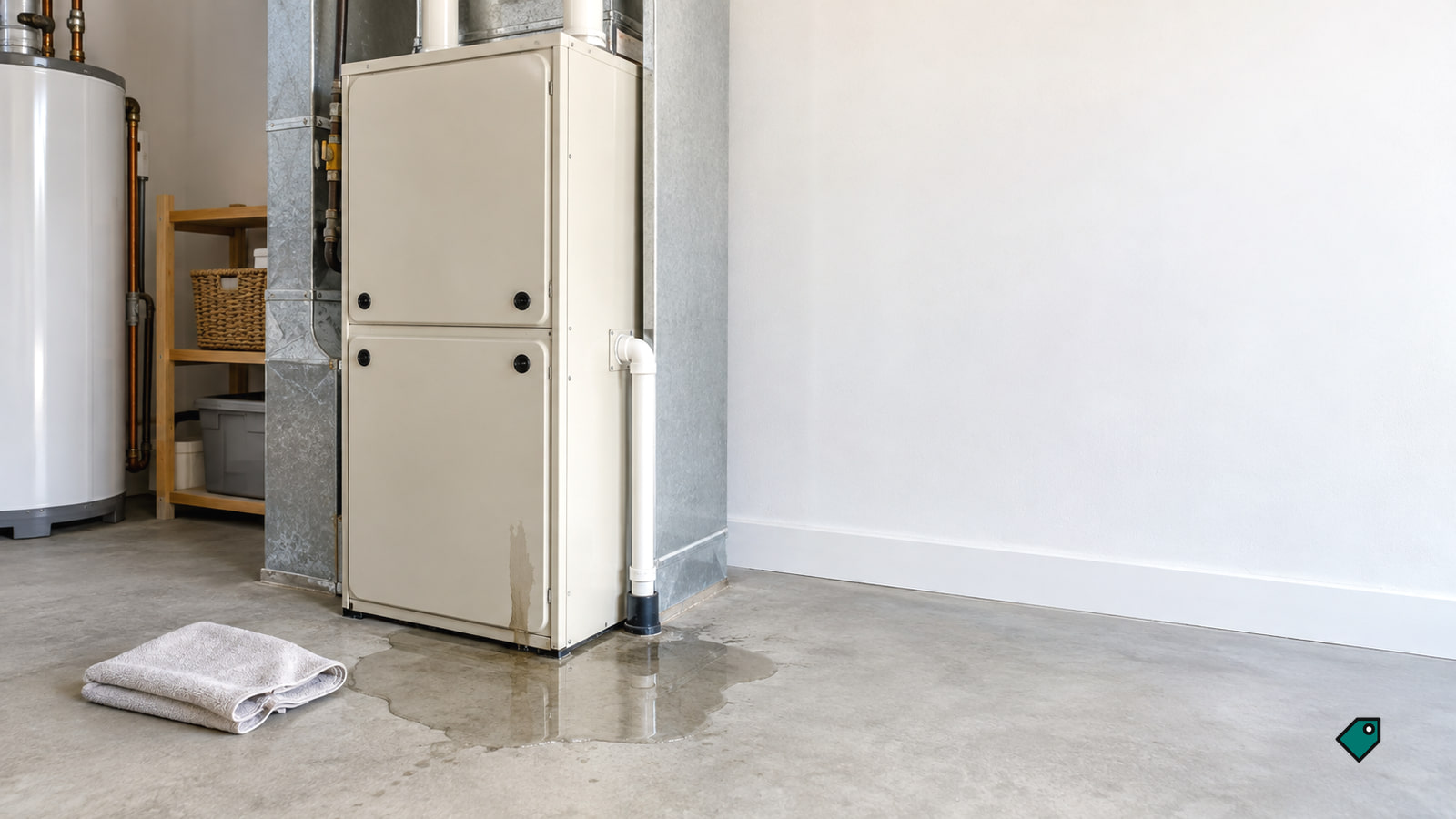
What the puddle can mean
During heating, a high-efficiency condensing furnace produces water as it pulls more heat from combustion gases. That water belongs in its drain. A conventional furnace doesn't produce the same condensate, so water beside one calls for a look at other sources, including the cooling equipment and nearby appliances.
For a condensing furnace that leaves water on the floor, a clogged drain or another drainage problem is a leading possibility. A condensate pump, where fitted, and an attached humidifier can also put water near the cabinet. Floor pooling needs prompt attention even though making and draining condensate is normal for the condensing equipment.
Use timing to pick the next place to look. Water that appears with the heat points toward the furnace's condensate path or a humidifier. Water that appears with the AC points toward the indoor cooling coil and its drainage in a split system. The first visible wet spot helps you narrow those possibilities without opening the equipment.
The water may start somewhere nearby
Look around the utility room before tracing anything on the furnace. A water heater, washing machine or wash tub nearby can leave water in the same area. If the floor is safe to approach, check which appliance has the first visible wet spot and note whether water is only under or beside the furnace.
If a whole-house humidifier is attached, look at its outside surface for an obvious overflow or water near its connection. A humidifier problem can wet the furnace cabinet or the floor. When water appears to start there, turn off the humidifier's water supply only if you can reach its valve safely, then ask an HVAC contractor to diagnose it.
Keep your check to parts you can see from outside. Don't open the furnace cabinet or try to repair something inside to follow the water. The cabinet contains electrical, mechanical and combustion components that need professional handling.
When the heat was running
If water appeared while the heat was running on a condensing furnace, follow only the accessible outside portion of the condensate line with your eyes. Look for a visible blockage, kink or disconnected section. A blocked line can back water up, while a disconnected line can let it spill before reaching the drain.
If your setup has a condensate pump, note whether the first wet area is around the pump or its tubing. A pump that fails, loses power or cannot discharge water can overflow. That observation gives the HVAC contractor a place to start; leave pump testing and repairs to them.
A line that looks clear from outside still leaves the drain and pump as possible sources. Keep the system off and report what you can see, including whether the water is at a line connection, near a pump or below the cabinet. An HVAC contractor can inspect the drainage system and identify the repair.
When freezing weather changes the clue
In freezing weather, look for visible ice on any accessible condensate line exposed to the cold. Ice can block the route that carries water away from a condensing furnace, letting it back up and leak. Note whether the furnace has also stopped operating.
Don't use an open flame to thaw a frozen line. Keep the furnace off and have an HVAC contractor assess the drainage problem, especially if heat has stopped. The outside check is enough to give them the weather, visible ice and shutdown details.
When the AC was running
If you have a split system with a furnace indoors and an AC unit outdoors, the indoor evaporator coil sits with the furnace. It makes condensate while cooling. Water normally moves through a pan and drain, but an overflowing pan can leave a puddle near the furnace.
Water can also appear after the AC stops. A frozen coil releases water as it thaws, and a dirty filter can restrict airflow enough to contribute to that freezing. Turn the air conditioner off if the coil has frozen, and have an HVAC professional deal with the coil. Remove the thaw water promptly when the area is safe.
Tell the contractor whether water appeared during cooling or after shutdown. They can inspect the coil, pan, drain and any condensate pump, then clear a clog or address another fault. Those cooling components can make a furnace-area puddle even when the furnace itself is dry.
What an accessible filter can tell you
With the system off and the area safe, check an air filter you can reach without opening the furnace cabinet. Replace it if it's dirty, following the filter manufacturer's directions. Replace a wet filter as well.
A dirty filter can restrict airflow during cooling and contribute to a frozen coil, which releases water as its ice melts. Replacing it addresses that visible airflow clue. It won't clear a blocked furnace condensate drain, so keep any drain or pump observations separate when you describe the leak.
What the outside checks cannot settle
If water continues, the source stays unclear after these outside checks, or the drain looks clear and the filter is clean, contact an HVAC contractor for diagnosis. Tell them whether heat or cooling was running, where water first appeared, and what you saw at the accessible line, pump area, humidifier or filter. They can check the parts inside the system and make the repair.
A heat exchanger fault is a less common but serious possibility, although a cracked exchanger isn't a typical cause of a condensate leak. A puddle alone doesn't identify a damaged exchanger; if you suspect a heat exchanger or other combustion problem, turn off the furnace and seek a qualified HVAC inspection immediately. Don't inspect or repair the heat exchanger yourself.
A water leak usually isn't an immediate emergency, but it does need prompt attention to prevent damage. It can become urgent when electrical parts may get wet or combustion trouble is suspected. Leave gas, electrical and internal-component repairs to the contractor because mistakes can create fire, shock or carbon monoxide hazards.
Keep water off the floor while it stays off
After shutdown, and only where you can work safely away from wet electrical equipment, place a bucket or towel beneath a visible drip. That contains water while the equipment is assessed and helps protect the floor and nearby materials.
Use towels or a mop to remove pooled water. If the cooling coil froze, mop up water it releases as it thaws too. Leave the system off, and note the first place fresh water appears while you dry the floor.
More in this category