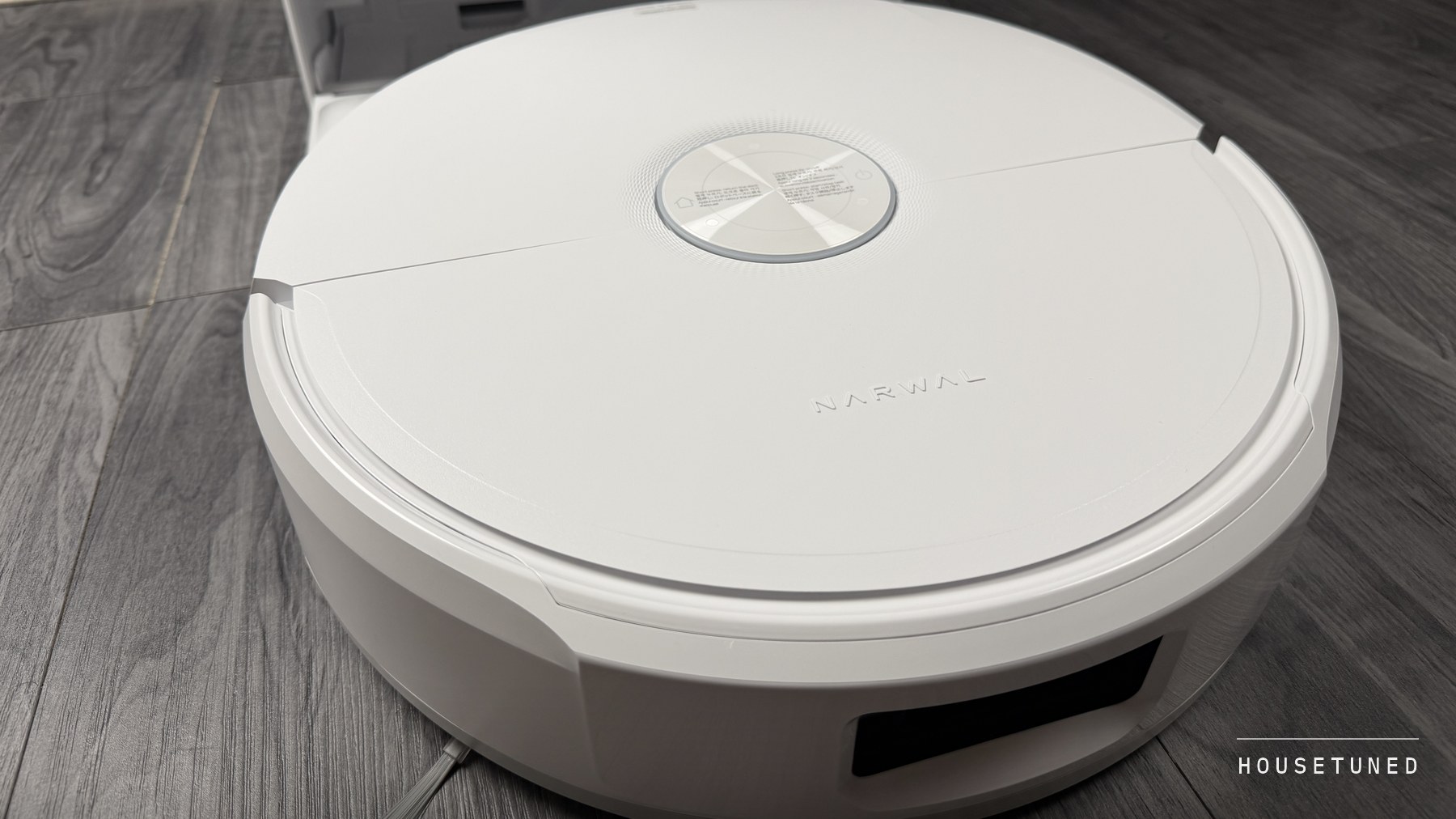
Nearly Two Weeks of Daily Runs, Counted in Chores
Keeping hard floors clean is not one chore. It is a string of small ones: vacuuming, mopping, rinsing and drying whatever you mopped with, emptying a bin, filling a bucket and tipping it out. A robot with a self-cleaning dock promises to take the whole string. None quite does, so the useful question is which jobs really leave your list and which come back in a different shape.
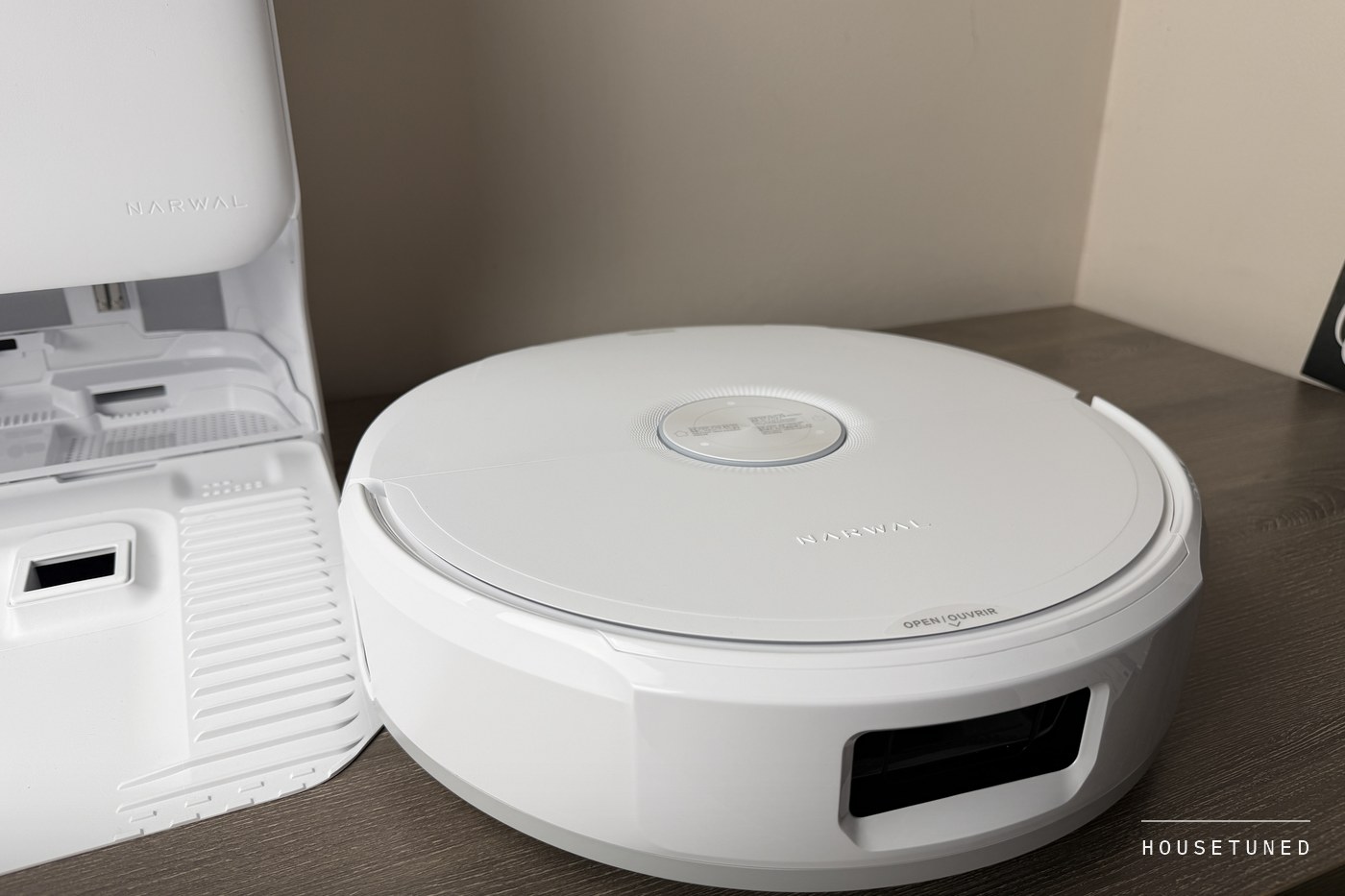
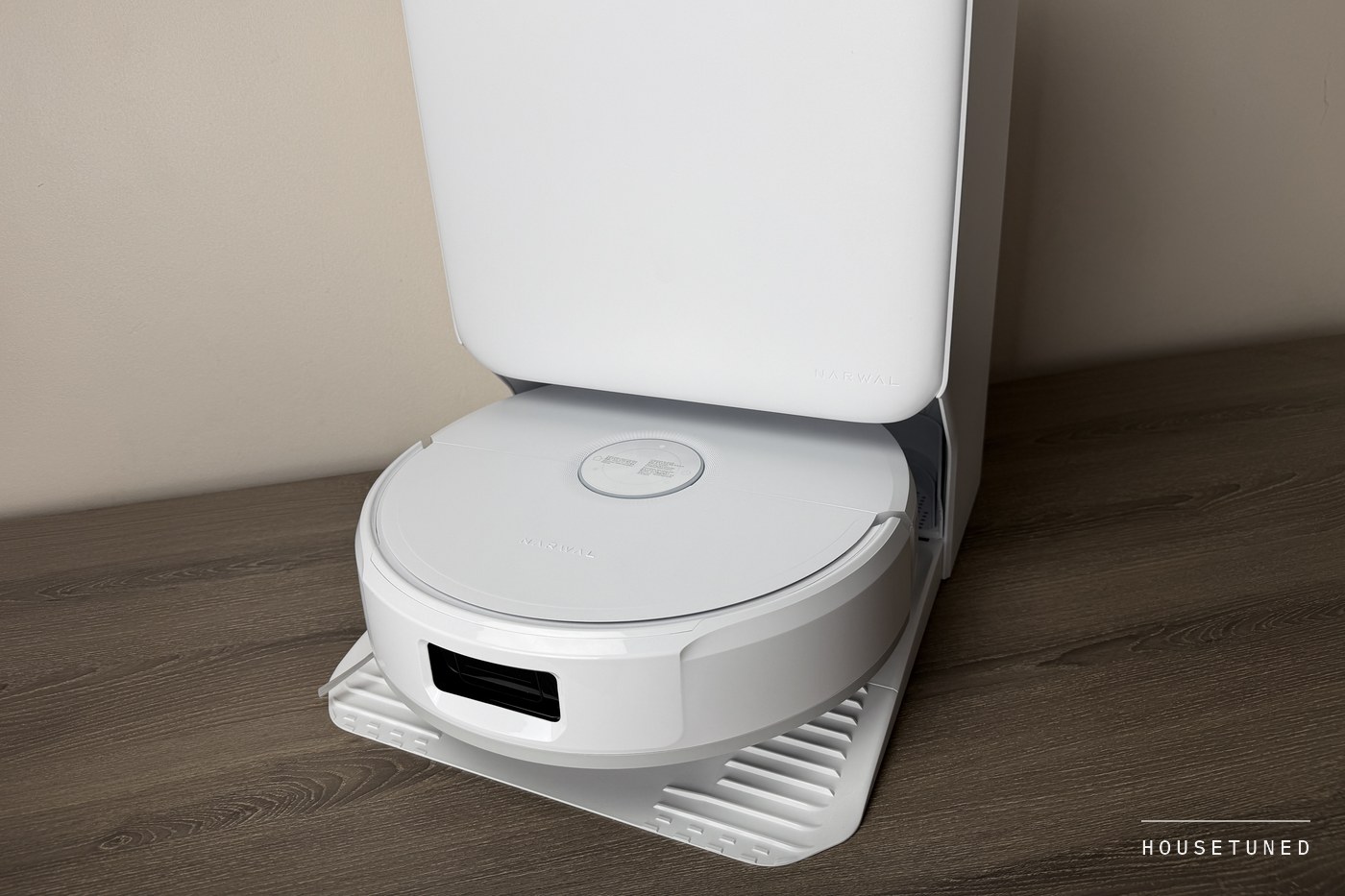
We ran the Narwal Freo 20 Edge every day for nearly two weeks in September and kept that ledger. It is a camera-free robot with a wide, self-rinsing track mop that reaches toward the baseboards, sitting on a dock that takes the robot's dust, washes and dries the track and rinses out its own dirty-water tank. The dock neither connects to a water line nor heats water, and those two facts decide most of what a household does with it.
- Tested
- Nearly two weeks of daily runs, September 2026
- Dock tanks
- 4.5 litres clean, 4.05 litres dirty, both by hand
- Mop care
- Room-temperature rinse, 113°F (45°C) air drying
- Dust bag
- 2.5 litres, rated about 120 days, 90 with pets
- Rugs
- Mop lifts 12 mm, for pile up to 7 mm
- List price
- $799.99
Two weeks shows what the dock takes over. It cannot show a dust bag filling or a mop wearing out, so for the long end of the ledger we lean on Narwal's own manual and schedule for this model, and say so where we do.
Four Jobs It Took Off Our List
The biggest is mop care. The Edge rinses its track with clean water as it moves, scraping the dirty water off before it goes back down, heads home partway through bigger jobs for a wash, and ends each mopping job with the dock washing and warm-air drying the track. Every time we checked, the track was visibly clean, fresh to the touch and odourless, and the rooms it had just mopped never smelled of stale water. Earlier robot mops we lived with, self-cleaning docks and all, soured within a few runs.
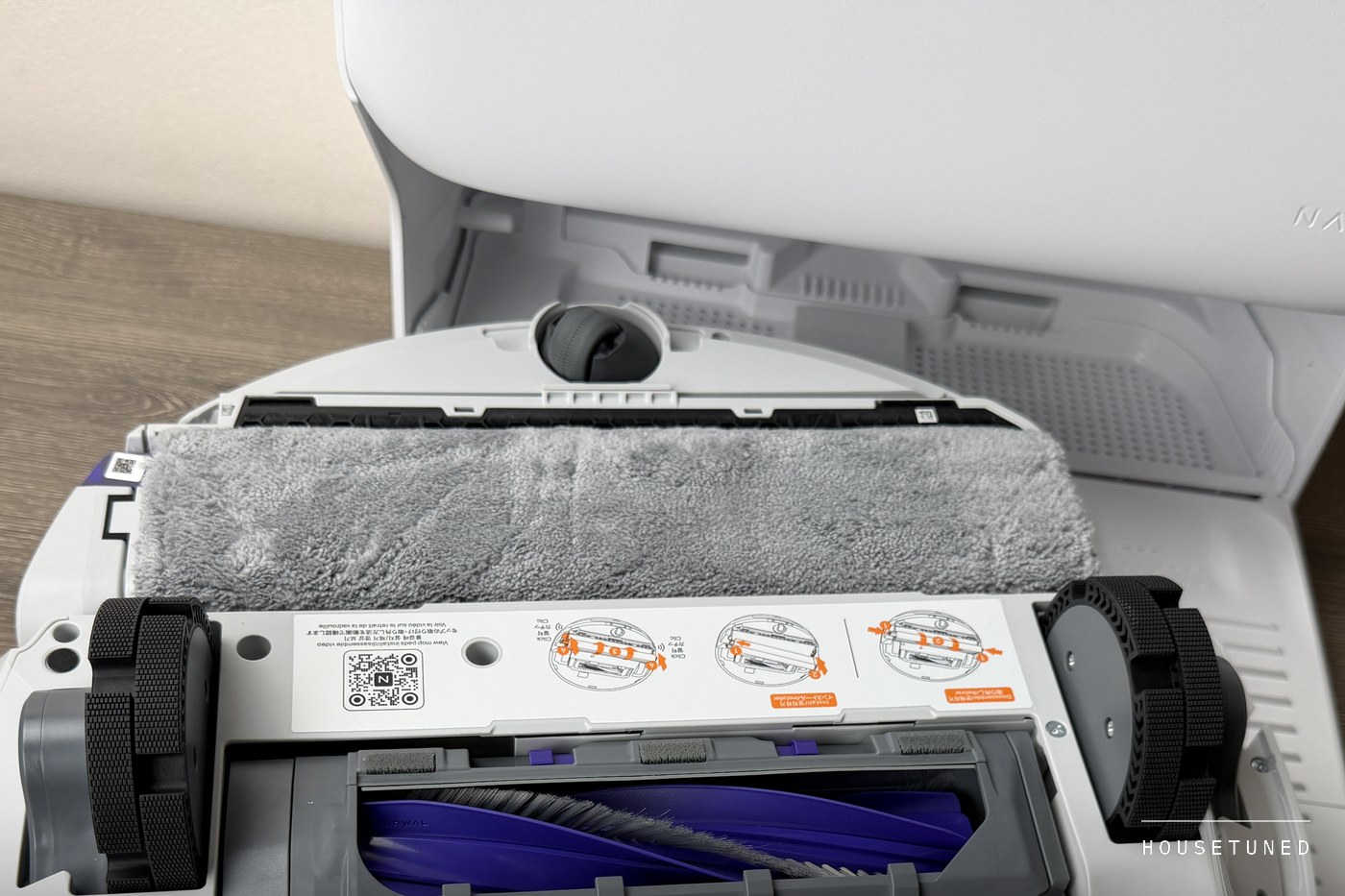
The second job is the bin, which the dock empties into a 2.5 litre bag on its own. The third is the brushes. Neither the roller nor the side brush picked up a single hair wrap while we had it, and on a robot that is usually the job that ends with scissors. The fourth is fetching it. The Edge docked itself after every run, recalled or finished, and not one run ended with us carrying it back.
The Water Run Is Still Yours
The dock's two tanks lift out, 4.5 litres of clean water going in and 4.05 litres of room for what comes back, and neither connects to a supply or a drain. Narwal's automatic water-exchange kits list other Freo models, not the Edge, so one job stays on your list. Carry the dirty tank to a sink, empty and rinse it, fill the clean one, carry both back.
How often depends on how much floor you mop. Narwal's lab figure is roughly 2,475 square feet of vacuuming and mopping from one full tank, so on paper a home with 800 square feet of hard floor, mopped daily, refills about every third day. That is arithmetic from Narwal's number rather than a count from our testing, and a wetter mop setting will shorten it.
Cleaning solution rides along with the water run, because the dock does not dose it. It goes into the clean tank by hand, and it has to be Narwal's own low-foam formula. Narwal warns that other cleaners can upset the pumps or overflow the dock, and that damage they cause is not covered by the warranty.
Put the dock where the walk to a sink is short, since a full clean tank is about ten pounds of water. Give it roughly 18 inches of clear floor in front and a socket within its 4.9 foot cord, away from heaters and direct sun. Then pair the tank jobs, emptying the dirty tank every time you fill the clean one.
No Hot Water, and the Mop Stayed Fresh Anyway
The Edge washes its mop at room temperature. Narwal's step-up Freo 20 rinses with 140°F water while it cleans, but the Edge's dock lists power for charging, dust collection and an 85 watt dryer, and nothing that heats water. If hot washing is what you were shopping for, this is the wrong model.
The missing heat did not show up in the smell, and there is a sound reason. The sour note of a neglected mop is a cousin of the smell of laundry hung to dry indoors, which microbiologists have traced to bacteria breaking down the skin oils left in the fabric. Remove the residue and shorten the damp, and little is left to go sour. The Edge works on both. The scraper keeps dirty water off the track mid-run, and afterwards the dock dries it at 113°F for about three and a half hours on Power Dry, or five on Quiet Dry.
Where heat would earn its keep is grease and anything dried hard. That is Narwal's own case for hot water on the Freo 20, and its advice for hardened stains such as dried soy sauce or cooking oil is to soften them with warm water or detergent first. We did not stage a grease test, so we cannot say what the missing heat costs on the floor beside a busy stove.
The dryer is also where most of the electricity goes. Narwal puts a Power Dry cycle at about 0.36 kilowatt hours and a day on standby at about 0.12, so mopping daily comes to about 14 kilowatt hours a month, nearer 19 on Quiet Dry, plus a little for charging.
Every Rug Needs an Instruction From You
Carpet is the part of setup the robot will not guess. It senses carpet ultrasonically and lifts its mop 12 mm to cross it, but Narwal's robots skip a newly recognised carpet by default until you say otherwise. The choices are Boost, Cross, Avoid and Vacuum-Only, made in the app, and a rug nobody has set up simply does not get cleaned.
Narwal rates the lift for carpet under 20 mm thick with pile up to 7 mm, which suits flat-weave and low-pile rugs, and advises Avoid or Vacuum-Only for anything deeper. The side brush does not lift, and the quick first mapping run can miss a rug it never reached. We are not grading carpet cleaning here, but in our testing the suction dealt thoroughly with dust, debris and hair, and on a rug that is the part doing the work.
- Add any rug the first run missed in the map editor, then choose what the robot does on it.
- Check the pile on anything shaggy. Past about 7 mm, choose Avoid or Vacuum-Only.
- Decide about bath mats and doormats on purpose rather than leaving them to the default.
Map Once, Then Leave the Dock Alone
Here the Edge made our part easy. Setup took minutes, the robot switched itself on about ten seconds after meeting the dock, and the app paired it over 2.4 GHz Wi-Fi, the only band it uses, in a few guided steps. The first map took a few minutes and was right first time. After that it threaded between furniture and clutter without fuss and came back to the same edges and corners on the next run. By our rough walk-through it reached 95 to 98 percent of the floor, corners and all.
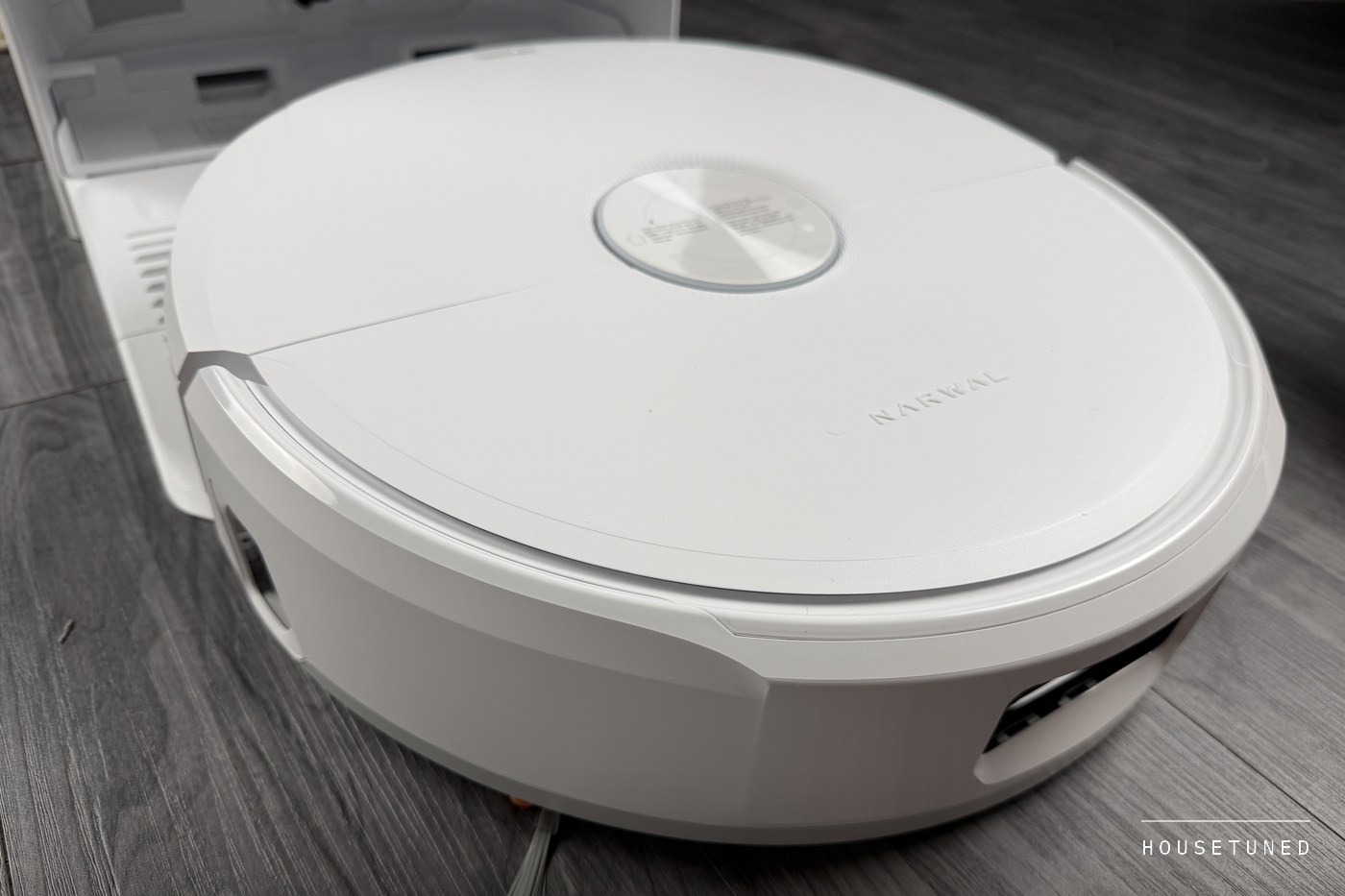
Keeping that map good is mostly restraint. Narwal's guidance is not to move the dock once the map exists, because that means remapping, and to remap after big changes such as a sofa or bookcase moving. A shifted side table it simply absorbs. For a second floor you build a secondary map and carry the robot up, leaving the dock where it is.
No-go zones do the rest. Narwal suggests them for pet bowls, loose cables and delicate things, and for any sofa or bed with less than about 3.9 inches of clearance or an uneven underside, where the 3.74 inch robot can get stuck.
The Maintenance Calendar It Hands You
With the daily jobs gone, what remains is a calendar, and Narwal publishes one for this model. Most of it is a fortnightly rinse and brush-off, plus a few parts that wear out over months.
| Part | Clean | Replace |
|---|---|---|
| Roller brush | Every two weeks | About every six months |
| Side brush | Every two weeks | About every three months |
| Robot bin and filter | Bin weekly, filter every two weeks | Filter about every three months |
| Dock cleaning base | Every two weeks | Not listed |
| Dock filter | Not listed | About every three months |
| Track mop | Washed by the dock | Every one to three months |
| Dust bag | Filled by the dock | About 120 days, 90 with pets |
| Caster wheel | Monthly, more with pets | Not listed |
Our two weeks covered one lap of the fortnightly rows. With nothing wrapped around either brush, that clean is a quick check, and the rows measured in months we could not test. Narwal also wants the sensors, mop scraper and clean-tank filter sponge cleaned regularly, without giving an interval, and pet owners should switch on Pet Household in the app so the bag countdown matches.
Two buying notes. Narwal lists its spare parts under the names of the Freo 20 and its siblings, with a warning to check your model, so confirm a part fits the Edge before ordering. And the US warranty runs one year and excludes consumables, which is most of the replace column.
Sticky Spills Yes, Puddles and Pet Accidents No
The self-rinsing track shows its value on spills. A pad keeps whatever it last picked up until its next wash, which is how a drip of juice by the fridge becomes a faint trail down the hall. The Edge rinses as it goes, and in our testing it cleared each spill where it lay, kept going on a track that had already been rinsed, and left no residue we could find.
What it should not be sent to is a puddle. Narwal's guidance is never to use its robots on standing water such as a spilled drink, to keep them away from foaming liquids and urine, and never to run them over pet waste. Its own marketing talks about sticky spills like coffee, soy sauce and ketchup, which is the right picture: the film a spill leaves, not the spill.
The remaining hand jobs are the ones every robot leaves. Pick up cables, socks and toys before a run, and close doors to rooms you want left alone.
Is It Worth Handing the Floors Over
Totted up, the ledger comes out well ahead. Every day the Edge took the vacuuming, the mopping, the mop care, the bin and the fetching, and it mopped right into the corners. In return it hands back a water run every few days, a brush and filter clean every two weeks and some parts every few months, and it asks once, at the start, for an honest account of your rugs and the places it should not go.
The two items on the wrong side are the ones Narwal left out at this price, plumbing and hot water. If carrying tanks is the chore you most want gone, or your kitchen floor sees real cooking grease, look for a dock that plumbs in or washes hot. For a home of mostly hard floors with a sink near the dock, this is the most complete handover of floor chores we have tested. It stops short of a top score because the water run is real, and two weeks cannot vouch for the long end of the calendar.
It takes the daily floor work and the worst of mop care, and hands back a water run every few days and a fortnightly brush clean. In a hard-floor home, that trade is worth making.
Can it mop without the app?
Not by default. Pressing the start button on the robot itself begins a vacuum-only run, and the mopping settings, carpet choices, no-go zones and parts countdown all live in the app.
How long does a full clean take?
Longer than you might think. It returns to wash the mop about every 215 square feet by default, and Narwal's lab figure for a 1,615 square foot home is about 190 minutes to vacuum and mop together, or over five hours to vacuum first and mop after, so schedule it for an empty house.
Will it climb the step into my kitchen?
If it is a single step of 0.8 inches or less, yes, though wet floors lower that. For taller ones there is a Narwal threshold ramp, sold separately, or a no-go zone to keep it away.
More in this category
Take a closer look
- How to Wash and Fully Dry the Filters on a Dyson SV10
- Shark Robot Vacuum Not Charging? What to Check First
More from the home desk