Two causes can leave the same milky look
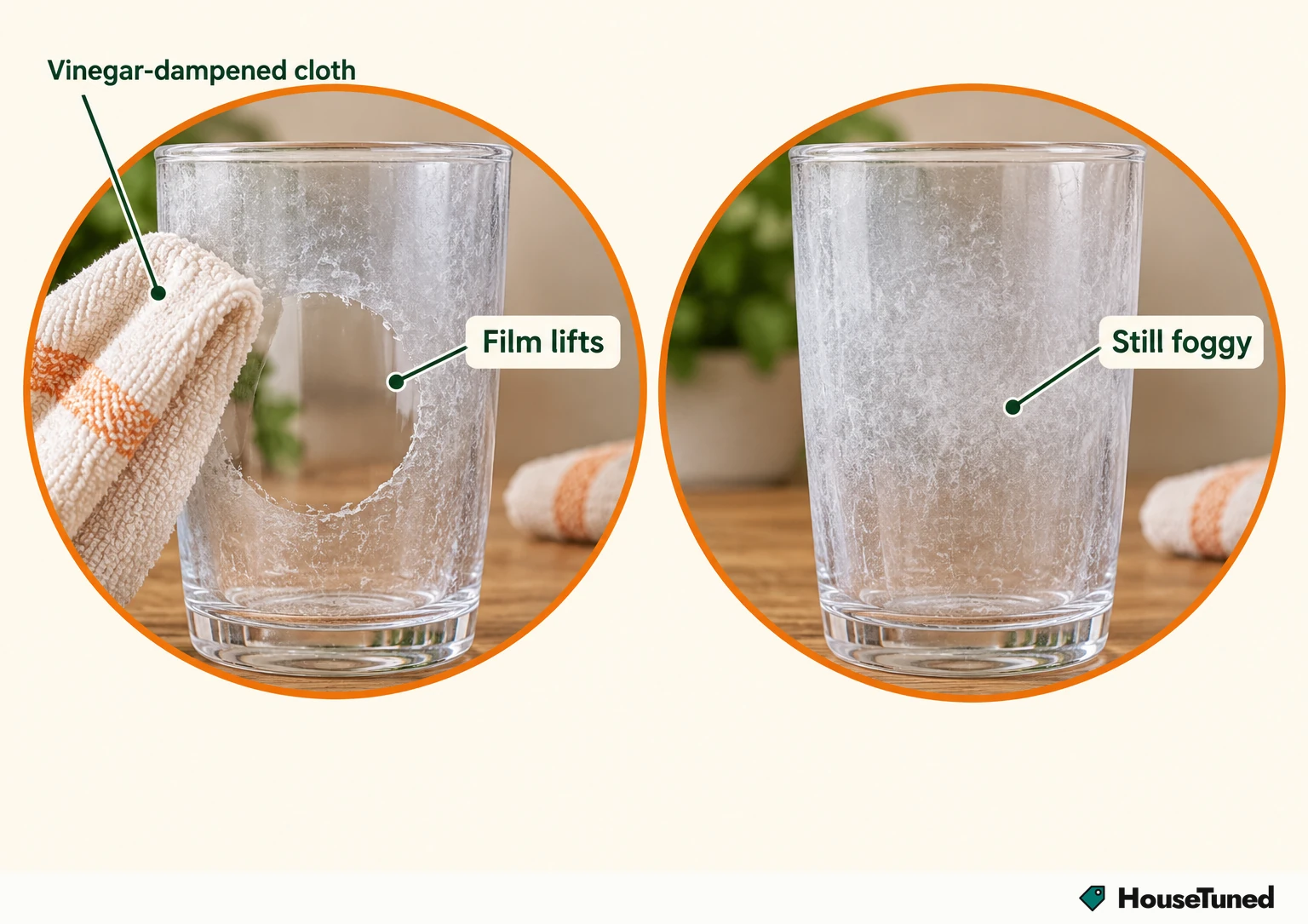
- Gently test a cloudy patch with a vinegar-dampened cloth. Film that lifts points to removable mineral buildup.
- For mineral-clouded glasses, soak fully immersed in vinegar for 15 minutes, then hand wash and dry promptly.
- Fogginess that stays put suggests etching. Cleaning can't reverse that surface damage.
A tumbler can come out of a completed wash with minerals still clinging to it. We'd test one patch before soaking the set, because removable deposits and permanent surface damage can both look milky, but only the deposits respond to this cleaning method.
Hard water leaves minerals such as calcium and magnesium on glassware. Those deposits form a cloudy coating that doesn't usually wash away in the dishwasher, which explains why another cycle can leave you looking at the same haze.
The useful first distinction is between something on the glass and a change to the glass itself. Maytag's glass-cleaning guidance (opens in a new tab) covers drinking glasses, tumblers and wine glasses with mineral buildup, using a hand-cleaning sequence that removes the coating.
Why some haze won't wash away
Tiny scratches and dings can make an otherwise clean glass look foggy. That damage is called etching, and it changes the surface itself. A cleaning solution that removes a mineral coating can't smooth away those damaged areas or restore their original appearance.
Etching is associated with washing in soft water, and too much dish detergent can make it worse. Detergent combined with soft water, high water temperature and little food soil can erode the surface over time, leaving the small marks responsible for the haze.
The price of your glasses doesn't settle which problem you have. Etching can affect inexpensive and quality glassware in any dishwasher (opens in a new tab), so a favorite or expensive set still needs the same distinction between deposits and surface damage.
These causes also explain why clean and clear aren't always the same thing. A glass can have been washed and still carry a mineral film, while an etched glass can remain cloudy even after cleaning has removed what was on its surface.
Let one small patch guide the cleaning
Dampen a small rag or dish towel with vinegar, then gently rub a portion of the cloudy glass in a circular motion. Watch the area you're wiping for a change in clarity. You're checking how the film responds before treating the whole glass.
If the film begins to lift and the patch becomes clearer with each wipe, that points to mineral deposits. The vinegar is removing material from the surface, making this glass a candidate for the soak that follows.
If the patch stays foggy, etching is the likely explanation. Whirlpool's vinegar spot test (opens in a new tab) makes that distinction using gentle rubbing, so focus on whether the film lifts while keeping the same light handling.
Give the deposits a fully immersed soak
For the glasses with removable film, choose a sink or a large, deep dishpan. The container needs to hold the glasses on their sides with vinegar covering them completely. Full immersion is the useful measure when you're deciding how much vinegar to pour.
Set the affected glasses sideways in the container, then add enough vinegar to cover each one fully. Leave them immersed for 15 minutes. This soaking method for drinking glasses, tumblers and wine glasses (opens in a new tab) keeps the cloudy surfaces covered during the soak.
Vinegar serves a particular purpose here: it's an acid-based cleaning solution that can tackle hard-water deposits. Its role is to remove the buildup responsible for the milky coating, which is why the response to the cloth test matters before this stage.
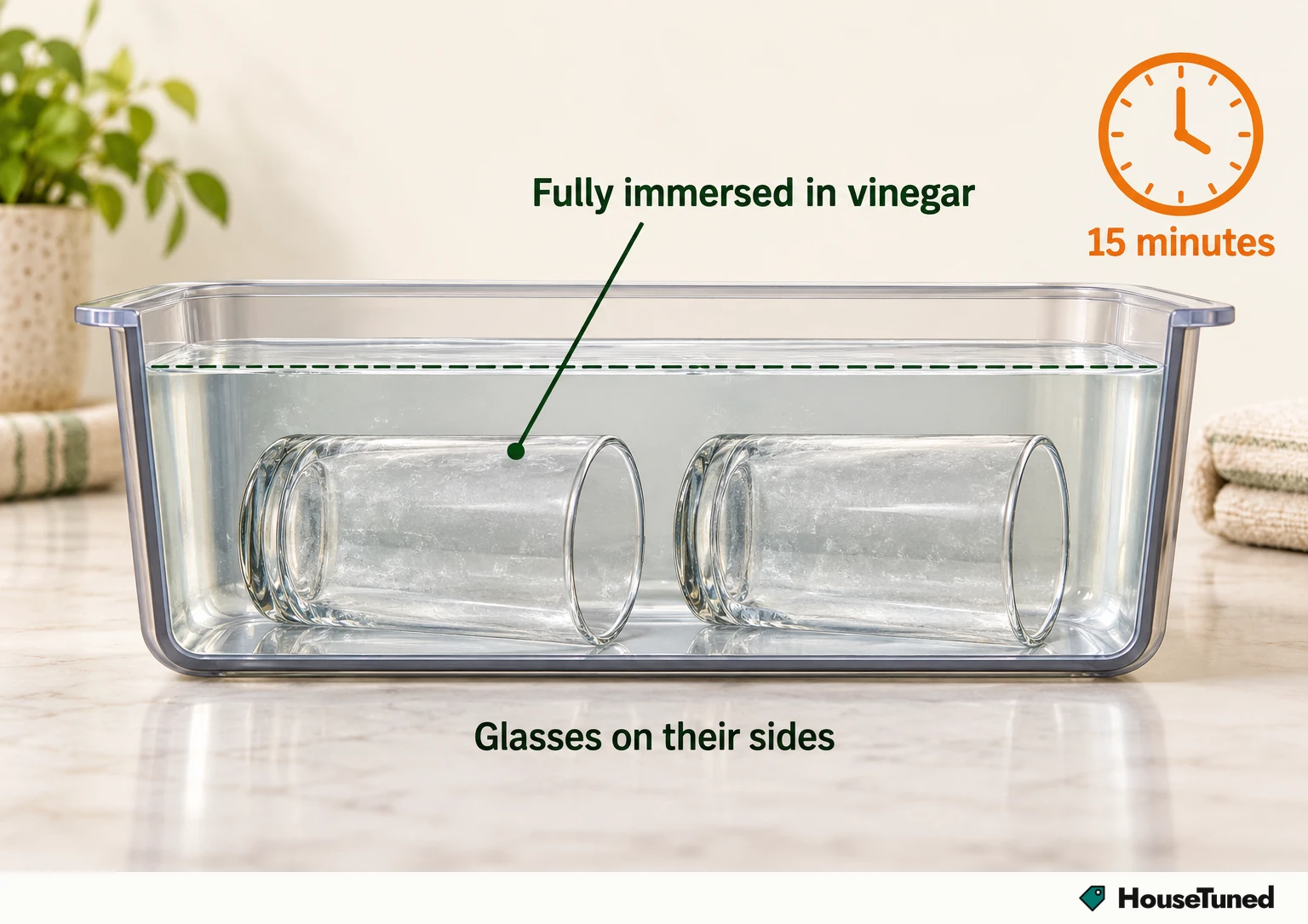
The 15 minutes is the soaking portion of the job. Hand washing and drying still follow, so allow for those stages when you're getting ready to clean the glasses. Finishing the soak brings you to the next cleaning step, rather than the finished result.
Finish the soak with a gentle hand wash
When the soaking time is up, drain the sink or remove the glasses from the dishpan. Gently wash them by hand with dish soap and warm water. This moves each glass from the vinegar treatment into the washing part of the cleaning sequence.
Use the same hand-washing stage for cloudy wine glasses. Whirlpool's wine-glass method (opens in a new tab) pairs a vinegar soak of around 15 minutes with warm, soapy hand washing, so stemware follows the same basic treatment as the drinking glasses.
Keep the washing gentle as you work through the affected pieces. The method combines a deposit-removing soak with hand washing and thorough drying; the washing stage is part of that complete treatment, even when the glass already looks clearer after its time in vinegar.
Dry promptly for a spot-free finish
Have a microfiber cloth ready for the freshly washed glasses. Dry them thoroughly as soon as possible, because air drying can allow water spots to form. That gives the newly cleaned surface a better finish than leaving droplets to dry on their own.
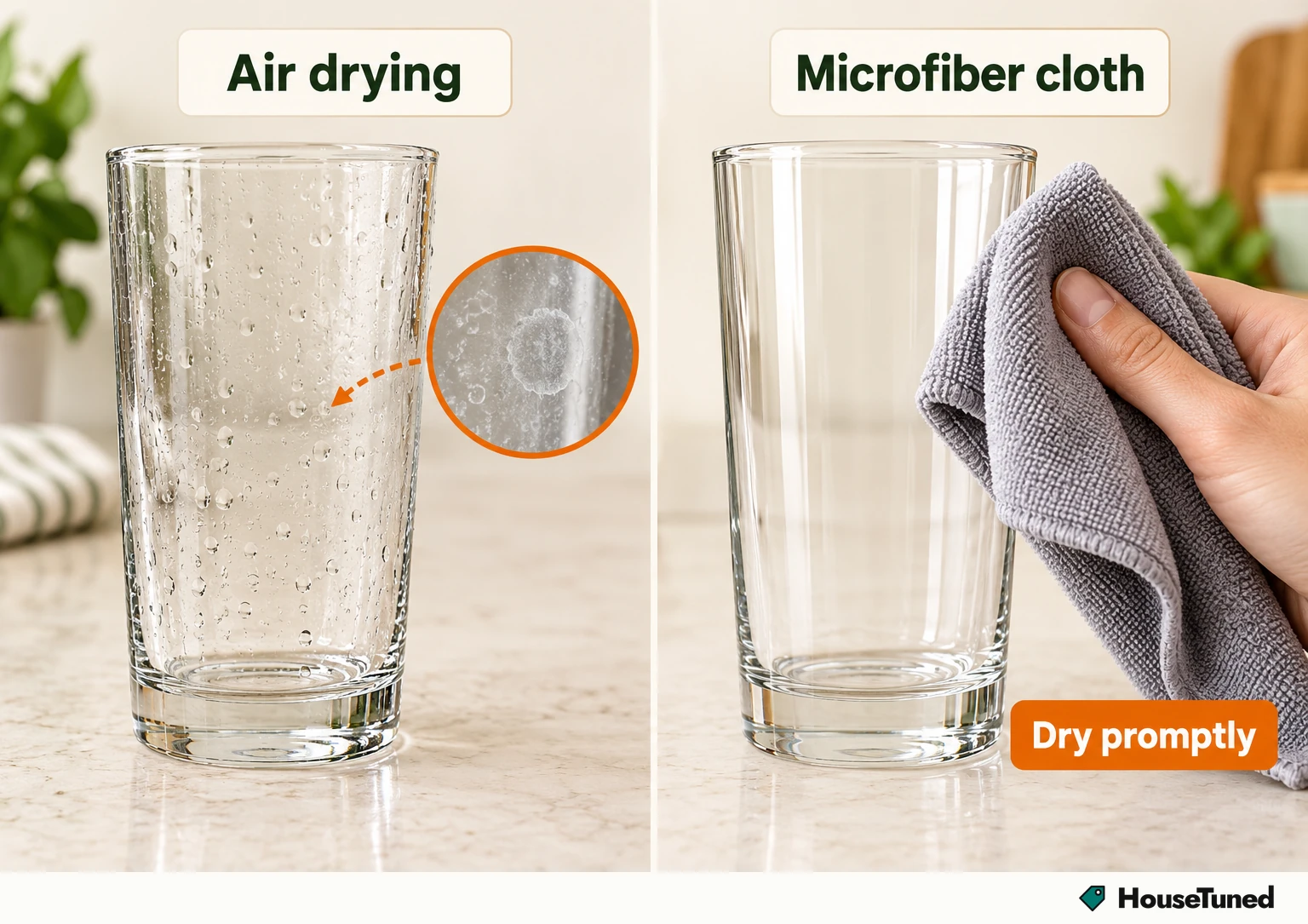
The reason for prompt drying is separate from the reason for soaking. Vinegar addresses the mineral buildup already on your glasses, while cloth drying helps avoid water spots after washing. Both affect how clear the glass looks when you've finished.
Maytag's drying guidance (opens in a new tab) specifies microfiber for this final stage. For wine glasses, the corresponding hand-cleaning guidance calls for a soft cloth to help prevent spots, keeping the finish gentle as well as thorough.
Check what cleared and what stayed
Once you've completed the cleaning, look at the area that was cloudy. A clearer surface is the outcome you're looking for when mineral buildup was responsible. Assess the glass after drying, with all three parts of the cleaning treatment complete.
Remaining fogginess may be irreversible etching. If that's the damage you're seeing, stop trying to restore it through cleaning: removing deposits can't repair the tiny scratches in the glass. Persistent haze after this sequence is a reason to recognize that limit.
A glass that clears and later turns cloudy again has a different cleaning history from one that stays foggy throughout. Mineral deposits can return during continued washing in hard water (opens in a new tab), even when the vinegar treatment removed the earlier buildup successfully.
When you assess a later haze, keep those two outcomes separate: cloudiness that never lifted, and a coating that appeared again after the glass had cleared. Use the return of haze as a reason to check the new film before choosing another cleaning treatment.
More in this category