Food residue gives you somewhere to begin
- Start with the filter, using your model's instructions for removal.
- Food residue inside the tub and mold or mildew around the door seal can also cause odor.
- Work through the filter, interior and gasket cleaning sequence. If the smell remains, a professional should check for a possible drain-hose clog.
If you're opening the door to an unpleasant smell, we'd check the filter first because it gives you a specific place to remove trapped debris before cleaning the rest of the interior. A dirty filter is one supported cause, while food on the walls and buildup around the door seal need separate attention.
Think of these as different places to look, rather than a ranking of how often parts cause trouble. Whirlpool's odor guidance (opens in a new tab) names a dirty or clogged filter, interior food residue, and mold or mildew on the gasket as possible causes.
Poor cleaning can go along with the smell, too. Whirlpool connects dishwasher odor with reduced performance and improperly cleaned dishes, so if your dishes aren't coming out clean, include the machine's own cleaning needs in your checks.
Clean the filter using your model's instructions
Empty out the dishes, glasses and utensils before you begin so you can reach the interior. Have your product manual ready before removing the filter: the removal method varies by model, so follow the instructions for your machine's assembly.
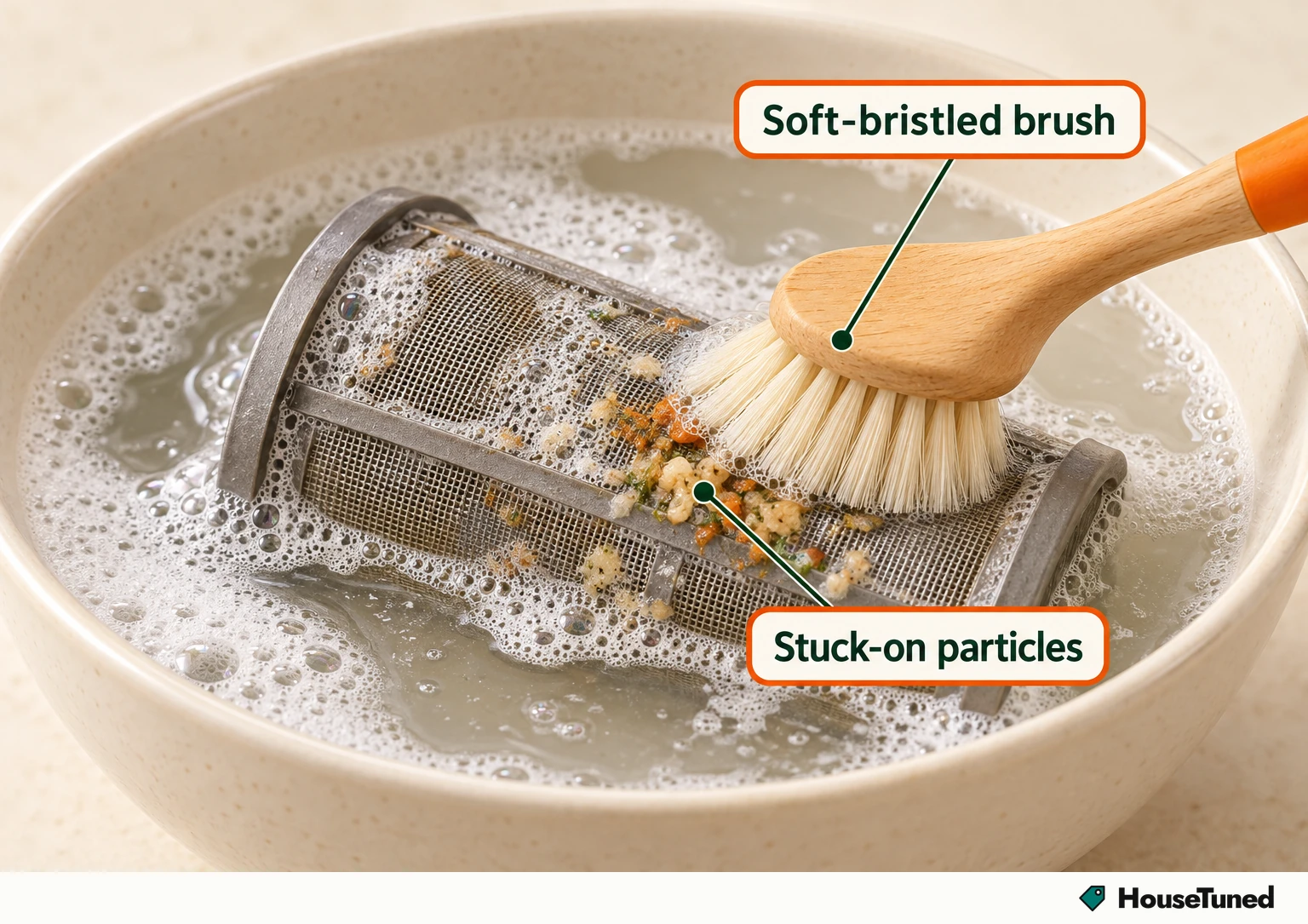
For the cleaning itself, you'll need warm, soapy water and a soft-bristled brush for particles that stay stuck. The filter-cleaning method (opens in a new tab) uses soaking followed by gentle brushing where needed.
- Pull out the bottom dish rack, then remove the filter following your product manual. You can now inspect the removed filter for debris.
- Empty the debris out and soak the filter in warm, soapy water. Check for particles still attached to it.
- Gently scrub stuck-on particles with a soft-bristled brush, then return the cleaned filter to the dishwasher. Finish with the filter back in place.
Give the interior its own cleaning cycle
A clean filter leaves another possible odor source to address: food residue on the interior walls. The next part of Whirlpool's cleaning sequence treats the inside of the empty dishwasher with a measured amount of white vinegar.
For Whirlpool's interior-cleaning method (opens in a new tab), pour two cups of white vinegar into a dishwasher-safe bowl and put it on the bottom rack. Keep dishes, glasses and utensils out of the machine for this cleaning cycle.
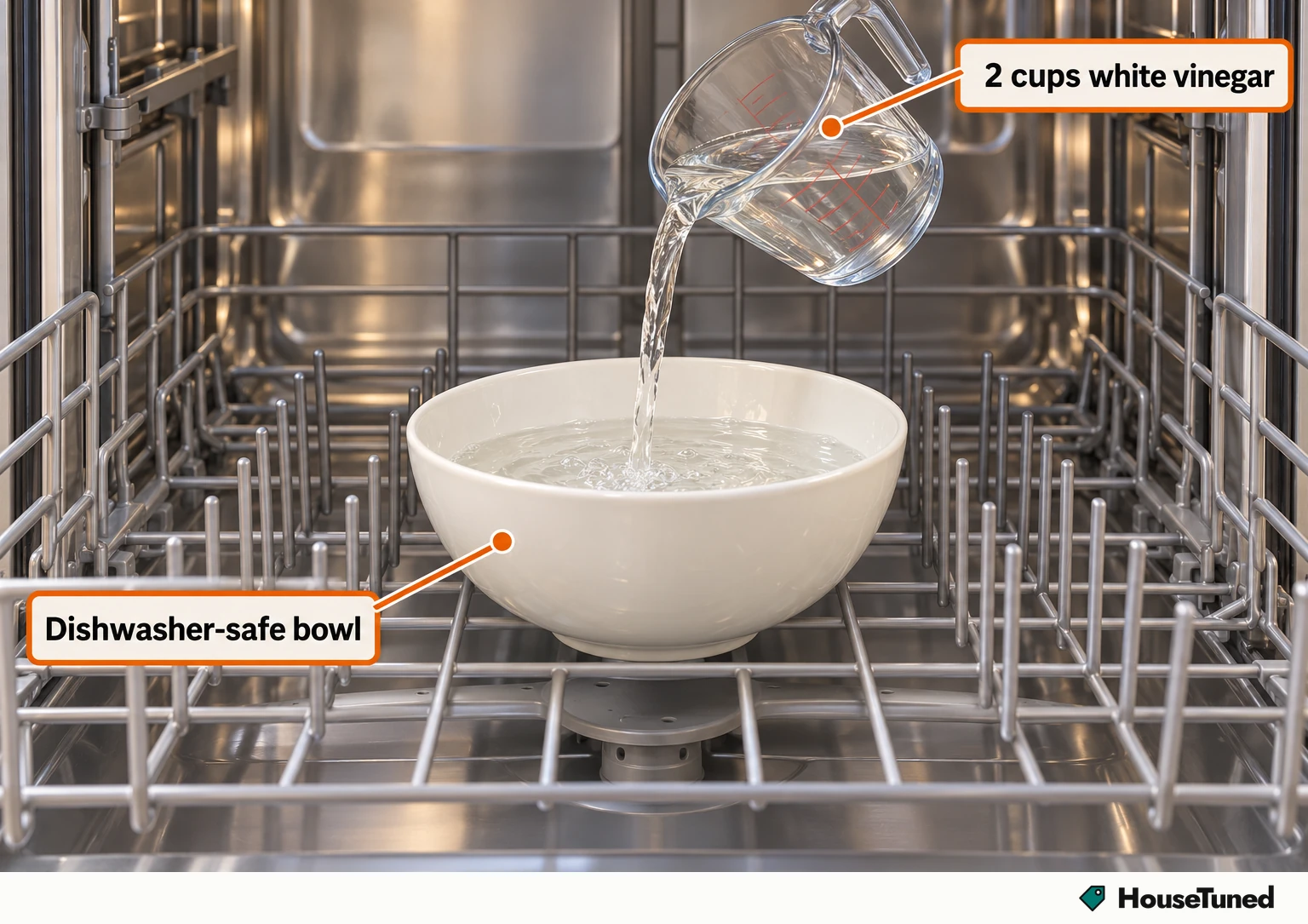
Select a dishwasher cycle with an air-dry or energy-saving dry option, then press start. The vinegar mixes with the wash water during the cycle to help neutralize odors and clean the interior.
Let the wash cycle finish. Whirlpool says you can use the dishwasher normally once it's complete; the remaining part of its odor-cleaning sequence is to wipe the gasket seals.
A musty smell can come from the door seal
Pay attention to the crevices around the door's gasket seals, especially if the smell is musty. Mold and mildew can grow there without regular maintenance, which gives you another place to address even after the filter and tub have been cleaned.
Use a sponge and warm, soapy water to wipe away buildup on the gasket seals. Then wipe them dry with a clean towel, completing the gasket-cleaning method (opens in a new tab) with a dry surface.
A new GE dishwasher has a different odor example
If you've only just started using a GE dishwasher, there's another explanation to consider. GE's odor guidance (opens in a new tab) describes a normal manufacturing-related smell that may take several washing cycles to fade.
GE also identifies the tub material, chlorine bleach in detergent and rinse aid as possible sources of a distinctive smell during initial use. Those initial-use smells tend to diminish with normal use, and GE recommends several cycles with detergent to help clear the manufacturing-related odor.
That initial-use explanation has a limit: GE considers odors that remain for an extended period abnormal. Keep track of whether the smell is fading over those early washes or continuing, because a persistent odor belongs in the troubleshooting path.
What Bosch identifies as likely odor sources
For Bosch dishwashers, Bosch identifies trapped food particles and debris in the filter and spray arms (opens in a new tab) as likely reasons a machine begins to smell. This is Bosch's family-level explanation for the odor, with both areas named as possible places where debris collects.
Standing water adds a separate clue on a Bosch dishwasher: it indicates that the machine isn't pumping water out. Bosch identifies food debris clogging the filter or water pump as the most common reason for its dishwashers to stop draining.
If you see that water as well as noticing an odor, include both symptoms when you seek help. Bosch's explanation makes the drainage symptom relevant to the problem, beyond the smell itself.
Keep food buildup from starting again
Once the smell has cleared, give food residue fewer chances to build up again. Whirlpool recommends cleaning the filter at least once a month to avoid food-particle buildup, making filter care a recurring job rather than something you do only when an odor appears.
Leave room between dishes instead of overstuffing the racks. Water and soap need to pass through the load to break down debris, so loading is part of prevention as well as the cleaning routine.
For routine interior care, Whirlpool recommends a dishwasher cleaner once a month (opens in a new tab) to reduce odor-causing residues. That's a separate maintenance recommendation from its white-vinegar deodorizing method.
For GE owners, GE recommends scraping food off plates before loading (opens in a new tab) to help prevent food-residue odors from returning. It explicitly cautions that the dishwasher isn't a food disposer.
A smell that survives cleaning needs a service check
After the filter, interior and gasket cleaning, check whether the odor has cleared. If it remains, Whirlpool identifies a drain-hose clog as a possibility and says this more complicated problem should be diagnosed and repaired by a professional.
This is the point to arrange service instead of taking the drain hose apart. If you own a Whirlpool dishwasher, use the Whirlpool service-center route described in its US odor troubleshooting guidance (opens in a new tab) to schedule a repair.
For a Bosch dishwasher, contact Bosch US support at 1-800-944-2904 for assistance or to book a service visit. If you know it needs repair, use a Bosch authorized servicer through Bosch's US owner-support guidance (opens in a new tab).
More in this category