1. Read the warning before another load
- D90 means your LG dryer has detected a severe exhaust restriction. LG labels it 90% blockage.
- Stop using the dryer until the exhaust system has been cleaned and repaired.
- Start with the lint filter, then check the connection and outside outlet you can see.
- If the restriction is hidden, have a dryer-vent specialist assess the full route. Confirm the repair with your model's installation test.
A damp load makes another cycle tempting. We'd keep the dryer off and check the filter first, because lint that blocks airflow can cause excessive heat and a fire. D90 points to the exhaust path from the dryer to the outlet outside your home.
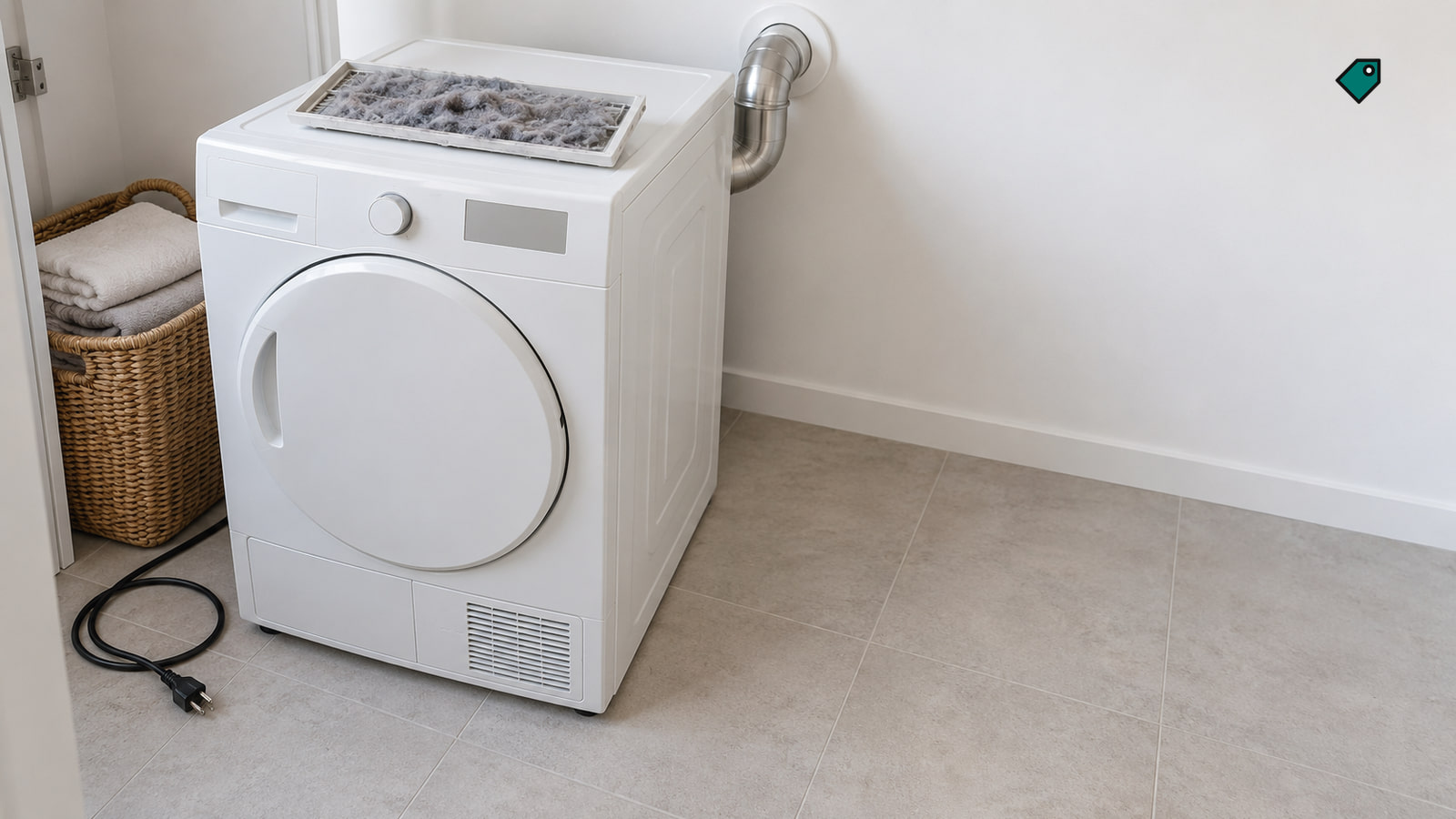
What D90 tells you about the exhaust
On LG dryers with duct blockage sensing, D90 means the dryer has detected a potentially blocked exhaust that needs immediate attention. The 90% figure is LG's blockage designation for this warning. Check the exhaust path to find which section needs work.
These exhaust checks apply to LG electric and gas dryers with this warning. The restriction can be anywhere between the appliance and the outside exhaust exit, including the home's ductwork and the connection behind the dryer.
The LG DLE3400W, for instance, has a FlowSense duct clogging indicator. You don't need to match that particular model to begin the filter and visible-connection checks.
| Finding | Next action |
|---|---|
| Lint on the filter | Remove it. If you wash the filter, let it dry fully, then continue checking the exhaust. |
| A crushed, kinked, loose or damaged connection | Describe the visible problem when arranging vent inspection and repair. |
| Lint, damage or stuck flappers at the outside outlet | Include the hood and its movement in the vent specialist's assessment. |
| A clear-looking connection and outlet | Have the hidden home duct checked for lint, length and bends. |
| A restriction indication after the exhaust is repaired | Use your model's installation test, then arrange appliance service if the problem continues. |
2. Clean and dry the lint filter
Remove accumulated lint so the filter is clear of blockages. Clean it before or after every drying cycle. If you wash it, use warm water and a soft brush, then let it dry fully before putting it back.
A lint-covered filter gives you one restriction to clear. Whether you found lint or the filter was already clean, continue to the visible exhaust connection. Clothes that stayed damp after a typical cycle or took longer than normal to dry are useful details to mention when booking the vent assessment.
3. Set aside part of a crowded load
Reduce the load size so air has room to pass through the clothes from the back of the drum toward the front. Set some clothes aside if the drum is crowded.
A smaller load addresses airflow through the clothes. Continue checking the exhaust even if the load was already small, since D90 points to a restriction along that route.
4. Look at the connection behind the dryer
With the dryer off, look at the exposed exhaust connection between the appliance and the wall. Keep this to what you can see without moving the dryer or disconnecting ducting.
- Look for visible lint buildup at the rear exhaust duct.
- Check for crushed, dented, kinked or compressed sections and other damage.
- Notice whether the hose is coiled over itself like a spring.
- Look for holes in the hose and loose connections.
Lint at the rear exhaust can cause long drying times, and a crushed or damaged duct can block airflow. Note exactly what you can see, such as a flattened section or a loose connection. If the connection looks intact, check its material and the outside outlet next.
The exhaust hose should be straight or follow an S curve, rather than loop over itself like a spring. Include a different shape in your description of the connection.
5. Check what the connection is made of
For an LG dryer displaying D90, the exhaust connection should be rigid or semi-rigid ducting. Check the visible material as well as its shape.
If you see plastic or foil accordion-type ducting, ask the vent specialist to replace it with rigid or corrugated semi-rigid metal duct. Plastic and foil types can trap lint more easily and are more prone to kinking or crushing, which can greatly reduce airflow.
The CPSC's dryer fire-safety advice (opens in a new tab) explains that material change. If the connection is already metal and intact, move on to the outside outlet.
If the connection or route needs replacing, our advice on planning a dryer vent installation can help you prepare for the discussion about materials and routing.
6. Look at the outside outlet
Find the exhaust outlet outside your home. Look for a damaged hood, visible lint clogging or an obstructed area around it. A clear-looking outlet sends you to the hidden sections of the duct next.
The outlet may have flappers, a cage or mesh to keep animals or debris out. Lint can jam the flappers, which need to open fully. Note any visible problem and ask the vent specialist to check their movement and whether the cover needs replacing.
Our explanation of cleaning dryer exhaust shows how the outdoor opening fits into the full route.
What to request at the vent visit
Contact a local professional dryer-vent cleaning company for inspection and repair of a hidden or unresolved restriction. Ask for an assessment from the dryer to the outside outlet, including the sections you can't see.
- Where has lint accumulated in the exhaust system?
- What is the total ventilation length from the dryer to the outside outlet?
- How many 90-degree elbows are in the route?
- What modifications does the ventilation system need?
Mention longer drying times, damp loads, visible duct damage or problems at the outside cover before the visit. If the warning continues after the exhaust has been cleaned and repaired, arrange appliance service for a diagnosis through LG's repair request (opens in a new tab).
A few questions before you book
Why were clothes still damp before D90 appeared?
A blocked lint filter or exhaust duct can leave clothes damp after a typical cycle or make drying take longer than normal.
Is D90 the same as another brand's vent warning?
No. Other dryers use a C90/C9 vent-test result (Samsung), a Check Vent light (Whirlpool and Maytag), or an exhaust-tube check for bends and blocks (Electrolux). An exterior hood with freely moving flaps is part of the GE Appliances check. Match the warning and test to your own dryer.
Can a smaller load clear D90?
Reducing the load gives air more room to pass through the clothes. The exhaust system still needs cleaning and repair before you use the dryer again.
Will the warranty cover a vent problem?
Check your model's warranty terms against the cause found. For the LG DLEX6700/DLGX6701, incorrect or inadequate exhaust systems are excluded from the dryer warranty.
What should I ask about service cost?
Ask for the diagnostic fee, whether it will be waived if you approve an appliance repair, and a written quote for the work. LG says its out-of-warranty diagnostic fee is waived when you proceed with its repair service.
8. Confirm airflow after the repair
Once the exhaust has been cleaned and repaired, check whether your model is listed in LG's dryer test instructions (opens in a new tab). If it is, empty the drum, remove any drying rack or other items, and close the door. Then use the button combination shown for your model, press Start/Pause to run the test, and check the Flow Sense result when the test ends. If your model isn't listed, use its installation-test instructions or contact LG for the correct procedure before drying again.
If the Flow Sense LED turns on or the restriction warning continues, arrange appliance service for a diagnosis. An unlit Flow Sense LED at the end of the test means the exhaust system is adequate. Once your model's installation test confirms adequate airflow and the dry filter is back in place, you can return to the waiting load.
More in this category
Take a closer look
What Do Whirlpool Dryer Error Codes Mean?
What Does the F21 Washer Code Mean?
Why Is My Samsung Dryer Not Heating?
- How to Unlock an LG Front-Load Washing Machine
- How to Fix a Squeaking Clothes Dryer
- How to Clean a Dryer Duct
- How to Clean a Dryer Exhaust Vent
- Why Is My Whirlpool Dryer Not Getting Hot?
- Why Does My Samsung Dishwasher Show an LC Code but No Leak?
- How to Fix an Ice Maker That Stopped Working After a Power Outage