The care label decides whether to load them
- Check the shoe care label first. Canvas, nylon, cotton and polyester shoes are usually suitable when their instructions allow machine washing.
- For an eligible pair, prepare and bag the shoes, add soft buffer items, and use a cold, gentle cycle with mild detergent.
- Air-dry completely before putting the shoes back together. Keep delicate, embellished and cleated footwear out of this wash.
If you're holding muddy trainers and wondering which setting to choose, we'd settle the material question first, because a gentle cycle still isn't suitable for every shoe. Find the care label or the shoe maker's cleaning instructions before loading anything.
Use the fabric-shoe route below only once those instructions confirm machine washing is suitable. Canvas, nylon, cotton and polyester are generally durable enough for detergent, but the care instructions govern your particular pair, including tennis shoes you're planning to wash.
Which shoes belong in this load
Look at the shoe's materials and details as well as its everyday name. A sneaker with delicate decoration needs a different cleaning choice from a plain, washable fabric shoe.
| Shoe material or detail | What to do |
|---|---|
| Canvas, nylon, cotton or polyester | Usually suitable for machine washing. Proceed only when the shoe's care instructions allow it. |
| Suede or suede-like material | Keep it out of the washer. Agitation can damage the material. |
| Leather, rubber or vinyl | Keep these out of the fabric-shoe load. Manufacturer advice differs, as explained below. |
| Rubber or metal sports cleats | Do not put these shoes in the washer. |
| Silk, beading, embroidery, sequins or other embellishments | Take the shoes to a shoe repair and cleaning specialist to avoid damage. |
Whirlpool excludes leather, rubber and vinyl shoes from machine washing. TCL gives qualified exceptions: leather must be specifically designed for machine washing, rubber requires checking the manufacturer's instructions, and vinyl may become misshapen or cracked even though TCL permits washing it.
We'd keep those disputed materials out of this routine because the permissions differ and vinyl has an explicit damage risk. Use your shoe maker's material-specific care instructions to choose their cleaning route.
Laces and sole dirt come out first
Remove the laces and inserts if they're removable. Leave fixed parts attached and wipe them with a damp cloth instead of trying to pull them free.
For lace washing, Whirlpool permits a securely closed mesh garment bag, which keeps laces from tangling or wrapping around drum parts. Samsung prefers leaving laces out of the washer when possible, while TCL recommends hand cleaning removable laces.
For the hand-cleaning option, use laundry detergent and a soft brush on stubborn lace dirt. Keep the cleaned laces aside to dry before rethreading them.
Brush excess mud and debris off the soles with a soft brush. Use a toothbrush or carefully handled toothpick for tight spots, and wipe surface debris away with a damp rag.
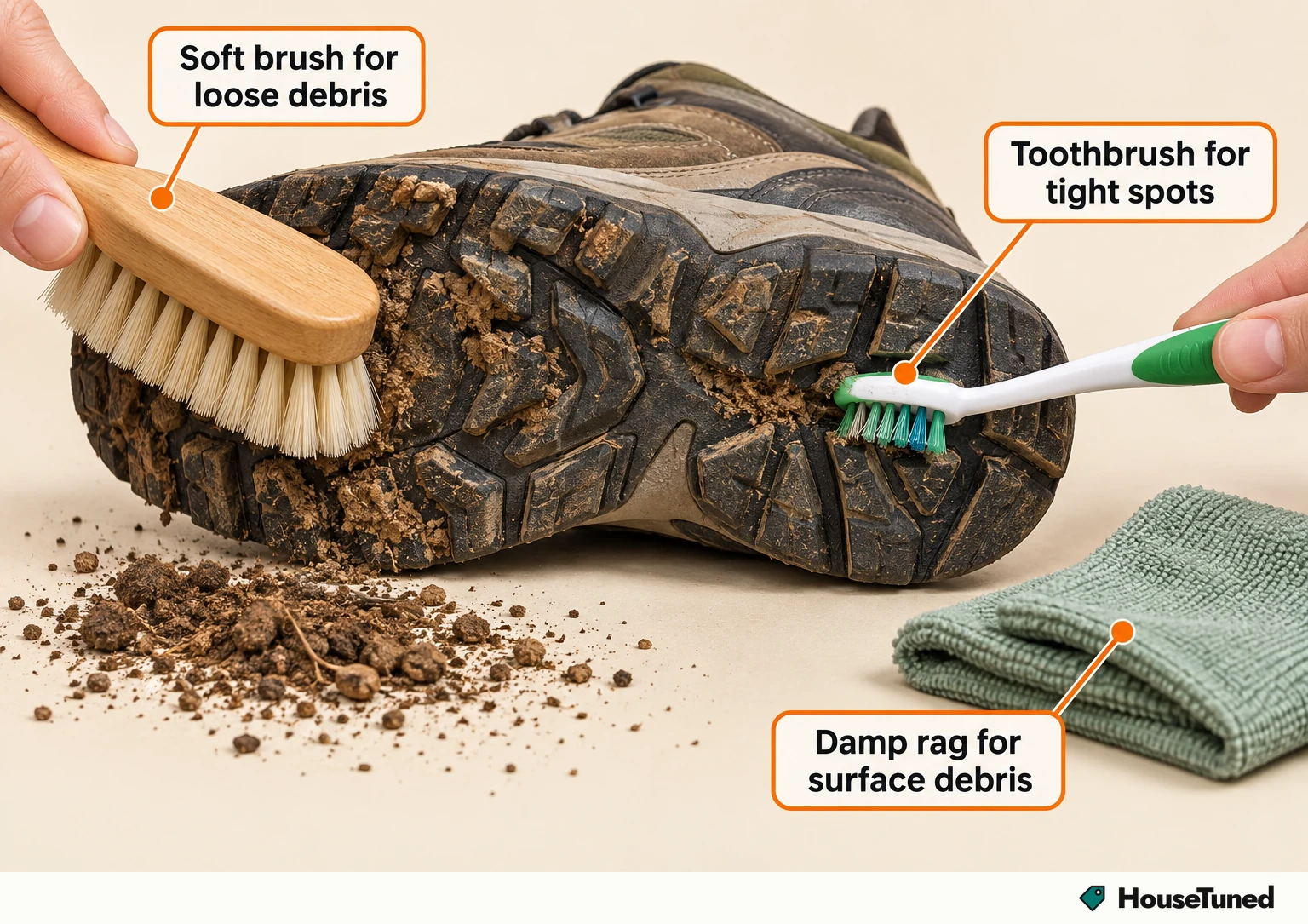
If you use TCL's pre-cleaning method, scrub sole dirt with a toothbrush and warm soapy water, then rinse each shoe individually until the soap and dirt are gone. For scuffs, you can gently apply shoe cleaner with a rag or soft brush and wipe it away with a damp rag.
Give the insoles their own cleaning
Hand-clean the removed insoles unless their own care instructions permit machine washing. In the washer, insoles can become waterlogged and take days to dry, so cleaning them separately gives you a way to tackle dirt and odor without that soaking.
- Wipe the insoles with a soft brush or rag and slightly soapy water, working over the surfaces you need to clean.
- Use a sponge to absorb as much excess moisture as possible, leaving the insoles less wet.
- Sprinkle baking soda over the insoles and leave them overnight to deodorize and absorb remaining moisture.
- Brush off the baking soda in the morning, leaving the insoles clear of the powder.
The overnight treatment handles the removable inserts separately from the shoe load. Keep them out until they're dry before reassembly.
A bag and soft towels protect the load
Put the prepared shoes in a mesh garment bag, or use a pillowcase if you don't have one. Containing the shoes helps limit forceful tumbling that can damage them and protects the washer tub from the shoes moving around inside it.
Add a few old towels alongside the bag to balance and cushion the load. Soft buffer items also help prevent excessive noise and vibration, so a bagged pair doesn't need to be the only thing in the drum.
Choose old towels because newer ones can release excess dye and stain the shoes. Keep light-colored shoes separate from dark-colored ones too, so one pair doesn't bleed color onto another.
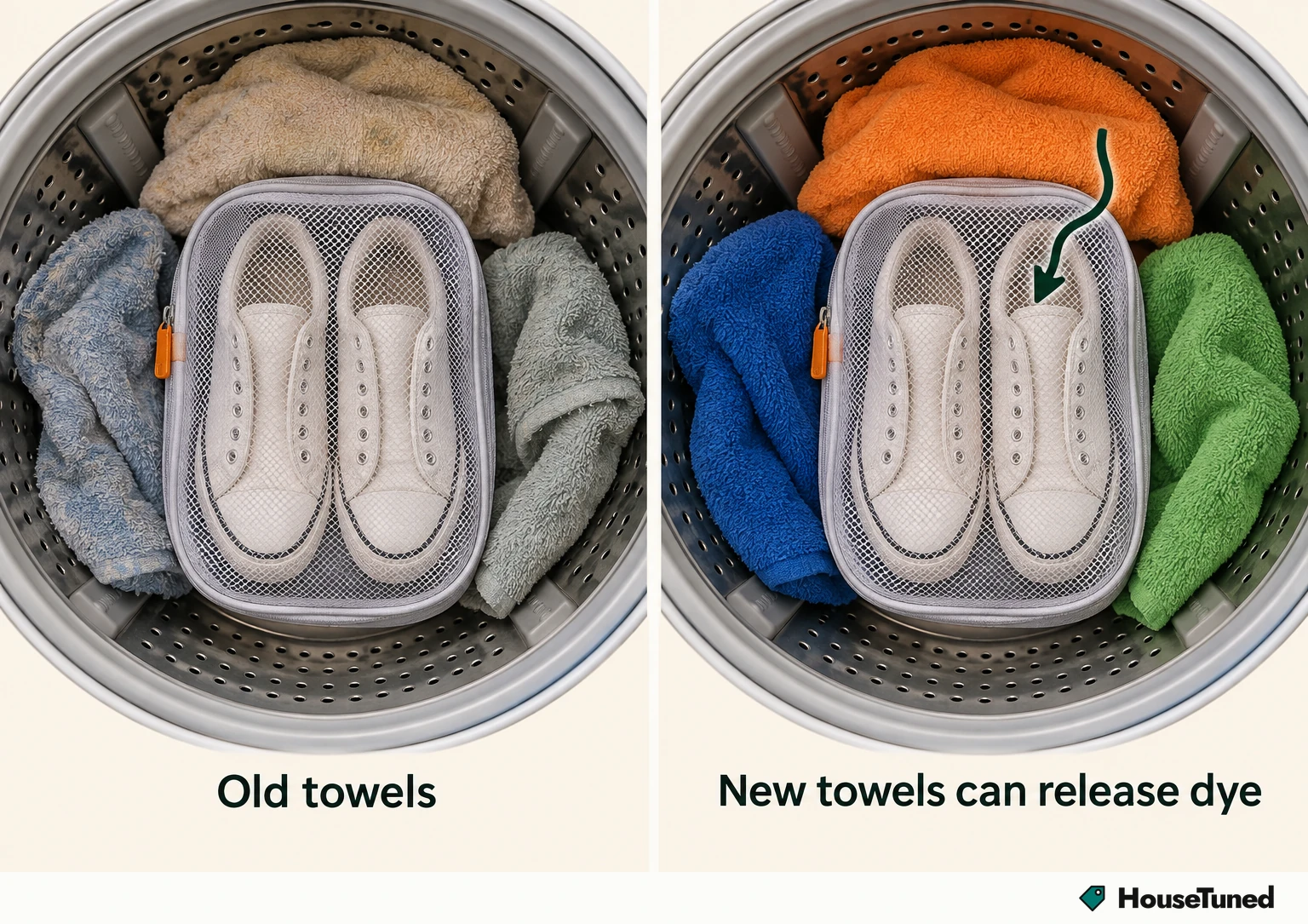
Avoid overloading the washer with shoes. For Samsung washers, the recommendation is only a couple of pairs at a time, with the buffer items included in your load planning.
Bagging and cold, gentle washing work together to reduce potential machine damage from tumbling. If your next load needs a footwear-focused reference, use our guide to cleaning shoes in the washer.
Keep the detergent mild and the extras out
Add a small amount of mild detergent. Liquid detergent is a supported choice, and Whirlpool also permits laundry pods. Skip powder for this job because undissolved detergent can get stuck inside the shoes.
Keep bleach, harsh chemicals and fabric softener out of the load. Harsh cleaners can damage shoes, and bleach can damage the color of footwear fabrics and materials.
TCL suggests a tablespoon or two of gentle detergent and generally advises warm water instead of hot, but specifically calls for cold water for athletic sneakers. That differs from Whirlpool's and Samsung's cold-water instructions, so we'd choose cold for the washable sneaker load because all three support that path.
Use cold water and a gentle cycle
Choose a gentle or Delicate cycle with cold water and a slow or no-spin option. Gentle, low-spin washing helps avoid shoe damage, while cold water reduces the shrinkage risk associated with a hot wash.
On Samsung front-load and top-load washers, suitable gentle-cycle examples are Delicates and Hand Wash, paired with the cold-water setting. You can use Samsung's shoe-washing steps (opens in a new tab) while selecting the cycle on your machine.
Hot water can also make elastic bands on athletic shoes brittle over time. Keep the temperature choice tied to shoe care even when the shoes are heavily soiled.
For planning, a Delicate shoe wash takes about 45 minutes to an hour in Whirlpool's care guidance. Leave room in your schedule for drying afterward, which takes longer than the wash itself.
Dry fully before wearing or storing
When the cycle ends, take the shoes and any machine-washed laces out of their bags and let them air-dry. Stuff the shoes with clean rags or paper towels if you'd like help absorbing excess moisture and holding their shape.
Allow at least overnight, and be prepared for drying to take a few days. A sunny spot can help speed air-drying, but the point to judge is whether the shoes are completely dry.
Keep high dryer heat out of the process because it can shrink and damage the shoes. Give the air-drying route the time it needs.
Once the shoes and cleaned removable parts are completely dry, put the insoles back and rethread the laces. Before storing the shoes, make sure they've aired out fully to help prevent mold and mildew.
More in this category