Match the sheet to your load
- Dryer sheets help reduce static cling, soften laundry and add scent by transferring ingredients onto fabric.
- Check your load's care labels first. The coating that softens everyday clothes can interfere with specialty fabrics.
- Choose the amount from the sheet's packaging, and make lint-filter care part of using them.
If you're reaching for a sheet because your socks cling together or your shirts feel rough, those are the benefits to weigh. We'd make the fabric check your first decision, because a softer feel isn't worth compromising a garment's moisture-wicking or protective properties.
Think about what you want from this particular load: less cling, a softer touch or added fragrance. Dryer sheets address those preferences, but their suitability depends on what's going into the drum. Everyday cotton clothing and performance clothing call for different choices.
What happens in the drum
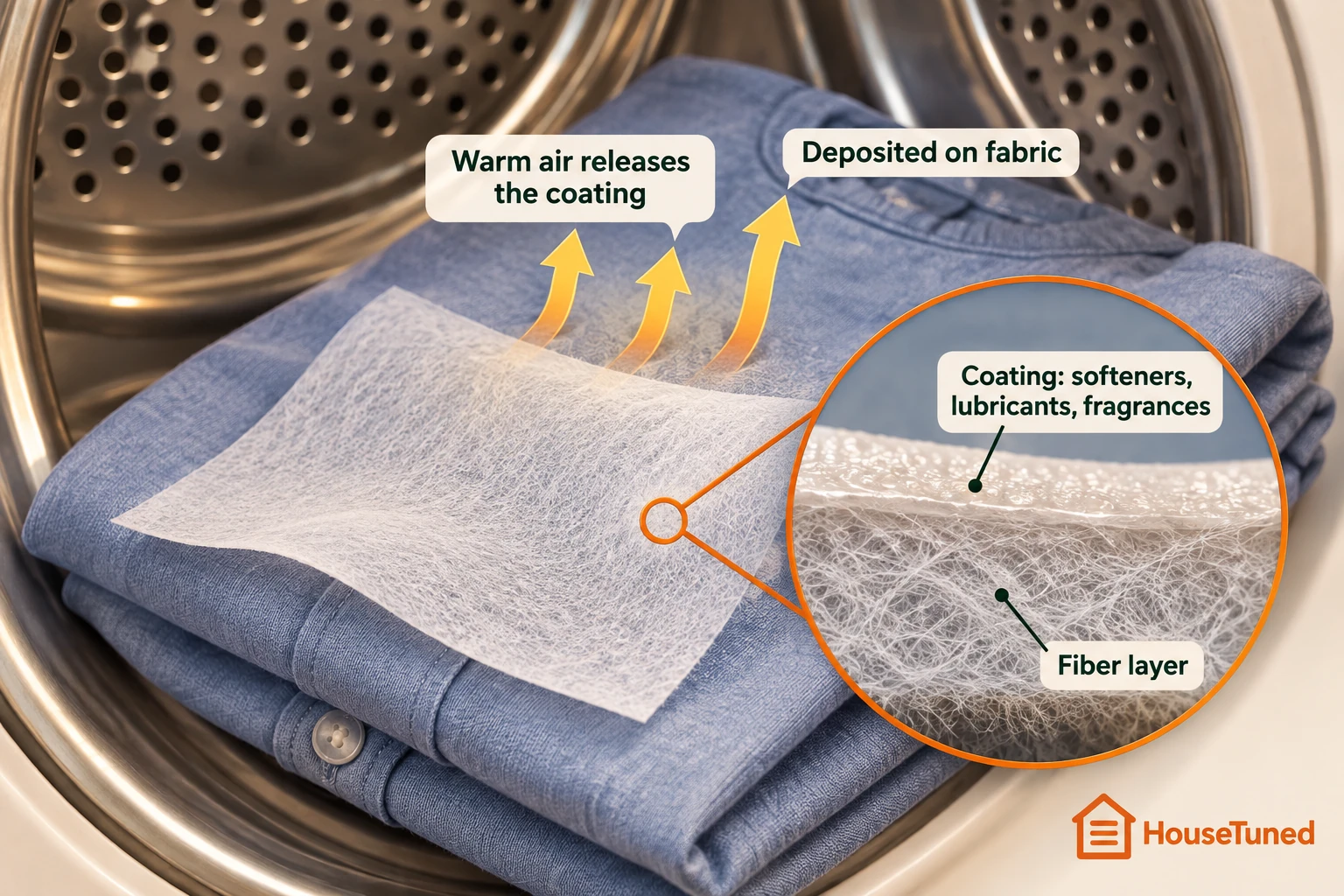
The sheet itself carries a coating of liquid softeners, lubricants and fragrances. Its fabric layer is often made from polyester or cellulose fibers. During drying, heat warms that coating and releases the ingredients onto your laundry, as explained in Whirlpool's dryer-sheet guidance (opens in a new tab).
Static starts as clothes rub against each other while tumbling. That can build an electrical charge and leave items sticking together when you unload. Dryer-sheet ingredients help neutralize that attraction, so socks clinging to sweaters are the kind of problem they're designed to address.
Softness and scent come from ingredients transferred to the fabric, too. You're feeling the effect of deposited softeners and smelling added fragrance. Most dryer sheets need heat to release those ingredients effectively, which makes heat part of how the product works.
When you judge the result, look for less sticking between items and a softer feel. With a fragranced sheet, added scent is another intended result. Those are separate benefits, so you can decide which actually matters to you when choosing whether a sheet suits the load.
The fabrics that should skip the sheet
Read each item's care label before putting it in the dryer. Natural-fiber everyday items, such as cotton shirts, pants and socks, are the loads Maytag and Whirlpool identify as good candidates for dryer sheets. A garment's special function matters as well as its fiber content.
Use these distinctions when sorting a mixed load. The concern is what the softening coating can do to the fabric's intended performance, including safety features. Maytag's fabric guidance (opens in a new tab) explains the reasons for keeping these items out of a load with dryer sheets.
| Items in your load | Your dryer-sheet decision |
|---|---|
| Athleticwear | Skip the sheet. Its coating can interfere with moisture-wicking and stain-absorbing properties. |
| Microfiber items | Skip the sheet. Deposited ingredients can affect the fibers' stain-absorbing and moisture-wicking abilities. |
| Flame-resistant clothing, including flame-resistant kids' pajamas | Don't use a sheet. Softeners can reduce the fabric's ability to self-extinguish, creating a safety concern. |
| Water-repellent jackets, windbreakers and similar items | Don't use a sheet. The softener coating can interfere with the fabric's ability to repel water. |
Towels come with an absorbency trade-off
A fluffy feel can come at the expense of soaking up water. Maytag warns that the softeners in dryer sheets can reduce towel absorbency, so the appealing softness has a practical trade-off when you dry yourself.
Whirlpool's towel advice (opens in a new tab) has two parts: it initially includes towels among fabrics to avoid, then says to use sheets only in moderation if you still want their fragrance and softening benefits. That later allowance retains the warning about reduced absorbency.
We'd leave the sheet out of towel loads because absorbing water is the job you need those towels to do. That choice follows the absorbency warning without turning Whirlpool's moderation allowance into a blanket approval.
Consider sensitivity and what you're already using
Consider who will wear or use the laundry before choosing a scented product. If you or someone in your household has fragrance or dye sensitivities, some dryer sheets can cause adverse skin reactions. That makes sensitivity a reason to reconsider the product before adding it to the load.
Already using fabric softener? You don't need to add dryer sheets to the same load for the same purpose. Maytag explains the overlap (opens in a new tab): sheets contain fabric softener and offer very similar softening and fragrance benefits.
Let the package set the amount
Dryer sheets generally work in both gas and electric dryers. Before using them, consult the sheet manufacturer's instructions and your dryer owner's manual for guidance that applies to your products. The general method doesn't depend on choosing one fuel type over the other.
Use the amount specified on your sheet's packaging. Maytag connects using the right amount with avoiding buildup on clothes and appliances, so adding extra sheets changes more than the strength of the scent.
Whirlpool notes that some larger loads may call for two sheets (opens in a new tab), while still directing you to the product packaging for specific recommendations. Treat that as a conditional example: your package supplies the amount for the product you're actually using.
Add the sheet before the cycle starts
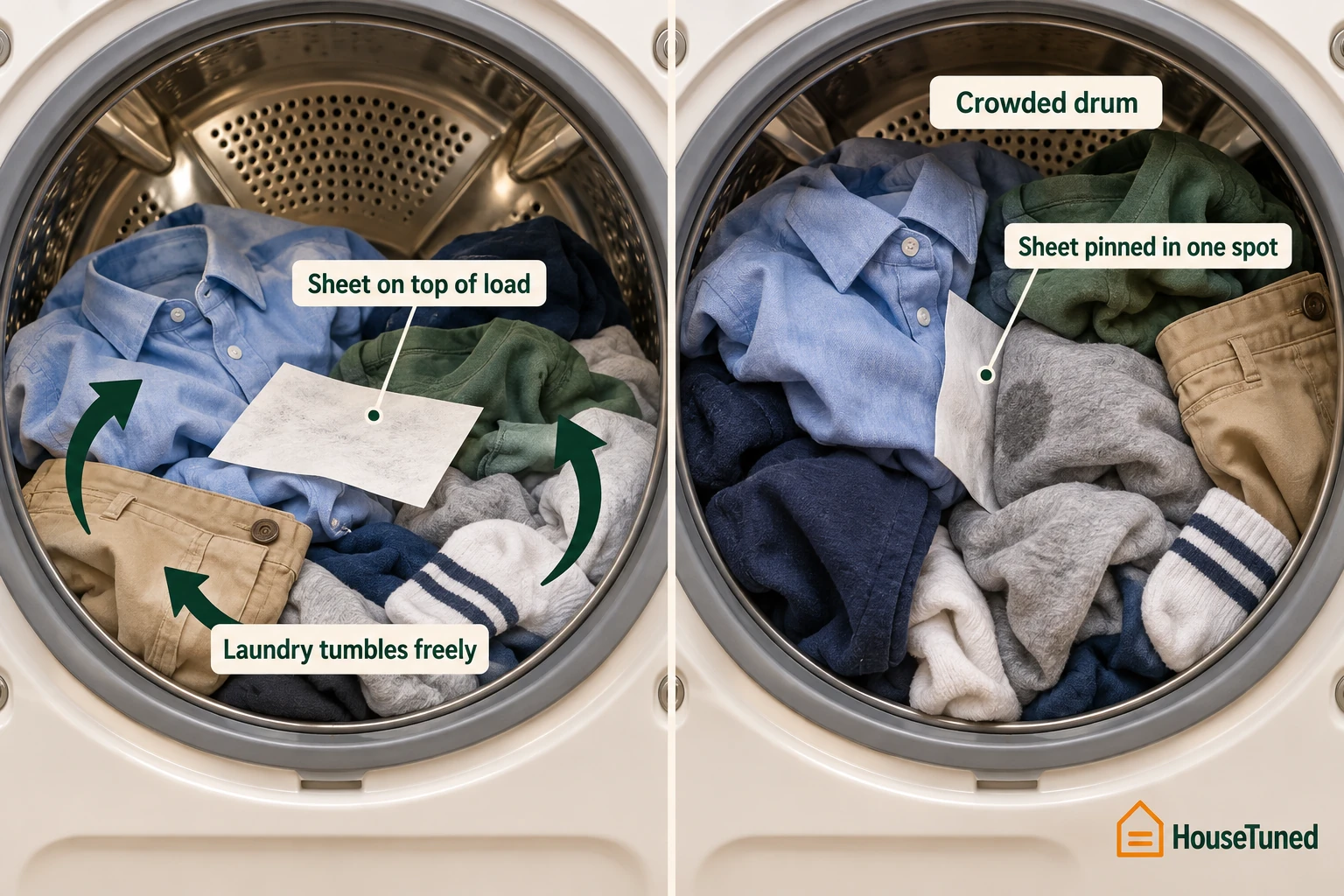
Give the laundry room to move when you load it. Overloading can trap a sheet against one spot, where concentrated softener can melt onto the clothing and leave stains. Free tumbling supports proper drying and keeps the sheet from getting pinned in place.
Once you've selected a suitable load and checked the package, follow this general sequence from Maytag's dryer-sheet instructions (opens in a new tab).
- Empty the lint trap completely before starting so air can circulate properly. Check that the collected lint is gone.
- Transfer the laundry into the dryer and add a fresh sheet at the start of the cycle. Place it on top of the load.
- Run your desired drying cycle and let it finish.
- Remove the used sheet when you unload. Check that you've taken it out of the drum.
Keep residue out of the lint filter
The deposits can reach your dryer as well as your clothes. Dryer sheets can leave oily residue that may clog the lint-filter screen faster, reducing air circulation and creating a potential safety hazard. Filter care addresses that residue where it can obstruct airflow.
Remove lint after every load. In addition, both Maytag and Whirlpool recommend washing the lint filter once a month to remove potential residue buildup. These are two separate care tasks: clearing collected lint after use and periodically washing the screen.
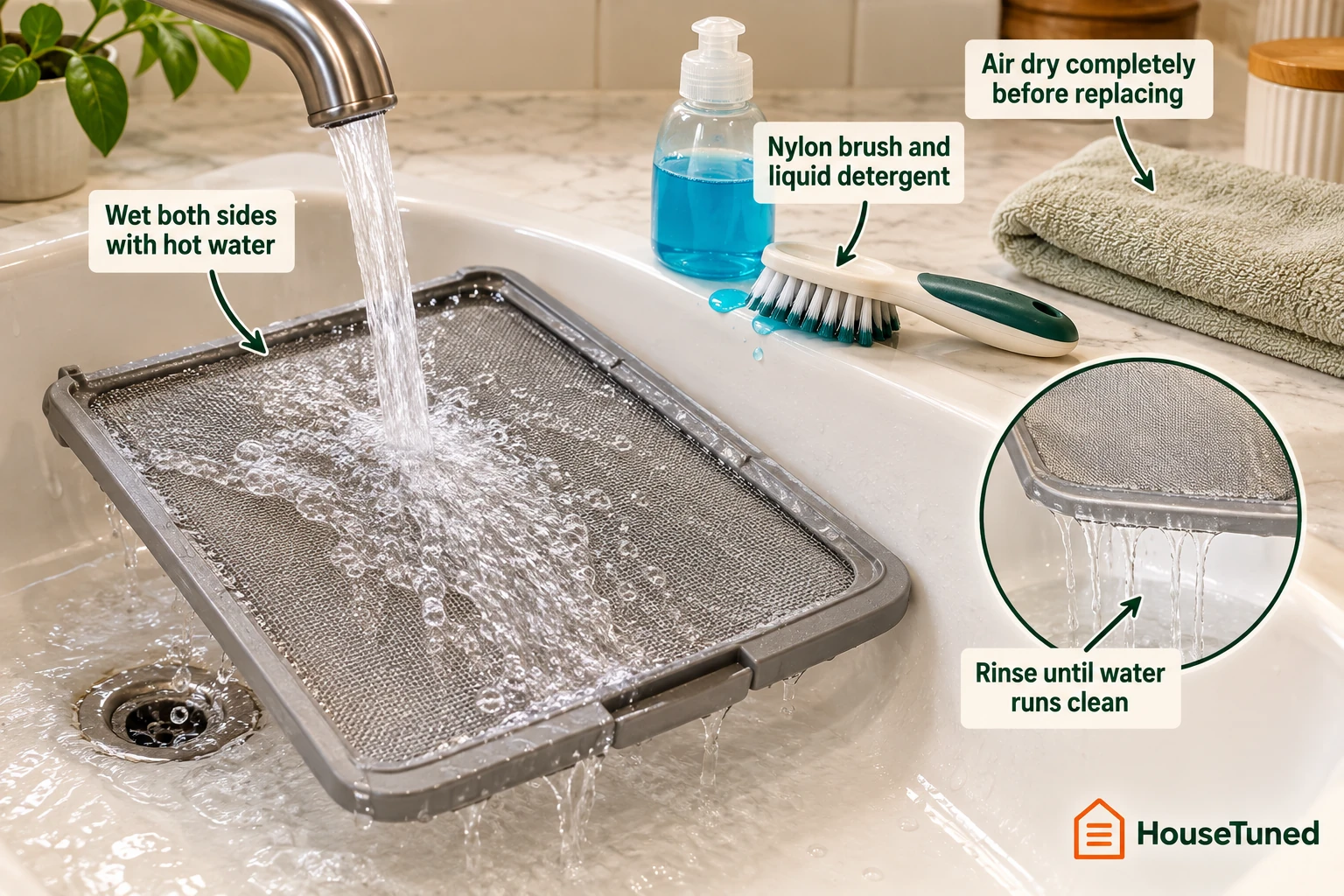
For the washing task, gather hot water, liquid detergent, a nylon brush and a towel. Maytag's filter-cleaning method (opens in a new tab) gives you an observable rinse endpoint and requires complete drying before the screen goes back into the appliance.
- Remove the lint filter and wet both sides of its screen with hot water. Both surfaces should be wet.
- Wet a nylon brush with hot water and liquid detergent, then gently scrub the screen.
- Rinse the screen thoroughly with hot water until the water runs clean.
- Pat it dry with a towel, then let it air dry completely. Replace it in the dryer only once it's fully dry.
More in this category