The Question a Mid-Priced Robot Has to Answer
Robot mops that wash their own rollers now come in price tiers, and what separates the tiers is mostly what the cheaper ones leave out. A mid-priced robot can clean the middle of a room as well as a dearer one. The savings turn up somewhere else, and the useful question for a household is whether they turn up somewhere it will notice.
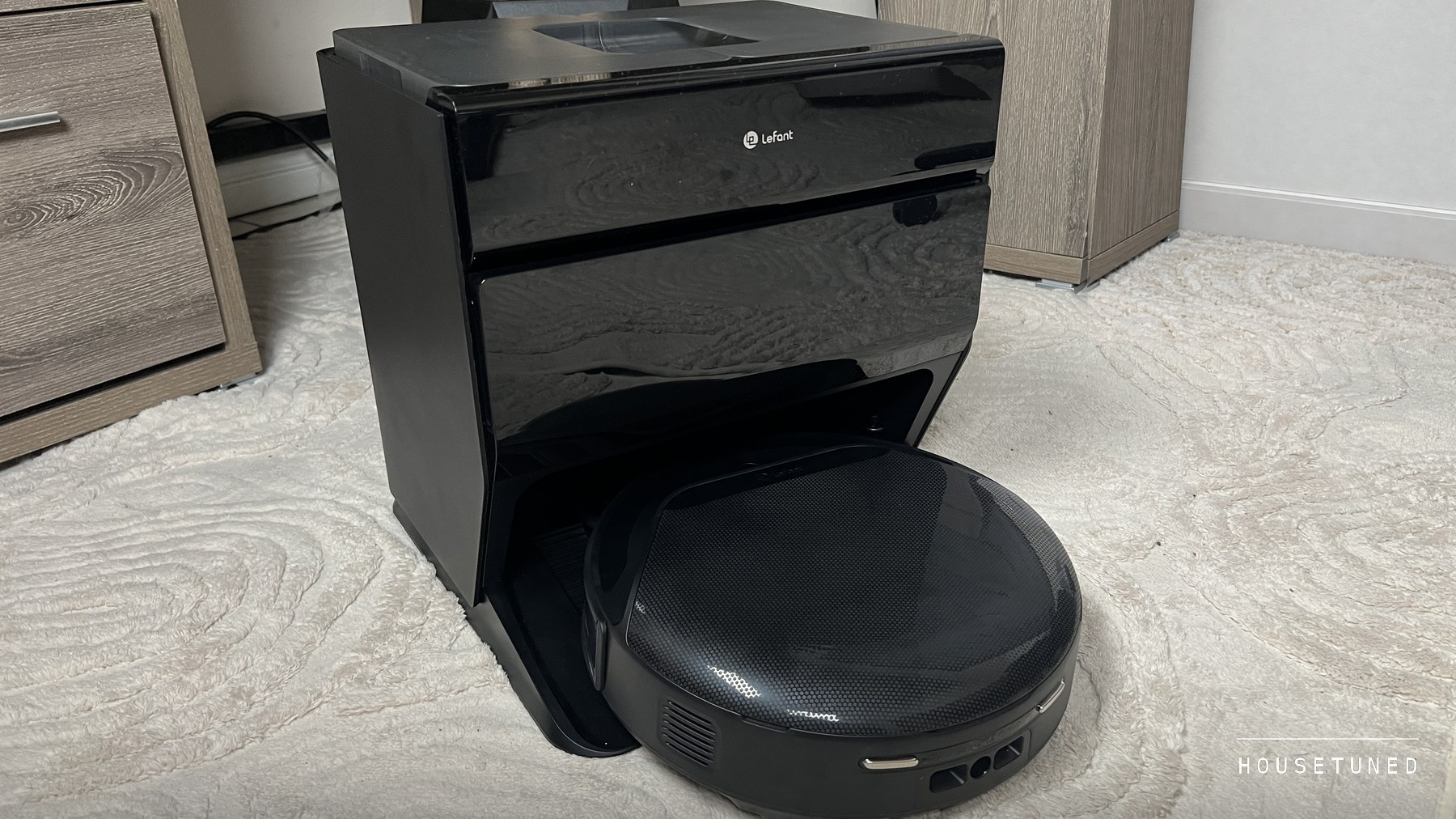
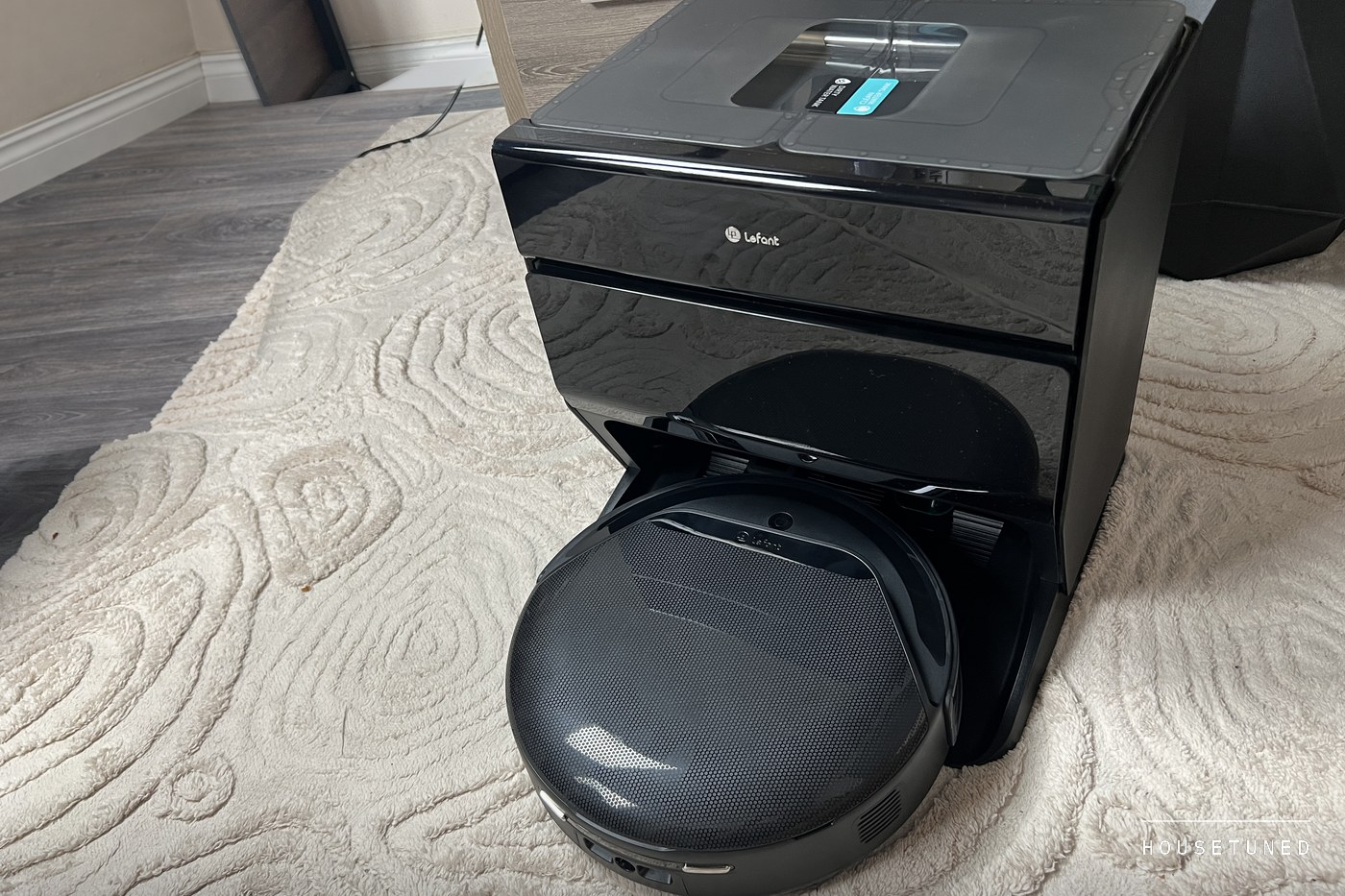
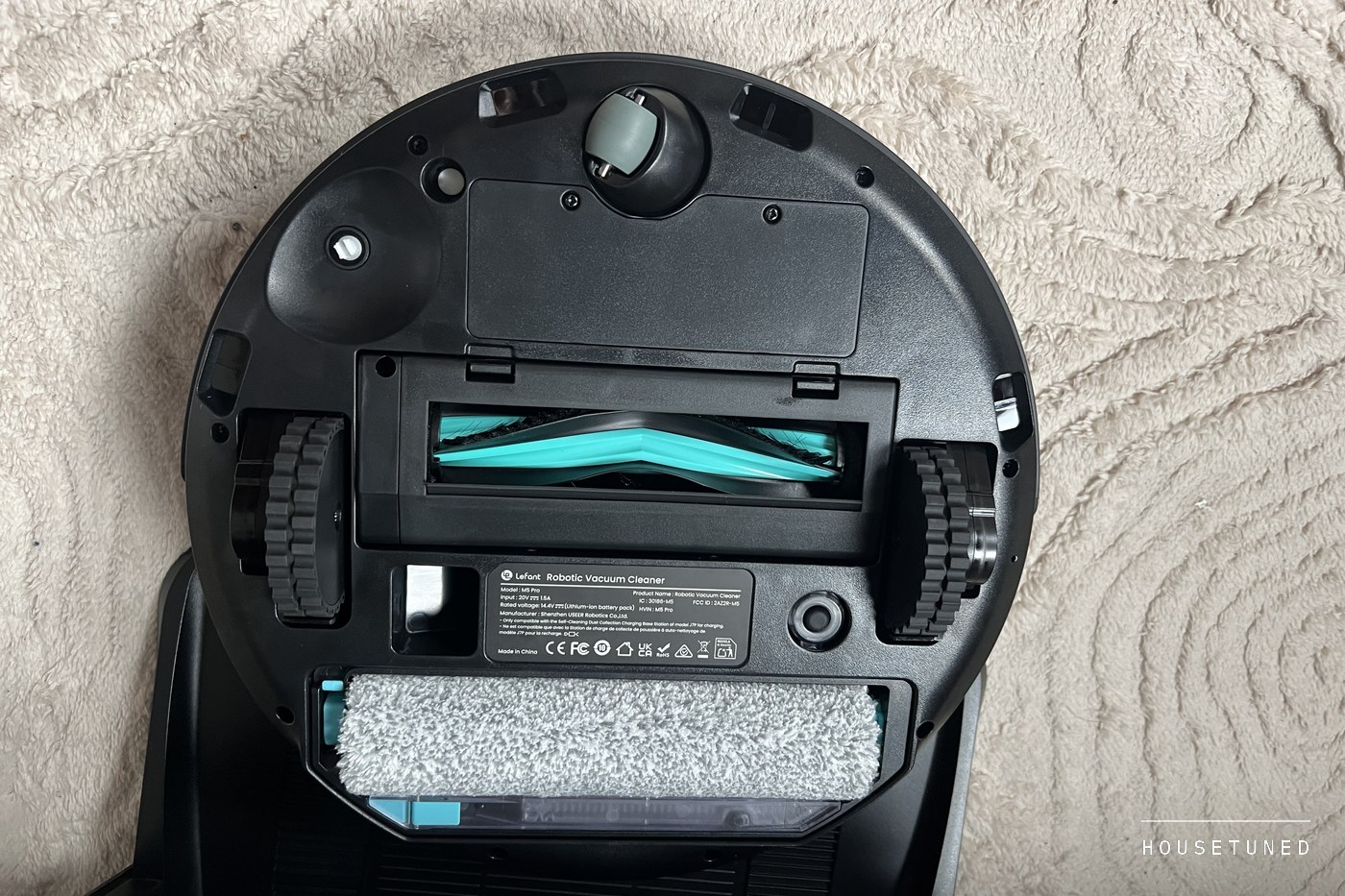
We ran the Lefant M5 Pro every day for weeks in June, on a unit Lefant supplied for review with no say in what we wrote. It is a camera-free robot about four inches tall. Its roller mop turns against the floor while clean water is fed onto it, and a scraper behind the roller pulls the used water off and into the robot. Its dock empties the dust into a bag, washes the roller in water at up to 167°F (75°C), dries it with room-temperature air and refills the robot.
- Tested
- Weeks of daily runs, June 2026
- Mopping
- Roller fed with fresh water, scraped as it turns
- Mop care
- Up to 167°F (75°C) wash, room-temperature air drying
- Edges
- No extending roller or side brush
- Obstacles
- Laser mapping and PSD distance sensors, no camera
- Rugs
- Mop lifts 8 mm and suction rises
- Suction
- 18,000Pa, Lefant's rating
- Dust bag
- Lefant rates each bag at up to 120 days
To see what it leaves out, we set it against two pricier roller-mop robots from bigger brands, on paper, using their makers' own specifications. Between them they add four things the M5 Pro does without. Our weeks with it showed which of those a household actually notices, and it was two of the four.
The Parts of the Job It Does Not Skimp On
Start with what the lower price did not cost. The mopping system works the way the pricier robots' do: a roller with a steady feed of clean water, turning at 280 rpm by Lefant's figure, and a scraper that takes the dirty water off before it goes back down. So the M5 Pro mops with clean water on every turn rather than dragging a pad that gets dirtier across the room, and our floors came up looking washed rather than wiped.
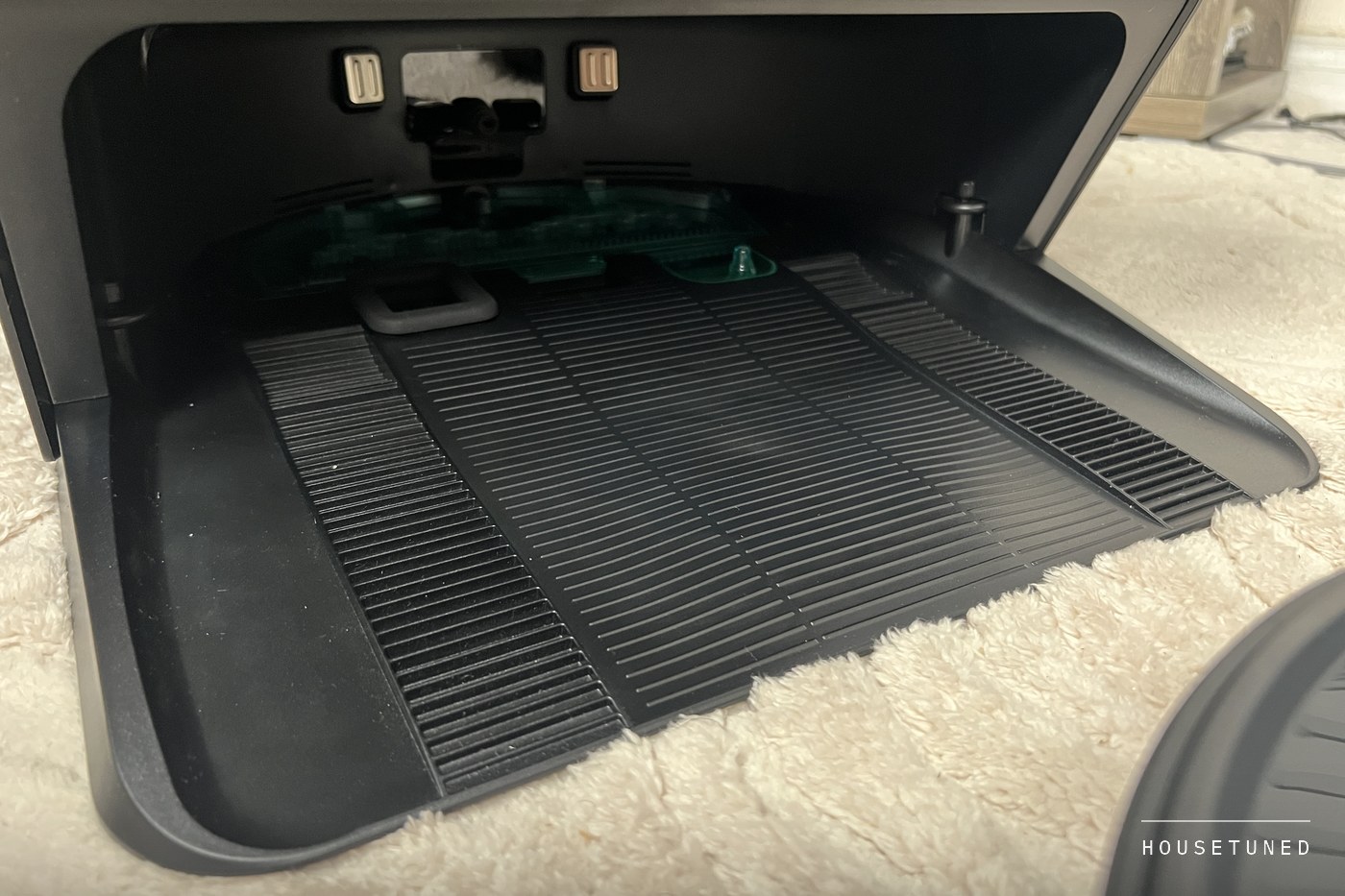
Its dock matches them on the headline number too. Both pricier robots we compared wash their rollers at up to 167°F, the temperature Lefant quotes for the M5 Pro. It also empties the bin, refills the robot, drains its dirty water and doses cleaning solution from a cartridge of its own, so our part came down to topping up the clean tank now and then and emptying the dirty one.
The vacuuming gave nothing away either. Crumbs and fine dust came off hard floors in one pass, and on rugs it dragged out grit that lighter robots skim past. In weeks of daily use not one hair wrapped the V-shaped main brush, so the scissors stayed in the drawer. Its first map came out right, docking never failed, and its four-inch height let it clean under the sofa, the bed and the television stand.
Room-Temperature Drying Was the Saving We Never Noticed
The first extra the pricier robots add is heat in the drying. The two we compared blow warm air over the roller after each wash, 131°F (55°C) on one and 145°F (63°C) on the other, and both makers sell it as the cure for odours. The M5 Pro dries with room-temperature air, for as long as you set in the app.
On paper that is the omission that should matter most, because a mop left damp is where robot-mop smells start. In practice it never showed. Weeks of mopping every day never left the roller smelling off. The faint gym-bag smell that pad-dragging robot mops leave on a floor was what we had braced for, and it never came.
Our reading is that the M5 Pro puts its heat into the wash instead. The roller gets clean water all through a run and hot washes at the dock during and after it, so it goes into the drying phase with little left on it to sour, and room air finishes the job over whatever time you set. Warm air would get it dry sooner, which counts for more in a humid house or on a tight schedule than it did for us.
The Strip Along the Baseboards Is the Gap You See
The second extra is reach. The pricier roller robots push the roller out toward the wall on edge passes, one to within about 10 mm of it by its maker's figure. Nothing on the M5 Pro reaches out, so a narrow band along the baseboards and in tight corners stays untouched by the roller.
Of the four, this is the one we noticed most, and how much it matters depends on the room. In an open living area the strip is a small share of the floor and easy to overlook. In a kitchen it runs the length of every cabinet, which is where splashes and cooking grease settle, so that is the first place a mid-priced robot's work looks unfinished.
The fix is small. A damp cloth along the kickboards and into the corners every week or two covers what the roller cannot, a few minutes rather than a mop and bucket. If that is a job you would resent, the extending roller is the extra worth paying for.
No Camera, So Pick Up the Socks First
The third extra is sight. The pricier roller robots carry cameras and recognise what is in front of them, one claiming more than 200 kinds of clutter, pet mess included. The M5 Pro maps rooms with a 360-degree laser and watches the floor ahead with PSD sensors across a 190-degree arc. A PSD sensor works out distance from where a reflected spot of light lands on it, so the robot knows that something is there and how far away, but not what it is.
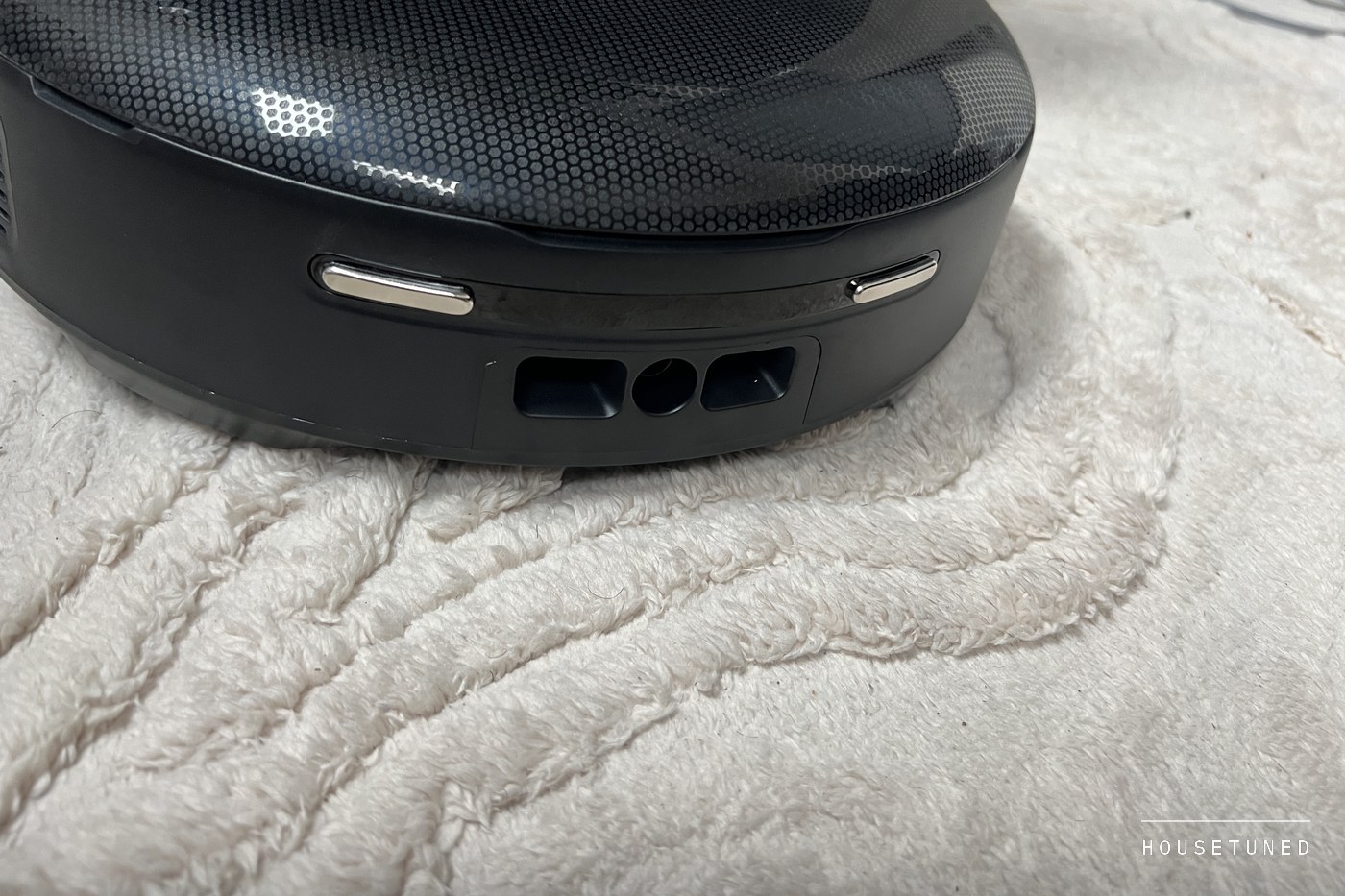
In daily use that was enough for solid things. It steered around chair legs, shoes, cables and toys without us clearing the floor first. Its weak spot was small, low, soft things: socks, thin charging cables and small toys sometimes got pushed along rather than steered around. A ten-second look across the floor before a run took care of it.
Where that look stops being optional is pets. A camera robot is trained to spot pet mess and steer around it. A robot that only measures distance cannot tell a dropped toy from an accident, so in a house with a pet that has them, check the floor every time.
There is an upside to having no camera, which is no camera wandering your home. Makers of camera robots answer that worry with security certification and permission settings, and the M5 Pro never raises it. The data statement Lefant's maker publishes for European buyers lists laser-scan logs, kept on the robot unless you choose to upload them, and bump and cliff-sensor readings, but nothing from a camera, because there is none. The laser also needs no light, so the robot can run in a dark house.
How Far an 8 mm Mop Lift Goes
The fourth extra is clearance. On carpet the M5 Pro lifts its roller 8 mm and turns up the suction, and by default it vacuums rugs without mopping them. The pricier roller robots lift 10 to 15 mm. On our rugs the smaller lift made no difference: the roller came up, the rugs stayed dry and the suction pulled out what had been trodden in.
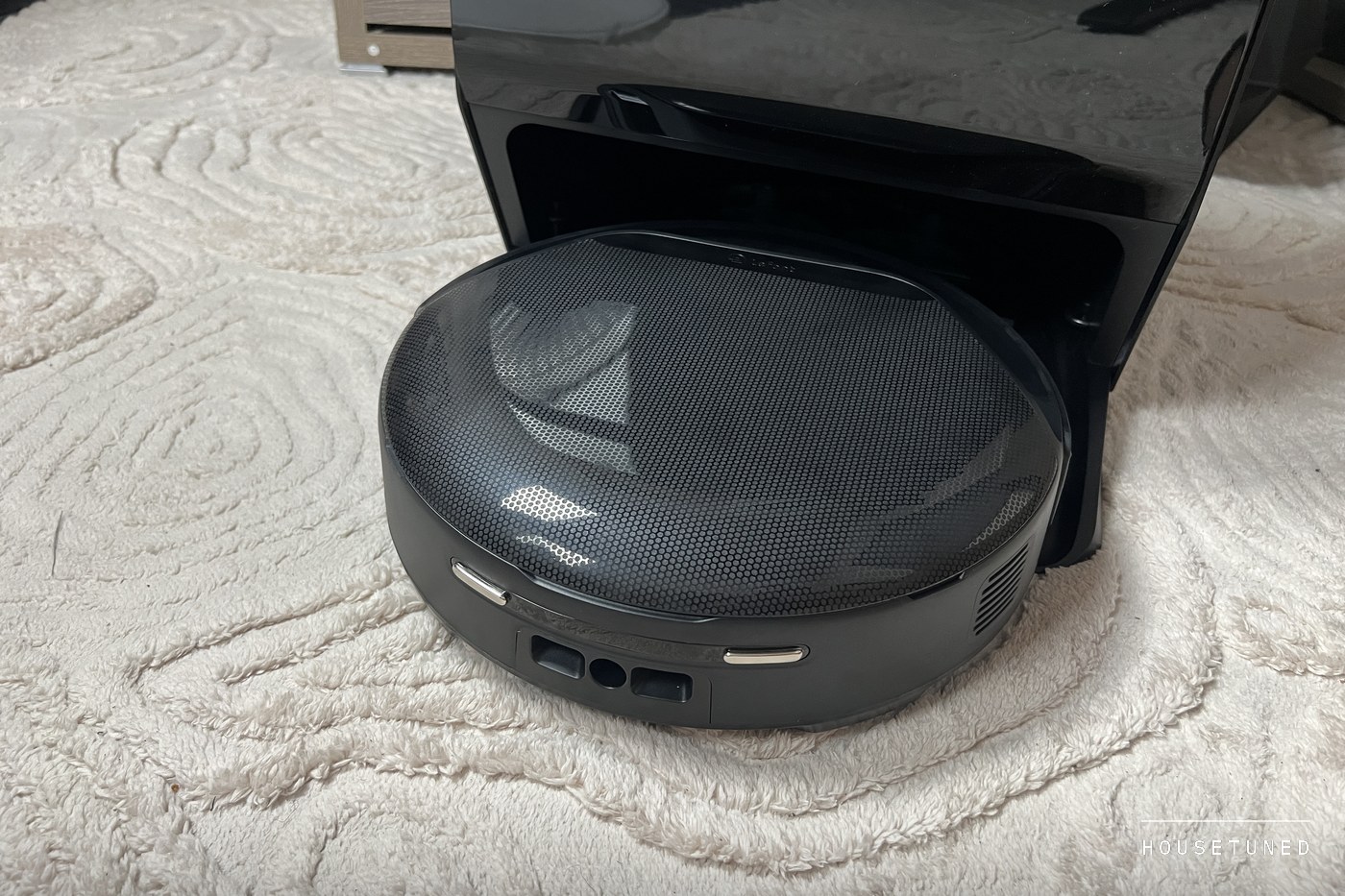
It does set a limit on thicker pile. Lefant's manual rules out long-pile carpet and warns that some dark rugs may not get a proper clean, and the app can tell the robot to avoid carpet entirely. Door sills are the same story. Lefant says the M5 Pro climbs sills up to 16 mm, about 0.6 inches, a little short of the 20 mm one of the pricier robots quotes with its mop fitted.
- Your deepest rug. Long pile is off the table, so plan to mark it as an area to avoid.
- Your tallest sill or floor transition. Anything over 16 mm, about 0.6 inches, is beyond Lefant's rating.
What Paying More Would Not Change
Some of what we noticed had nothing to do with the price tier. The dock is big, taking up roughly as much floor as a small side table, but it reads as furniture rather than clutter; give it a permanent spot near a socket with space in front. Lefant's manual asks for about 20 inches clear on each side and five feet in front, with nothing reflective, such as a floor mirror, nearby.
Emptying is loud. For about twenty seconds after each run the dock pulls out the bin with a strong whoosh, fine at lunchtime and not at midnight. Lefant ships quiet hours switched on from 10pm to 8am, and the app prompts you to set your own. By default, a robot that docks during them skips the emptying and does not resume a half-finished job, so either schedule runs to end before quiet hours begin or start the emptying from the app in the morning.
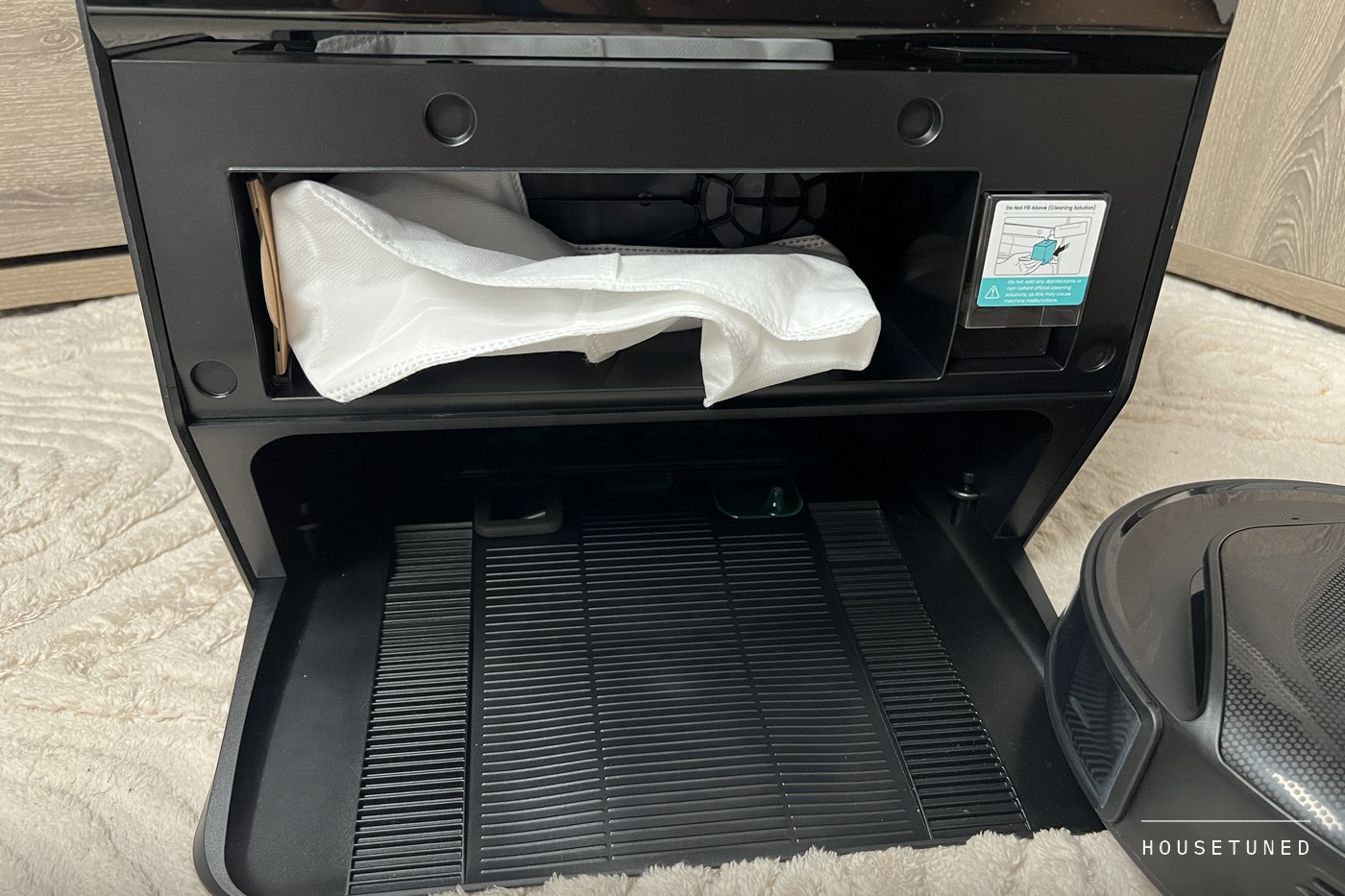
Filling and emptying the tanks stays your job too, and a pricier roller robot would not necessarily change that, since one of the two we compared lists no automatic refill and drain. Fill the clean tank with tap water that is not hot, since Lefant warns hot water can warp it, and pour cleaning solution into its own cartridge rather than the tank. Lefant allows only its own solution, and you can leave it out and mop with water alone.
Who Should Save the Difference
Set side by side, the four extras sort cleanly into two you would see and two you would not.
| The pricier robots add | The M5 Pro instead | Did we notice? |
|---|---|---|
| A roller that reaches out to the wall | A fixed roller and side brush | Yes, a narrow band along baseboards and in corners |
| Cameras that recognise objects | Laser mapping and PSD distance sensors | Sometimes, with socks, thin cables and small toys |
| Warm-air drying at 131°F to 145°F | Room-temperature air drying | No, the roller never smelled off |
| A 10 to 15 mm mop lift on carpet | An 8 mm lift | Not on our rugs, which stayed dry |
Save the difference if your floors are mostly open, your kitchen edges get a wipe anyway and the floor is usually clear by the time the robot runs. You get the part of a roller-mop robot that matters most, clean water on the floor and a roller that stays fresh, without paying for drying heat we never missed. By the end of our test it was the appliance in the house we thought about least.
Pay more if you have long runs of kitchen cabinets, children or pets whose things live on the floor, or a pet that has accidents. The extending roller and the camera are the two extras that change what the floor looks like week to week, and they are worth the money. The gap between the tiers moves with every sale, so check it on the day you buy.
We score it 8.8. The core jobs of mopping, vacuuming, mop care and emptying were done as well as we could ask over weeks of daily runs. It drops points for the edge strip and the pushed socks, the two omissions a household actually sees, and because weeks of testing cannot vouch for how the roller and dock age over months.
A mid-priced robot that saves money in the right places. Pay for reach and sight if your floors need them, and skip the warm-air drying either way.
Is the M5 Pro rated at 18,000Pa or 23,000Pa?
Lefant's own spec pages list the M5 Pro at 18,000Pa and the M5 Max at 23,000Pa, though some current retail listings for the M5 Pro quote 23,000Pa. Either way it is the maker's figure. We did not measure suction, and our verdict rests on what the robot picked up.
How often does the dust bag need changing?
Lefant's robot pages rate a bag for up to 120 days, but its own listing for replacement M5 bags says up to 45 days. Our weeks of testing were too short to settle it, so expect the shorter end with a shedding pet or a large floor.
Can you still get parts?
Yes. Lefant's US store lists M5 dust bags, HEPA filters, side brushes and roller brushes, and suggests a new main brush every three to six months.
Which voice assistants does it work with?
Lefant lists Alexa and Google Assistant. The Lefant app also runs on an Apple Watch, but Lefant does not list Siri voice control.
More in this category