A cold drum has more than one suspect
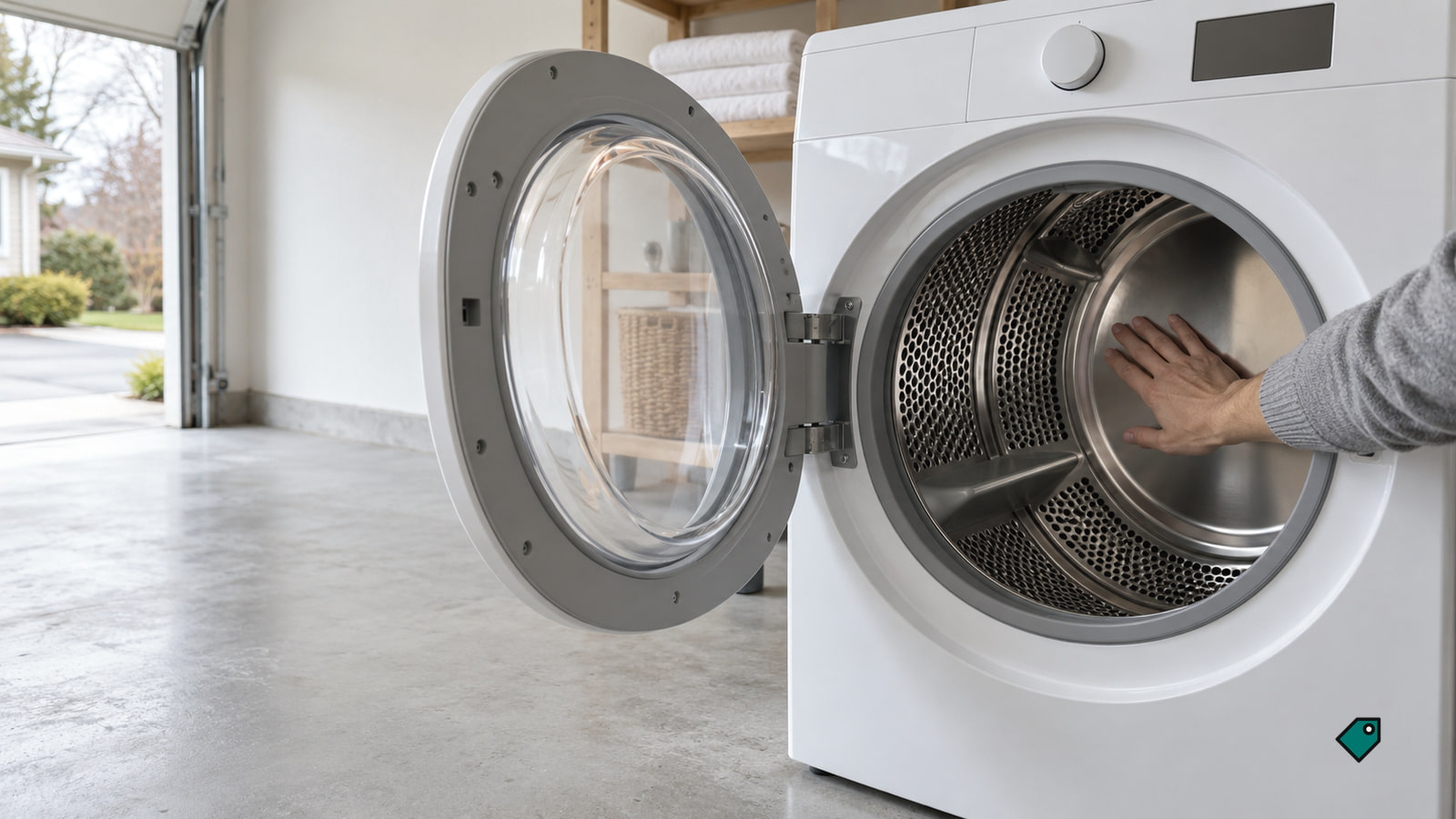
- Run a heated timed cycle with the dryer empty for 5 minutes, then open the door and feel inside.
- Cold on an electric dryer? Make sure an air-only setting isn't selected and reset both breakers before you blame the element.
- Warm, but clothes stay damp? Look at lint, the vent and the load first.
- Still cold after all that? Get a pro, because checking the element means taking the dryer apart.
An element is only one of the parts that can leave you with a drum that turns but never warms. Lost power, an overloaded or soaking-wet load and a blown thermal fuse can all look exactly the same from the outside. We'd run the empty heated test before anything else, because it separates real no-heat from slow drying, and each one sends you to different checks.
Electric or gas changes what you're hunting for
Electric dryers heat the drum air with a heating element. Gas dryers use a burner instead, and damage to either one can leave the dryer unable to heat.
If yours runs on gas, the element isn't your suspect. Run the heat test below, then head to the gas shutoff check.
The five-minute empty test
On Maytag dryers, the heat check goes like this.
- Choose a timed cycle that uses heat. Skip Air Only or Air/Fluff Only, which add no heat at any point in the cycle.
- Run it with the drum empty for 5 minutes.
- Open the door and feel inside to see whether the drum warmed up.
If you'd been drying on an air-only setting, that alone explains the cold air. Switch to a heated cycle and test again before you go any further.
| What you feel | Dryer type | What it points to |
|---|---|---|
| Cold | Electric | Power supply, heating element or thermal fuse |
| Cold | Gas | Closed gas shutoff valve or burner trouble |
| Warm | Either | Lint, vent airflow, load size or very wet clothes |
Cold drum on an electric dryer
Power is the first suspect you can check yourself. On GE electric dryers, the drum can keep running on a partial 120-volt supply but won't heat without its 208V/240V supply, and a breaker can be partly tripped even when it looks fine.
Maytag electric dryers run on a separate 30-amp, 240-volt circuit with two breakers, one for the motor that turns the drum and one for the heating element. If just one trips, the drum can still turn while the heat stays off.
- Unplug the dryer before you go to the panel.
- Reset both dryer breakers by switching each one off and back on, even if neither looks tripped.
- Plug the dryer back in, rerun the empty heated test and feel whether the drum warms up now.
A gas dryer that turns but stays cold
A closed gas shutoff valve lets the drum turn while the dryer never heats. Find the shutoff valve on the supply line and open it. It's open when the handle runs parallel to the gas pipe.
If the valve is open and the drum still stays cold, the burner side needs a professional look, which we cover below.
Warm drum, damp clothes
Heat in the empty test plus long dry times points to airflow, not missing heat. A clogged lint screen or blocked vent is a common reason clothes don't dry fully even while the dryer heats.
Pull the lint screen out from the top of the dryer or the door opening, open it if it folds, and wipe the lint off with your fingers. Close it and push it back into place. For the after-each-load clean, skip rinsing it with water, since wet lint is harder to get off. A clogged screen cuts airflow and adds stress on the heating system.
Then look at the load. A stuffed drum leaves no room for hot air to circulate or clothes to tumble, so drying drags on and the heating system works harder. Clothes that go in dripping wet instead of damp can also make a healthy dryer seem like it isn't heating.
Checking the vent run
Steam from wet clothes has to escape for the load to dry, so the vent should run from the dryer to the outside of your home with nothing in the way. Check it for kinks and lint buildup, and clean the whole length as needed, from the back of the dryer to where it exits. Our guide on how to clean a dryer duct walks through that run.
A crushed or blocked vent can leave the heat on and just stretch drying time, or it can push the element to a high-temperature limit that cuts the heat while the drum keeps turning. Either way, clear the vent before you book service about the element.
Still cold after every outside check
With settings, power, gas and airflow ruled out, the heat problem is inside the machine. On an electric dryer that could be the element or a blown thermal fuse, and on a gas dryer, the burner.
If you have a GE dryer, the GE no-heat help page (opens in a new tab) points you to repair scheduling.
Jot these down before you call so the tech can start in the right place.
Tick what applies and add details; the note above fills in as you go.
Knowing the heat is back for good
After any fix, rerun the empty heated test. A warm drum after 5 minutes tells you the heat is working again.
Then keep the airflow easy on it. Clean the lint screen after every load and leave room in the drum for clothes to tumble, since restricted airflow stretches drying time and stresses the heating system. Check the outdoor end too, and our guide to cleaning a dryer exhaust vent shows how.
More in this category