Use drying time and the damp spot as clues
- If your vented dryer is damp and loads take longer to dry, clear the lint screen first. Restricted airflow can trap humid air.
- Check the outside wall cap and the vent setup next, especially if the door or controls are damp.
- If the vent needs inspection or cleaning, arrange it with a vent cleaning service. If condensation continues afterward, schedule appliance service.
A load that stays damp longer than expected gives you a useful place to begin. We'd clear the lint screen first because lint reduces airflow, then follow the exhaust path if drying time and moisture don't improve.
Humid exhaust that backs up can condense on the controls. Heat and humidity trapped in the drum can leave it damp, make the dryer feel hot and lengthen drying time.
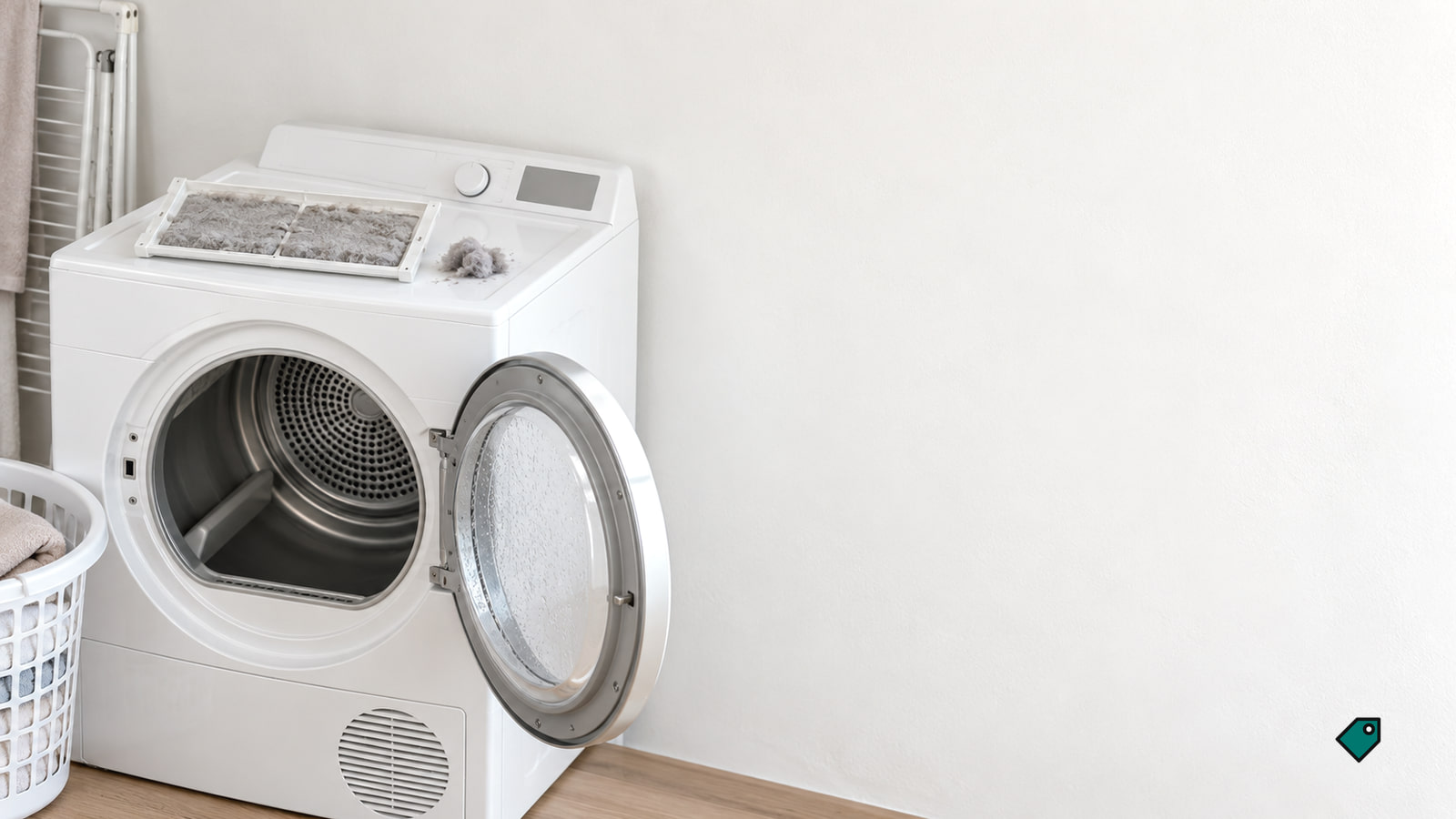
Clear the lint screen first
Remove lint from the screen after every use. On Whirlpool and Maytag dryers, the screen is on top of the machine or in the door opening. Lint on it reduces airflow, so clear it before judging the next load's drying time.
If you regularly use fabric softener, residue can build up on the screen even when you can't easily see it. That residue needs occasional cleaning for better drying performance; follow your dryer's screen-care instructions for anything beyond routine lint removal.
Check the outside outlet
At the outside wall cap, check for anything obstructing the outlet. Keep snow and ice from accumulating around it. If it's clear but the dryer still sweats or takes longer to dry, continue with the installation checks.
Moisture around the door can point to a vent run whose length and elbows don't suit the dryer. Compare that layout with your dryer's installation instructions before deciding the appliance itself needs attention.
Check the intake and vent setup
On a GE dryer, keep clothing off the floor directly in front of the machine. It draws air in at floor level, so a pile there blocks the intake you're checking.
Look at the visible vent material. For GE dryers, it should be semi-rigid metal or flexible metal; flexible plastic duct isn't recommended. Note any plastic duct for the vent specialist, since trapped heat and humidity can leave the drum hot or damp and increase drying time.
Compare the vent length and number of elbows with the dryer's installation instructions. On a GE dryer, the wrong combination can cause moisture around the door. An unheated location can also make the dryer sweat, particularly in cooler months, so include that condition when you describe the problem.
For GE dryers, arrange inspection and cleaning of the exhaust ducting at least once a year. Even a partial clog can impair drying performance.
If the visible checks haven't helped
On a GE electric dryer, use the vent comparison (opens in a new tab) if sweating or slow drying continues after the visible checks. This diagnostic applies to electric models only.
For that GE electric check, disconnect the vent from the back and run a load or two. If the symptoms go away, a venting problem is likely. If they continue, the dryer may need service. Reconnect the vent before returning to normal use.
If the dryer heats but drying remains slow or airflow still seems restricted after the visible checks, contact a professional vent cleaning service to inspect the home vent for obstructions. The same inspection is the next step if the GE electric comparison points to a venting problem.
Watch the next loads
After the vent has been inspected or cleaned, watch the next loads for the longer drying time and moisture that prompted the checks. If condensation or slow drying continues after the lint, outside cap, setup and vent checks, schedule appliance service with your dryer's manufacturer. Tell them where moisture appears, whether drying has slowed and, if you used the electric-only comparison, what changed.
For Whirlpool and Maytag dryers, arrange cleaning of the vent to the outside every one to two years, or when drying performance declines. Use a return of longer drying times as your cue to bring that vent attention forward.
More in this category