Find the safe path first
- Read your heater’s labels and manual, then note whether the pilot dies when you release the control or goes out later.
- Look around the heater for drafts and anything blocking its air intake.
- If you smell gas, stop and leave. If the pilot keeps going out, arrange professional service.
A flame that dies the moment you release the control gives you a different clue from one that holds for a while and then disappears. We’d check the heater’s own instructions and note that timing first, because ignition systems differ and the timing helps direct the next observation. You can gather useful details from outside the heater without opening its burner compartment.
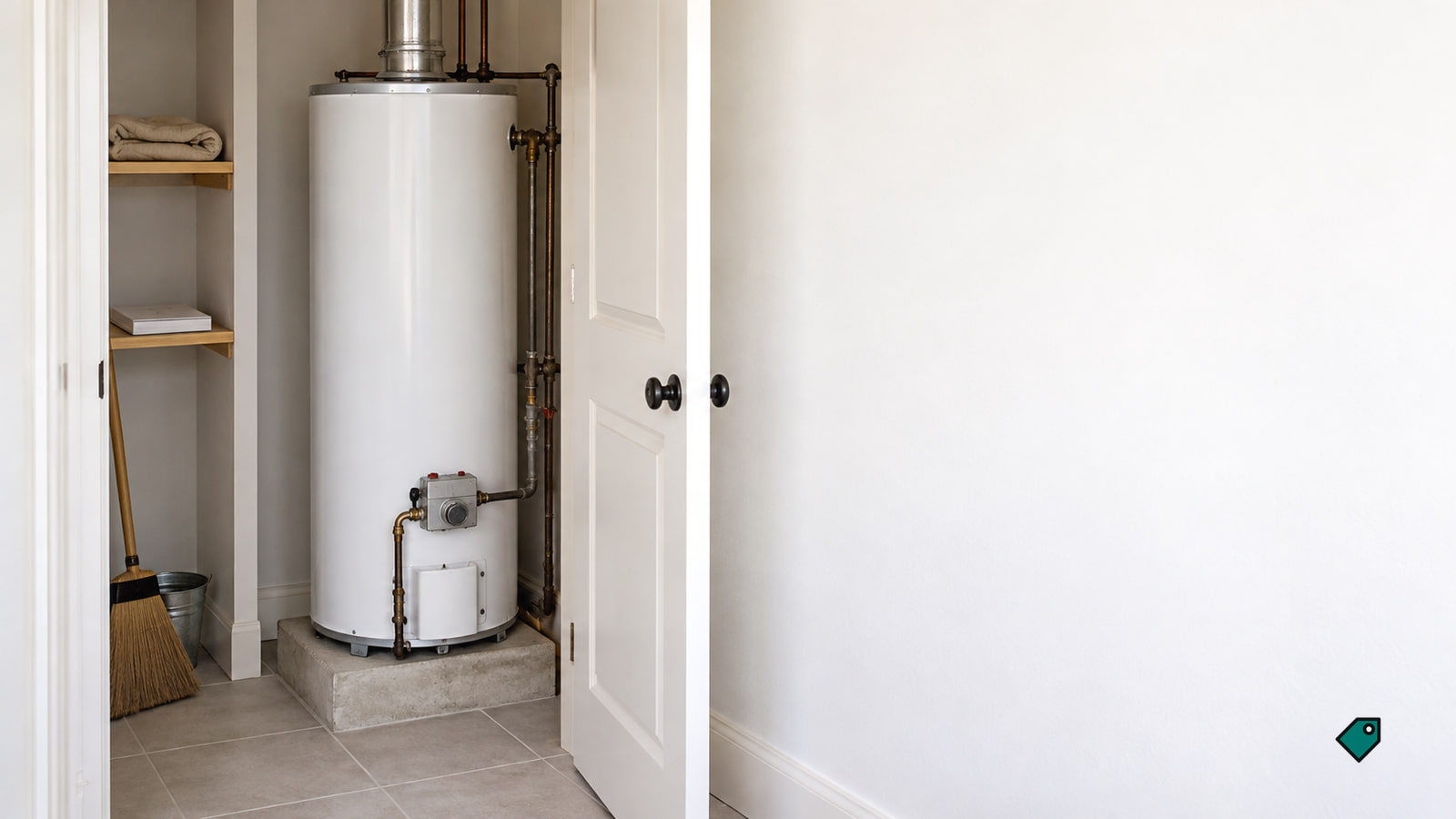
Make sure your heater has a standing pilot
Read and follow the labels on your heater and the safety instructions in its manual before troubleshooting. Use those instructions for your heater’s controls and ignition system. They take priority over general advice about pilot lights.
Some gas water heaters light an intermittent pilot automatically when the heater calls for heat. Others use a hot-surface igniter and have no pilot flame at all. Check which system your heater uses before treating an absent flame as a pilot that has gone out.
If your heater has a pilot you expect to stay lit, pay attention to what happens around the control and during normal operation. The point at which the flame disappears is more useful to report than a guess about which part has failed.
Look for drafts and blocked air
Look at the space around the heater from the outside. An open garage or utility-room door can let a gust reach the pilot, and air moving from a nearby window or vent can disturb the flame too. Note whether an outage happens when one of those sources of airflow is present.
Check whether stored boxes or other clutter crowd the heater or cover an air intake. Move loose items away from the intake without opening the heater. A pilot needs a steady supply of air, and a heater squeezed into a tight space can struggle to stay lit.
Combustion air also matters beyond the small pilot flame. Enough air helps the heater burn fuel and draft exhaust properly. If the heater’s location or surrounding space appears to restrict its air supply, that observation belongs in the service description.
Match the timing to what you saw
Sort what you saw by when the flame disappeared. A flame that dies as the control is released points toward a different set of service checks from one that goes out after the heater has been running. A weak flame adds another useful observation.
When it goes out after running
If the flame holds at first and disappears after the heater has operated, look back at the conditions around it. A door opening to the outside, a nearby window or airflow from a vent may coincide with the outage. Write down that timing and the airflow you noticed.
Restricted air around the heater is another possibility, especially if something has been stored near an intake or the heater sits in a cramped space. Gas pressure can change as well. An ongoing pressure problem may involve supply outside the heater, so its pressure needs a gas provider or licensed technician to verify it.
A gas control that delivers fuel inconsistently can also let the pilot fail after it has been burning. These possibilities call for different service checks. Your useful contribution is the sequence you observed: the flame held initially, when it went out, and what was happening around the heater then.
When the flame looks weak or discolored
A healthy pilot burns steadily with a blue flame. If you can see the flame from outside the heater, note whether it looks steady or weak and whether it appears yellow or orange. A yellow or orange flame points to a combustion problem that needs professional attention.
Dust or debris inside a pilot tube can reduce gas flow and leave a weak flame. A kink or clog in a fuel tube can also keep a pilot from getting the gas it needs to light or stay lit. Describe the flame you saw and leave those internal parts for the plumbing contractor to assess.
Unusual odors and signs of a gas leak also change the decision. For a gas smell, follow the leave-and-call action above immediately. For a discolored flame or another unusual odor, include what you noticed when you arrange service.
When your observations are enough
If the pilot keeps failing, dies when you release the control on repeated attempts, or you suspect a gas-supply or gas-control fault, stop trying to relight it in quick succession and contact a licensed plumbing contractor. A yellow flame or unusual odor also warrants that call. Tell them when the flame goes out and what you could see from outside the heater.
Keep these observations together for the service visit.
Tick what applies and add details; the note above fills in as you go.
What a working pilot looks like
Once the fault has been addressed, look for a pilot that burns steadily and blue. The flame should remain lit during normal operation, rather than disappearing after the heater has run.
Check that the tank is heating water again. If the pilot goes out, the heater cannot warm the water in its tank, so a steady flame and restored hot water are the useful signs that the outage has been resolved.
More in this category