Clean the parts you can see and the lines you can't
- Identify water jets, air jets, or both before choosing a cleaning cycle.
- Wipe the basin, then use a cleaner labeled for the jet system and tub finish.
- For every water-jet pump run, fill to the level required by your tub's instructions, even if there is no marked waterline; 2 inches above the highest jet is common, but some tubs require at least 3 inches. Clean, drain, and run a fresh-water rinse.
- After draining, complete the air-channel purge if your tub has one. If it has water jets, avoid bathing with them running until a clean-water run brings out no debris or cleaner foam.
Wiping the basin leaves whatever has collected inside water-jet lines. The pump draws bathwater through a suction inlet and sends it back through the jets, bringing loosened soap and body oils into view. An air system blows air through smaller openings and dries its channels with a purge after draining.
This is for an indoor tub that you fill and drain after use. We'd identify its jet system before adding cleaner because a water pump must stay off until its jets are submerged.
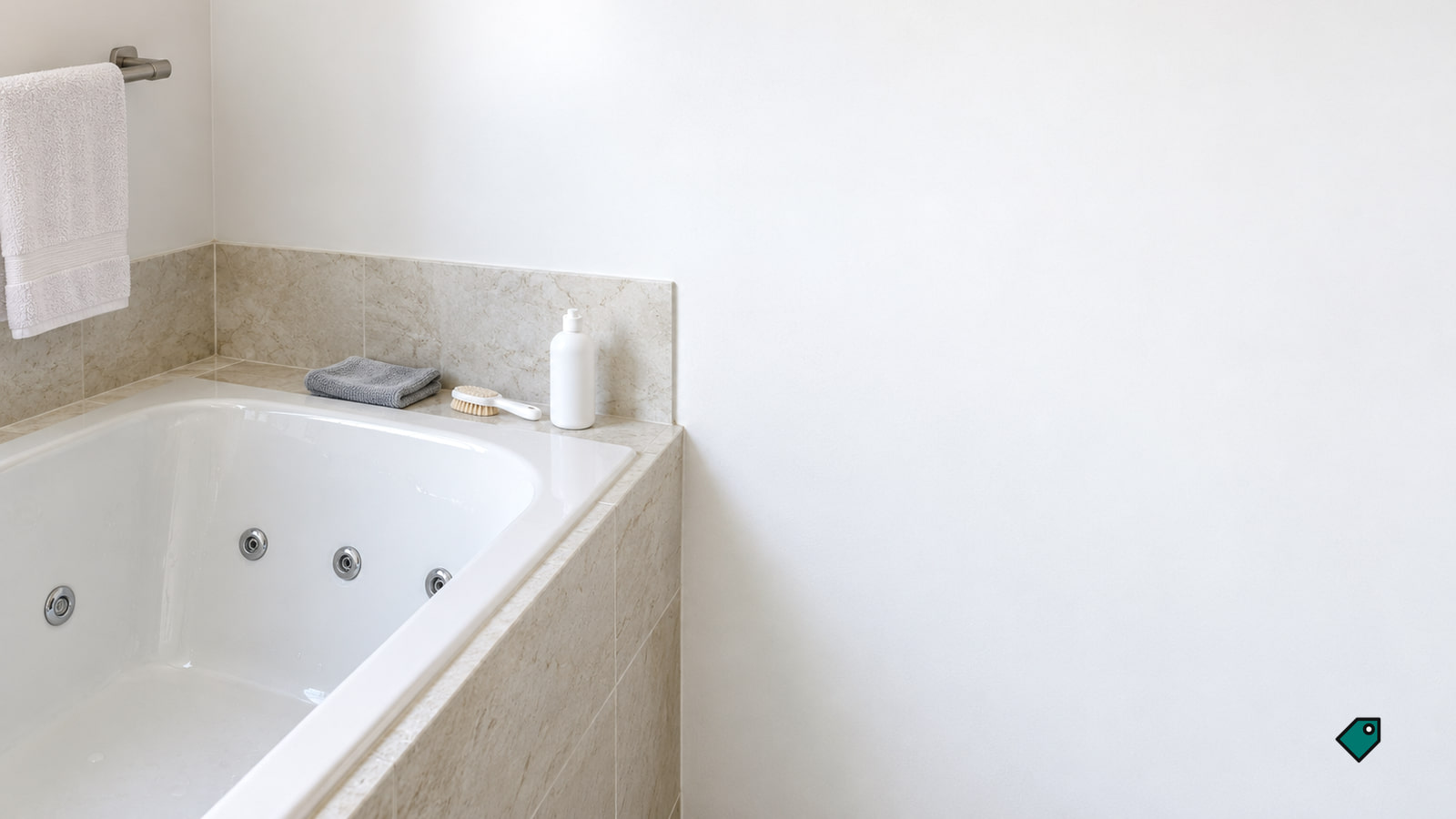
Tell water jets from air jets
Larger, often adjustable nozzles along the sides, plus a separate suction opening, point to water jets. Many small holes near the bottom point to air jets. Both sets of openings or separate whirlpool and blower controls mean you have a combination tub.
Look for a model and serial label you can reach without opening equipment, and photograph the openings and controls. Match the label to the tub's operating instructions to identify a control that isn't clear. Until you know what a button starts, leave it off. A possible water pump needs water above its highest jet before it runs; an air purge is a separate drying operation after draining.
On a combination tub, clean the water circuit and air system as separate jobs. The water side needs cleaner circulation and a fresh-water rinse. The air side needs the cleaning sequence assigned to its blower, followed by its post-drain purge.
Pick a cleaner that can go through the jets
For an unidentified water-jet tub, choose a low-foam product sold as a whirlpool piping cleaner. Its label must permit circulation through jet lines and list your basin finish; measure the dose on that label. A cleaner meant only for wiping the shell stays out of the plumbing. If your tub's maker names a whirlpool line cleaner, use that exact product and its dose and run time, then rinse with fresh water until no new cleaner foam or debris emerges; a 10-minute cleaning run is common.
For the basin and exposed jet faces, use a nonabrasive liquid detergent or a surface cleaner labeled safe for acrylic, with a soft damp cloth or sponge. Rinse it away before the line-cleaning fill. Avoid abrasive pads, brushes with metal bristles, and scrapers on acrylic or fiberglass because they can scratch or dull the finish.
Ordinary liquid hand-dish soap foams heavily when a water pump circulates it, so don't use it as a line cleaner. Automatic dishwasher powder appears in some whirlpool cleaning instructions, but the measured amounts run from 2 teaspoons to 2 cups. Tablet doses differ by product. Use the dose printed on a low-foam jetted-tub line cleaner's label instead.
Vinegar belongs only on exposed mineral deposits when the finish permits it; rinse it off promptly. Don't pour it into unidentified jet lines. Bleach is no fallback for an unknown tub because some systems prohibit chlorine cleaners. Never mix bleach with vinegar, detergent, or any other cleaner: dangerous vapors can result. The CDC's bleach safety instructions (opens in a new tab) give the same rule.
Flush and rinse water-jet lines
Use this sequence when the tub has recirculating water jets. Keep bathers out during cleaning. If water flow is weak, turn the pump off, confirm the required water level, open adjustable jets, and wipe visible blockage from the jet faces and suction screen. Restart only with the suction cover secure and the jets submerged. Flow at all open jets means the blockage is clear; if flow stays weak, keep the pump off and request a suction-path diagnosis. A cleaning run commonly lasts about 10 minutes, though tub and cleaner directions range from about 5 to 20 minutes; use the time printed for yours. The rinse clears cleaner and loosened material that draining alone can leave in the lines.
When the tub's cleaning instructions cap water at 104°F, keep the fill at or below that temperature. If its rinse calls for cold water with the air controls off, refill above the jets and run the rinse for 10 minutes.
- With the jets off, remove hair and loose debris from the basin, exposed jet faces, and outside of the suction screen. Wipe the basin with a soft cloth and finish-safe surface cleaner, then rinse the surface until no cleaner remains.
- Before every pump run, fill to the minimum level in your tub's instructions, even if there is no marked waterline; 2 inches above the highest jet is common, but some tubs require at least 3 inches. Keep that level through every pump run. Water below the top jet means the pump must stay off.
- Measure the line cleaner using its label. Add it to the filled tub and set any adjustable air controls as the tub's cleaning instructions direct.
- Start the water jets and run them for the cleaner's stated time, commonly about 10 minutes. Water should flow from the open jets. Cloudiness or flecks during this run show that material is being released into the cleaning water.
- Stop the pump before draining. Wipe released material from the empty basin and jet faces so it cannot wash back into the next fill.
- Refill above the highest water jet with clean water. Run the fresh-water rinse for about 10 minutes, or for the time given with the tub or cleaner, then watch the water from the jets. It should lose the cleaner foam and stop bringing out new visible particles.
- Stop the pump, drain again, and wipe the basin and exposed jet faces dry. If the tub also has air jets, complete their post-drain purge.
A cover that will not seat securely ends the cleaning run. The U.S. Consumer Product Safety Commission's suction-cover warning (opens in a new tab) describes the hair and body entrapment hazard at an uncovered intake.
Clean air jets and let their channels dry
For an air-only tub, wipe the basin and exposed air holes with a soft cloth and a finish-safe surface cleaner. If the model calls for surface care only, rinse the surfaces and drain the bath before its blower purge. If the model requires a filled blower cleaning cycle, fill above the air holes to its specified level, use only a cleaner approved for that air system, and run the blower for its stated time. Complete any required soak or second blower run, drain, and perform any required fresh-water blower rinse before the final drain and purge. An air system does not use the water-jet pump cleaning recipe.
After draining, press the purge control once if the tub has one. Let the blower run until it stops, commonly about 1 to 2 minutes; you should hear air at the small openings. An automatic purge may start about 5 to 30 minutes after draining or turning the blower off, so allow that cycle to finish before wiping the basin dry. If no purge starts, try the visible purge control and wipe any blockage from the exposed holes with a soft cloth. If the blower stays silent, confirm the correct blower control is selected, seat any accessible plug fully, and check the breaker or GFCI without opening equipment. If it still will not start, contact the tub maker or a qualified bath-service technician; if the GFCI tripped unexpectedly, stop using and disconnect the bath until a qualified service representative corrects the problem.
If black flakes keep coming out
Black or brown flecks can be accumulated soap, body oil, and bath-product residue from hidden lines. Color cannot identify the material or establish that it is mold. Soft slime may wash out over another cleaning cycle; save a photo or sample of hard or rubbery pieces for inspection because their appearance cannot identify which part, if any, has deteriorated.
We'd wipe away the released material and repeat the cleaning run with the same dose and run time, followed by a full drain and fresh-water rinse. Don't strengthen the mixture or combine products. Fill once more with clean water and run the water jets while watching for new particles, cleaner foam, or strong odor. Clear water from the jets, without new debris or foam, is the practical result to look for before bathing.
If the clean-water test still releases particles, slime, or strong odor after the repeat cycle, or the open jets remain weak after you clear visible blockage, keep the jets off and arrange a jet-line or suction-path diagnosis with the tub maker or a bath-service technician. If only cleaner foam remains, stop and drain, refill above the highest jet without cleaner, and run another fresh-water rinse for about 10 minutes. A clean-water run without new foam or debris finishes the rinse. A leak calls for a plumber; if an electrical fault interrupts cleaning, stop using the system and have a qualified electrician or service representative correct it before reuse.
Tell the service provider which cleaner and dose you used, how many cleaning and rinse cycles you completed, and what appeared during the final clean-water run. Photograph any particles and mention a leak, weak flow, or an electrical trip.
Professional cleaning and a fresh-water purge of one indoor tub's jet lines runs $150 to $300. A separate diagnostic visit runs $100 to $250 in the priced residential example; ask whether that charge is credited toward the work. Repairs to leaking or deteriorated internal parts are priced separately.
Keep the lines clearer between cleanings
After each bath, drain it, rinse visible soap from the basin, and blot the surface dry.
Let an air system complete its drying purge after each use. Wipe the exposed air holes dry after the blower stops.
Questions about using the tub again
Should I take off the jet covers to clean behind them?
With the pump off, wipe exposed jet faces and the suction screen with a soft cloth or small soft brush, never a metal tool. If the jet's instructions allow removal, use its release tool, clear debris, inspect the O-ring, reinstall without force, then refill above the jets and confirm normal flow. Remove a suction cover only if its instructions explain the fastener and gasket; clean and reinstall it securely before running the pump.
Can I take a bath if black bits are still coming out?
No. Keep the jets off while particles, slime, strong odor, or cleaner enter the water. Bathing without running the jets still leaves debris already in the basin, so drain and clean it; bathe after a fresh-water jet run brings out no new visible debris or cleaner foam. A leak or unexpected electrical trip means stop using the tub.
How much does professional cleaning cost?
The jet-line cleaning and diagnostic visit prices are under “If black flakes keep coming out.” Confirm that the quote includes cleaner circulation, draining, the fresh-water purge, and basin cleanup; a basin-only cleaning leaves the lines untouched.
How often should I clean the jets?
Clean water-jet lines about once a month, or sooner with frequent use or visible residue. To clean water jets, wipe the basin, fill to the model's required level above the highest jet, circulate a compatible low-foam line cleaner for its stated time, drain, run a fresh-water rinse at the required level, then drain and wipe dry. For an air-only tub, wipe the basin and exposed holes with a finish-safe cleaner, follow its air-system cleaning instructions, drain, and complete the blower purge.
Can I use bath bombs, oils, or bubble bath after cleaning?
Cleaning the tub first does not change which additives it can take. Use a bath bomb, oil, or bubble bath only when your tub's care instructions allow it; oils and bubble bath can build up or foam in water-jet lines, and products that do not dissolve in water can leave residue in air lines. Clean sooner after using an allowed additive, and stop using it if buildup returns.
More in this category