Find the comparison that fits your washer
- Whirlpool reports ENERGY STAR averages of 14 gallons per load for certified washers and 20 gallons for standard washers.
- First, identify whether yours is a standard or high-efficiency (HE) washer, then check its cycle and rinse selections.
- Your model, load size and settings change consumption, so compare figures for your washer's class.
If you're comparing a newer washer with an old machine that filled the basket, the difference can be substantial. We'd identify the washer type before changing settings, because its design sets the starting point, while cycle and rinse choices change how much water it uses for each load.
Age, capacity, bulky items and the amount of laundry all matter too. A published class average is useful for comparison, not an exact measurement of your machine's next cycle; use the matching category below, then check the choices available on your washer.
Gallons per load by washer type
Whirlpool gives these additional estimates by washer type, alongside its separate certified-versus-standard averages. Keep their qualifiers attached when comparing machines, especially the difference between a typical figure and what some machines can achieve.
- Standard top-load washers typically use around 19 gallons or more per load.
- HE top-load washers can clean with around 13 gallons per load.
- Some HE front-load washers can use as little as 7 gallons per load.
- Older non-HE top-load washers typically use about 40 gallons per load.
- A separate, broader estimate puts older washing machines at about 40 to 45 gallons per load and HE machines at about 10 to 25 gallons.
Those estimates differ: the 7-gallon example sits below the broader 10-to-25-gallon HE estimate, while the 14-gallon certified average describes another category. Keep them as separate comparisons instead of combining the lowest and highest numbers into a universal range.
If you're shopping, front-load HE washers tend to be the most water-efficient type. Both front-load and top-load HE machines use less water than traditional washers, and HE designs include top-load machines with either an agitator or an impeller. Check the machine's HE status along with its loading style when comparing your options.
Why less water can still clean your clothes
Older non-HE top-loaders keep laundry soaking throughout the wash while an agitator does the cleaning. HE front-load and top-load washers put water in the bottom of the machine and move clothes through it, which helps explain the smaller volume.
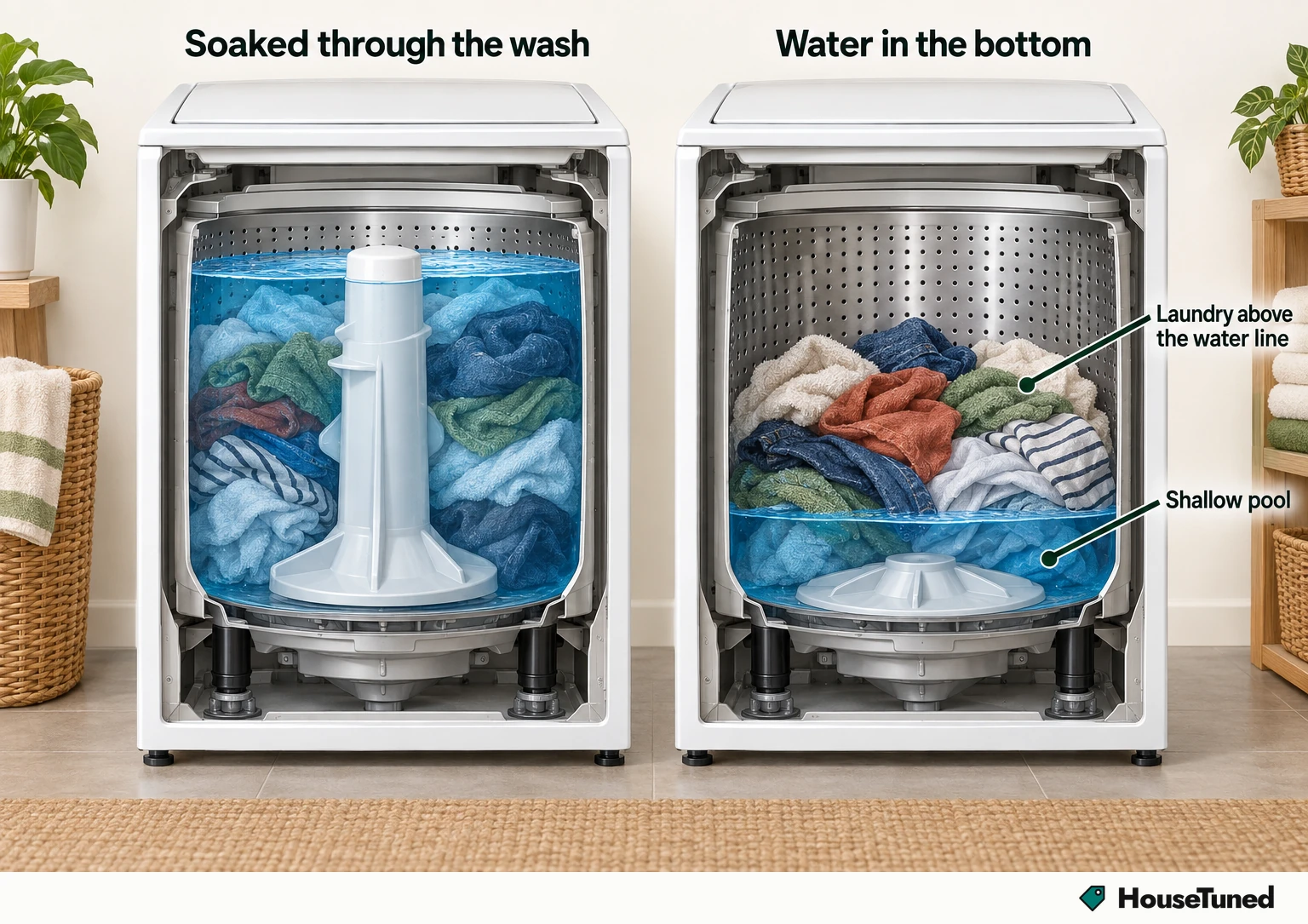
Front-load and impeller washers also use the friction of clothes rubbing together to remove soil. Less water between the fabrics allows that contact, while HE detergent works in a more concentrated solution. A deeper pool changes the washing action as well as the amount of water consumed.
Capacity and load size are separate influences. A large-capacity washer tends to use more water because it has a bigger drum, and a larger laundry load needs more water to saturate the clothes. Bedding, towels, coats and jackets may need additional water because they can absorb more than ordinary clothing.
On Whirlpool washers equipped with auto-sensing, the machine gauges the load size and supplies the amount of water needed. Whirlpool front-load washers naturally use low water levels, with the amount changing by cycle or load size.
Pick the cycle for the laundry you're washing
Choose the cycle that suits your fabrics and load, following your washer's use and care guide. Selecting a different cycle just to change the water level can compromise cleaning. Some cycles also increase time and energy use and may not meet ENERGY STAR standards.
Quick or Express cycles typically use the least water and are intended for small loads needing a fast refresh. Bulky cycles generally use more. A heavily soiled load may benefit from a higher-water cycle, while pre-treating stains before washing may let you use a Normal cycle with less water.
Cycle names need their machine-specific context. On Whirlpool washers, Deep Water Wash often fills the tub, while Maytag's top-load HE cycle guidance places Deep Water Wash among cycles that fill about halfway. Use the options and recommendations for your own washer when making that choice.
For Maytag top-load HE washers, Heavy Duty and Bulky use more water than Normal, and the load-size selection changes consumption too. Bulky's full-fill behavior belongs to that cycle, not every wash. You can check the cycle water-level guidance (opens in a new tab) when comparing those selections.
Not every Maytag machine has every cycle. An inappropriate cycle can leave clothing tangled or poorly washed, so match the selection to the clothing instead of choosing it solely for a deeper fill.
Rinse and fill options change the total
Use Extra Rinse only when you need it. On Maytag top-load HE washers, most cycles use a spray rinse, but Fabric Softener or Extra Rinse changes that to a deep-fill rinse. That choice adds water even when you leave the main wash cycle unchanged.
Some Maytag washers offer Deep Fill to increase the water level. Maytag also suggests Extra Rinse when the level seems too low, but its top-load HE guidance explains that laundry can normally remain above the waterline. We'd reserve additional water for the load's needs, because adding water can make clothes float, interfere with agitation and dilute detergent.
On those Maytag top-load HE washers, additional water can also lead to poor washing and tangled clothes. Choose deeper-fill options for the clothing you're washing, keeping those tradeoffs in mind.
On Speed Queen washers with a Soak option, soaking before the wash adds water to help address stubborn stains or heavy soil. Where Eco Cycle is available, it offers a lower-water, lower-energy choice. Check the purpose of each option before adding it to your usual wash.
Make full loads count without packing the drum
Wait for a full load when you can, without overloading the washer. Multiple small loads use more water than fewer large loads, even though an individual smaller load can use less water than a larger one. Think about the whole pile of laundry you're getting through, as well as the gallons for one cycle.
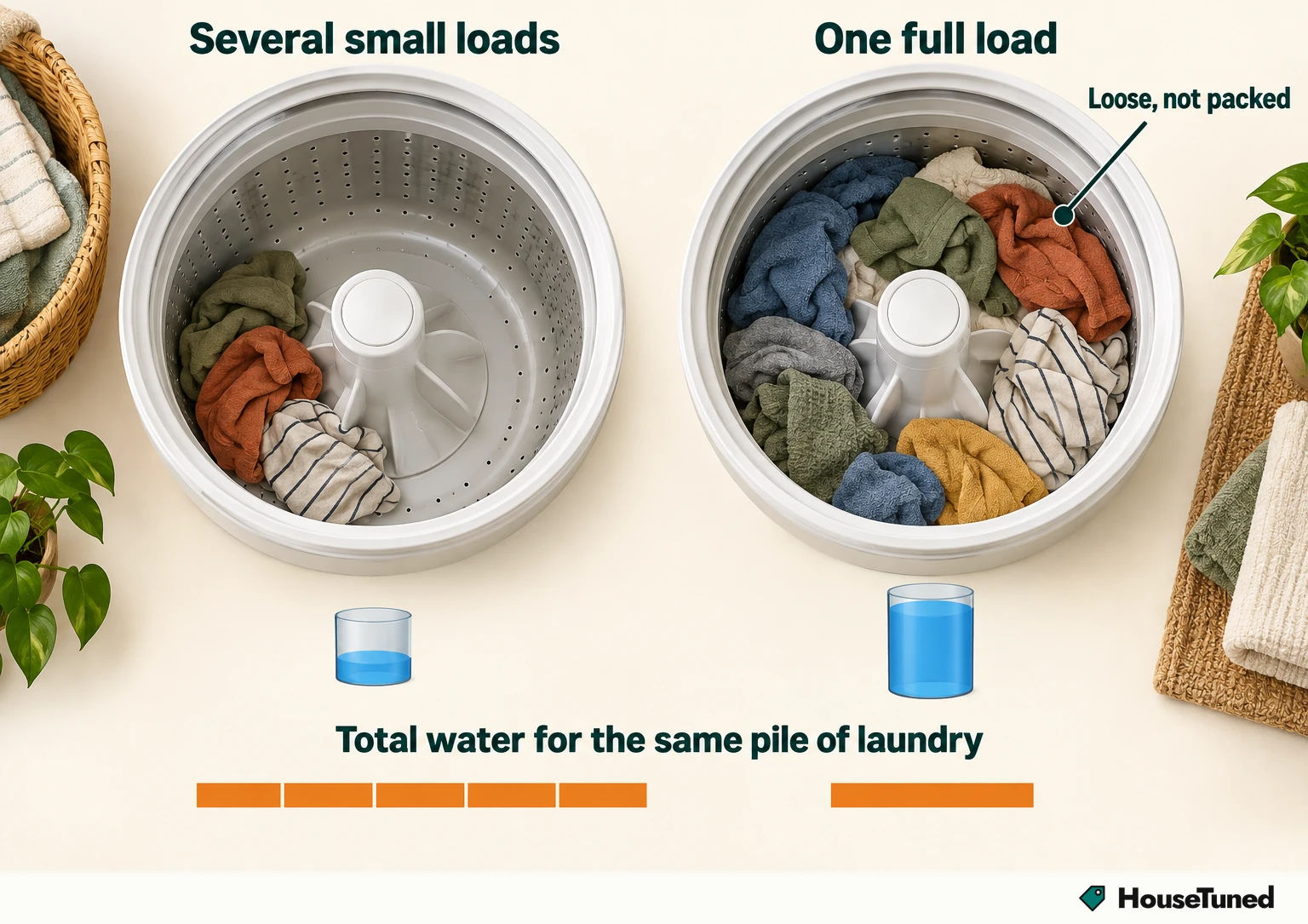
For a Maytag top-load HE washer with a washplate, place items in loose heaps distributed evenly around the washplate. Keep the load loose and don't overload it, so the machine can give its intended wash performance.
As that washer dampens and moves the laundry, the items settle lower in the basket. Leave the load as it is instead of adding more clothes to the space that appears. That settling is normal.
What a normal low-water wash can look like
A Maytag top-load HE washer can build its water level in stages. Short, slow sensing spins may take 2 to 3 minutes before more water enters. The washer then moves the load, pauses while water soaks in and may repeat the filling process until it has the amount needed.
A partly submerged load is normal in this low-water system and allows clothes to move, especially with a washplate at the bottom. If you've moved from an older agitator-style washer, expect a different-looking wash instead of a basket filled with water.
Match the detergent to low-water washing
For an HE washer, use HE detergent formulated for low-water washing. For another washer type, use it when your machine allows it. The formula is designed to work with less water and a more concentrated cleaning solution.
Non-HE detergent in an HE machine can generate excess suds and lengthen the cycle. Too much detergent can leave residue, so follow the recommended amount for your load. Before starting the wash, check both the detergent type and its dose against the laundry you've loaded.
More in this category
Take a closer look
How to Fix a Washing Machine
Washing Machine Not Draining? What to Check Before You Call
Washing Machine Smells Like Mildew? Front Loader Fixes
- Smells From Washing Machine? What Causes Mustiness and What to Clean
- How to Wash Shoes in a Washing Machine and What Can Go Wrong
- How to Stop a Shaking Washing Machine in Four Checks
- How to Unlock the LG Washing Machine
- How to Wash Tennis Shoes in the Washer
- F21 Washer Code? What to Check First
- Dishwasher Not Dispensing Jet Dry Rinse Aid? How to Fix It