Clean the tub, then the places water misses
- Empty the washer and remove any objects you can see.
- Run its cleaning cycle, or an empty hot Normal or Heavy wash if it has no cleaning setting.
- Wash the dispenser and wipe the door or lid, opening and front-loader gasket by hand.
- Rinse if cleaner or debris remains. Before washing clothes, make sure the tub has drained and is free of residue.
| Cycle | What to add and do | Done when |
|---|---|---|
| Samsung Self Clean or Pure Cycle | Add nothing; run the empty cycle using Samsung's Self Clean steps (opens in a new tab). | The cycle ends and the tub drains. |
| LG Tub Clean | Put a tablet in the drum, or powder or liquid in the main-wash dispenser; run Tub Clean. | The cycle ends with no visible cleaner. |
| No cleaning setting | Put one washer-cleaner tablet in the empty drum; run hot Normal or Heavy. | The wash and rinse finish, and the tub drains. |
We'd start with the empty tub cycle because it loosens residue before hand cleaning. Detergent and softener residue can collect in the dispenser, around the opening and inside a front-loader gasket. Damp residue can keep an odor around even after the tub looks clean.
Set out a washer cleaner, a soft cloth, a small soft brush and a towel. If your front loader has a small pump-filter door near the floor, have a shallow pan ready too. Remove laundry and visible objects from the tub before you start; a cleaning cycle needs an empty washer.
For a front loader, allow about 10 to 15 minutes to wipe and brush the parts, plus the machine cycle. A dedicated cleaning cycle may take about one hour on a top loader or four hours on a front loader, so use the time shown on your washer to plan the rest of the job.
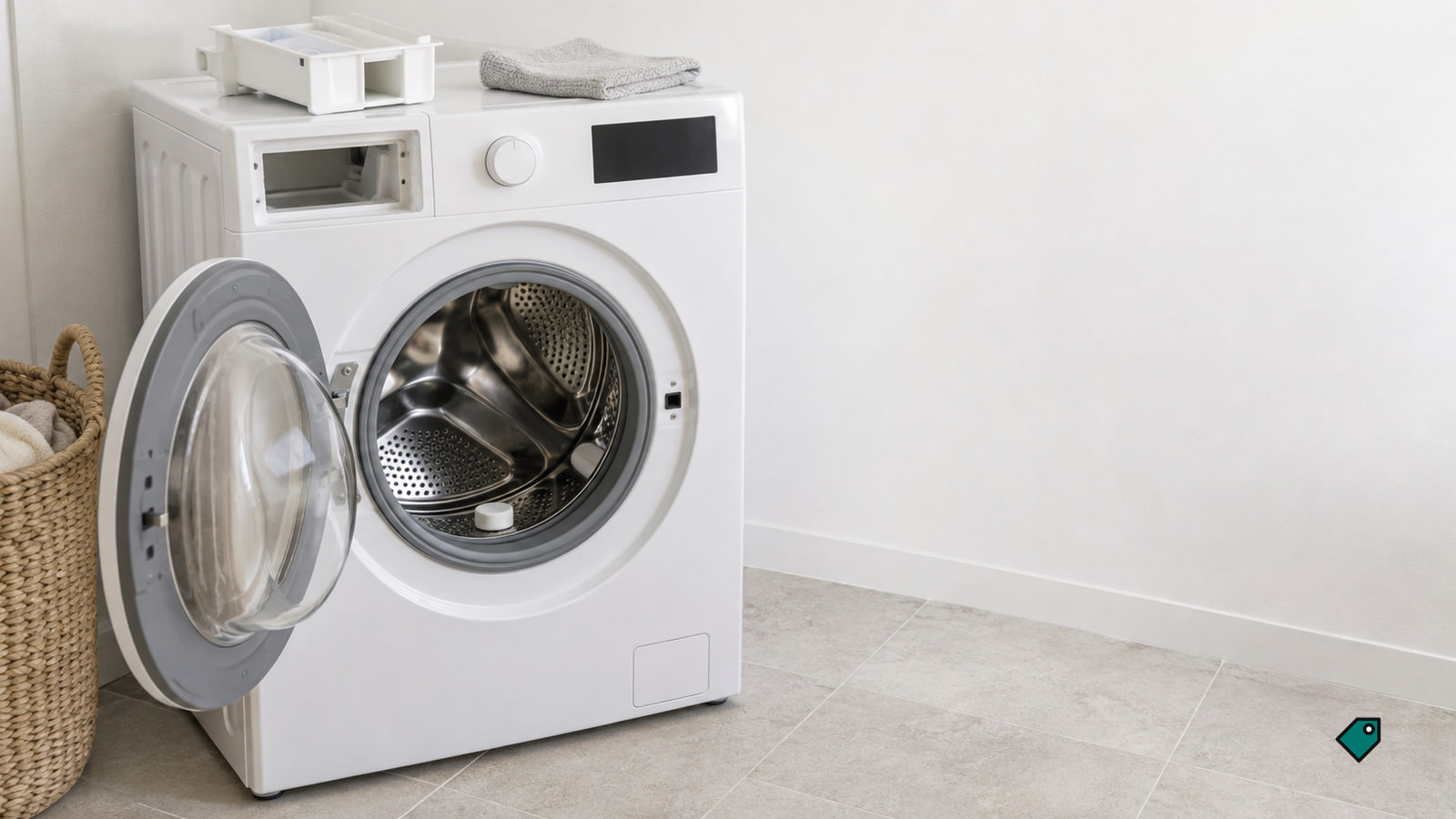
Choose the cycle and put the cleaner in the right place
Look for a setting called Tub Clean, Basket Clean, Self Clean, Self Clean+ or Pure Cycle. These settings wash the empty tub, but they don't all use the same additive: some run with water alone, while others call for washer cleaner or allow bleach. Choose the additive by the setting: a water-only cycle takes none, while a cycle that calls for cleaner takes one product at its stated dose. Follow a different additive rule stated for your washer.
Without a cleaning setting, select an empty Normal or Heavy wash on Hot. Choose the longest wash available when your washer's cleaning instructions call for it. Use one dose of washer cleaner as directed on its package, and let the wash and rinse finish. The washer's display gives you the duration of that cycle.
- Empty the tub and remove any objects you can see. Select the dedicated cleaning setting, or set Normal or Heavy to Hot if there is none.
- Follow the setting's additive rule. If it calls for water alone, add nothing. Otherwise, add one measured dose at the location named by the washer and cleaner directions. A tablet generally goes directly in the empty drum. Where the washer calls for powder or liquid in the main-wash dispenser, fit the liquid cup for liquid and remove it for powder. Add no laundry detergent or second cleaner; the CDC's bleach safety guidance (opens in a new tab) explains the danger of mixing cleaning chemicals.
- Start the cycle and let it finish. Look inside when it stops: the tub should be drained, with no visible cleaner or loose debris. If you still see cleaner, suds or debris, run an empty Rinse & Spin without additives and look again. Repeat the empty rinse if suds remain.
Suds appearing in an empty cycle with no detergent added point to detergent residue already in the washer. Keep running empty cycles without additives until suds stop appearing, then inspect the dispenser and opening for buildup the water did not remove. If the tub fails to drain, leave laundry out while you work through the drainage checks.
Wash the dispenser and wipe the opening
A tub cycle can't scrub residue from a dispenser drawer or the folds around a door. Do this hand cleaning after the cycle, while the washer is empty, and use a soft brush for corners a cloth cannot reach.
- Switch off and unplug the washer before hand-cleaning the dispenser, door, gasket or rim. Pull the dispenser drawer to its stop. If it has a release, press it and lift the drawer out; if it resists, leave it in place and clean the reachable parts. Remove any loose inserts. Wash removable pieces with warm water and a soft brush, and wipe or gently brush the recess. Use a damp cloth there instead of spraying water into the opening. Rinse the pieces, dry both them and the recess, and refit the drawer. It should move freely, with no visible residue blocking its passages.
- Wipe the inside of the door or lid and the surrounding opening with a damp cloth, then dry them. On a front loader, gently pull back the gasket folds, take out lint or small objects and wipe the surfaces and lower groove. For stuck grime or visible mildew, mix warm water with mild detergent, apply it with a soft cloth and gently brush the folds. Wipe the folds with a clean cloth dampened with warm water until the solution is gone, then dry the rubber. On a top loader, wipe the reachable rim, agitator or impeller. Clean inside an agitator cap only if it lifts off gently; leave a fixed cap in place.
- Look again at the surfaces you cleaned. They should be dry and free of trapped objects or visible buildup. If the smell remains, inspect the tub and dispenser again before repeating a complete empty cleaning cycle.
Many front loaders have a removable pump filter behind a low front access door. It traps lint and small objects, so clean it when odor persists, debris keeps appearing or draining slows. If your washer has no removable filter there, continue with the drainage checks.
- Switch the washer off and unplug it. If you just ran a hot cycle, let the retained water cool. Put towels and a shallow pan below the low access door before opening it.
- Open the access door. If there's a small drain hose, pull it over the pan, remove its cap and let the water drain completely. If there is no small drain hose, follow your washer's manual to drain retained water into the pan before removing the filter. Keep the towel in place for water left behind. Remove the filter only after collecting the retained water, using your model's specified release method, which may require pushing in while turning; stop if it does not release.
- Turn the filter counterclockwise and remove it. Brush away lint and objects, rinse the filter and wipe the reachable opening. Refit the filter firmly, replace the drain-hose cap, clip the hose back in place and close the door.
- Plug the washer in and run a short empty drain or rinse. The tub should drain normally and the filter area should stay dry. If water appears there, switch the washer off and unplug it before reseating the filter and hose cap, then plug it in and test again.
On LG front loaders with this setup, the pump filter (opens in a new tab) and small drain hose sit behind a low access door. A filter that is clear and dry after the test sends you to the remaining drainage checks if water still stays in the tub.
If the smell or gunk comes back
First, look again at the dispenser, door gasket or top rim, and tub. Hand-wash any missed residue. Next, run an empty rinse and look for suds or loose debris; repeat the rinse until they stop appearing. If your front loader has the removable pump filter described above, clean it and test that the housing stays dry.
If the washer completes and drains its cycles but still has visible residue or a musty smell, one more complete cleaning cycle is reasonable. A smell that remains after the tub, dispenser and opening are clean points beyond another dose of cleaner. Water left in the tub after a completed cycle points instead to a drainage problem.
If water stays in the tub or draining remains slow after cleaning, follow the washer drainage checks. If the tub drains but the odor returns, trace where the smell is strongest.
An active leak also means stopping use. If a household standpipe overflows, call a plumber; if the washer itself leaks or still won't drain after the visible checks, arrange appliance service.
If odor persists after a complete tub clean, hand cleaning and rinsing, contact the maker's support or an appliance repair technician. Tell them whether the tub drains, what odor remains, and which cleaning and filter steps you tried.
For a standard household washer, an in-home diagnostic visit when you decline repair runs $50 to $160; ask whether that fee is credited if you approve work. A new standard household washer costs $700 to $1,500 for the unit. Delivery, installation, connection parts and haul-away may be charged separately, so compare written totals.
Keep moisture and residue from building up again
Clean the washer about monthly or after about 30 loads, sooner if odor or visible residue returns. If your front loader has a removable pump filter behind its low front door, clean it monthly too. The routine is working when the empty washer and finished laundry stay free of a musty smell between cleanings.
Remove wet laundry promptly. After a load, wipe moisture from a front-loader gasket and the dispenser, then leave the door or lid ajar so the interior can dry. Those small drying steps matter because moisture left against detergent residue gives odor a place to linger.
If your washer requires HE detergent, use it and measure the dose for the load instead of filling the dispenser to its maximum line. Too much detergent leaves suds and residue. Frequent cold washes or excess fabric softener can add to buildup; shorten the cleaning interval when you notice residue returning. An occasional warm or hot laundry cycle can also slow buildup if you wash in cold water frequently.
Questions about cleaners and the next load
Can I use vinegar, baking soda or bleach instead of washer cleaner?
Use washer cleaner when you don't know which additives your washer permits. Vinegar belongs in a tub cycle or diluted spot cleaning only when the washer permits it; repeated use can harm rubber parts. Baking soda can help with odor where allowed, but neither replaces hand-cleaning trapped residue. Use bleach only at the washer's stated dose and location, never with vinegar or another cleaner. Run an empty rinse before laundry if bleach smell or other cleaner remains.
Can I keep washing clothes if the washer smells?
If the washer finishes and drains normally, you can finish the current load, then clean and dry the machine. Rewash clothes that came out musty after cleaning the washer, and dry them promptly. Standing water or a leak means leave the next load out; for smoke or a burning smell, follow the Stop instruction above.
How much might service cost if cleaning does not fix it?
The diagnostic and new-washer prices are above. For a front-load household washer, replacing one door gasket with a retail-sourced genuine part runs $150 to $460 installed: one gasket at $100 to $210 plus 1 to 2 hours at $50 to $125 an hour. Compare the written repair quote and warranty coverage with the replacement total.
More in this category